
Best SIM Card for International Travel with iPhone
Find the best SIM card and eSIM options for international travel with iPhone. Learn about setup, providers, costs, and how to stay connected while you travel.
Find the best SIM card and eSIM options for international travel with iPhone. Learn about setup, providers, costs, and how to stay connected while you travel.
Traveling with your iPhone is easier than ever, but figuring out how to stay connected abroad can still be confusing. Between roaming charges, local SIM cards, and newer eSIM options, you may wonder which is the best choice for international travel. The good news is that in 2025, you will have more flexible and affordable solutions than ever before.
This guide explains everything you need to know about using a SIM card for international travel with your iPhone, including eSIMs, setup steps, recommended plans, and why frequent travelers now choose digital SIMs over physical ones.
Can You Use a SIM Card for International Travel on Your iPhone?
Yes. You can use your iPhone abroad with either a physical SIM card or an eSIM. A physical SIM card is a small chip that you insert into your phone, while an eSIM is a digital chip that is installed directly through your iPhone’s settings.
If you purchase a physical SIM, you’ll need to order it before your trip or buy it upon arrival at your destination. With an eSIM, you can purchase a plan online and activate it instantly by scanning a QR code.
Both options work, but eSIMs have become more popular in 2025 because they’re easier to set up and don’t require swapping cards.
How Do eSIMs, Local SIMs, and International SIM Cards for iPhones Differ?
When you want to connect your iPhone abroad, you have three main options: local SIM cards, international SIM cards, and eSIMs. Each works in a slightly different way and is better suited for certain types of trips.
Local SIMs
Local SIM cards are the ones you buy directly from a carrier in the country you’re visiting. They usually offer the best price for data and calls, but you’ll need to spend time finding a shop, presenting identification, and setting it up. In some countries, this process is quick, but in others, it can take more time. Local SIMs are great if you’re staying in one country for a while, but they won’t help if you’re crossing into multiple countries during your trip.
International SIM cards for iPhone
International SIM cards for iPhone are physical cards that you order online before you travel. You insert one into your phone, and it works in several countries without needing to switch. These are convenient if you’re going on a multi-country trip and don’t want to keep buying local SIMs. However, the cost per gigabyte is usually higher, and you often don’t get the same flexibility as with a local SIM. International SIMs are good if you want one card that will simply work in different places without much effort.
eSIM for iPhone
eSIM for iPhone is the newest option and has become very popular. An eSIM is digital, so there’s no card to insert. You purchase a plan online, receive a QR code, and install it directly in your iPhone’s settings. Once activated, it connects to local carriers in the countries included in your plan. Many providers now offer eSIMs for international travel that cover entire regions, such as Europe, Asia, or North America. This makes eSIMs especially useful if you’re moving between countries on the same trip.
Many 2025 travelers now prefer eSIM for international travel because it’s convenient and also affordable.
Does Your iPhone Need to Be Unlocked for an International SIM Card?
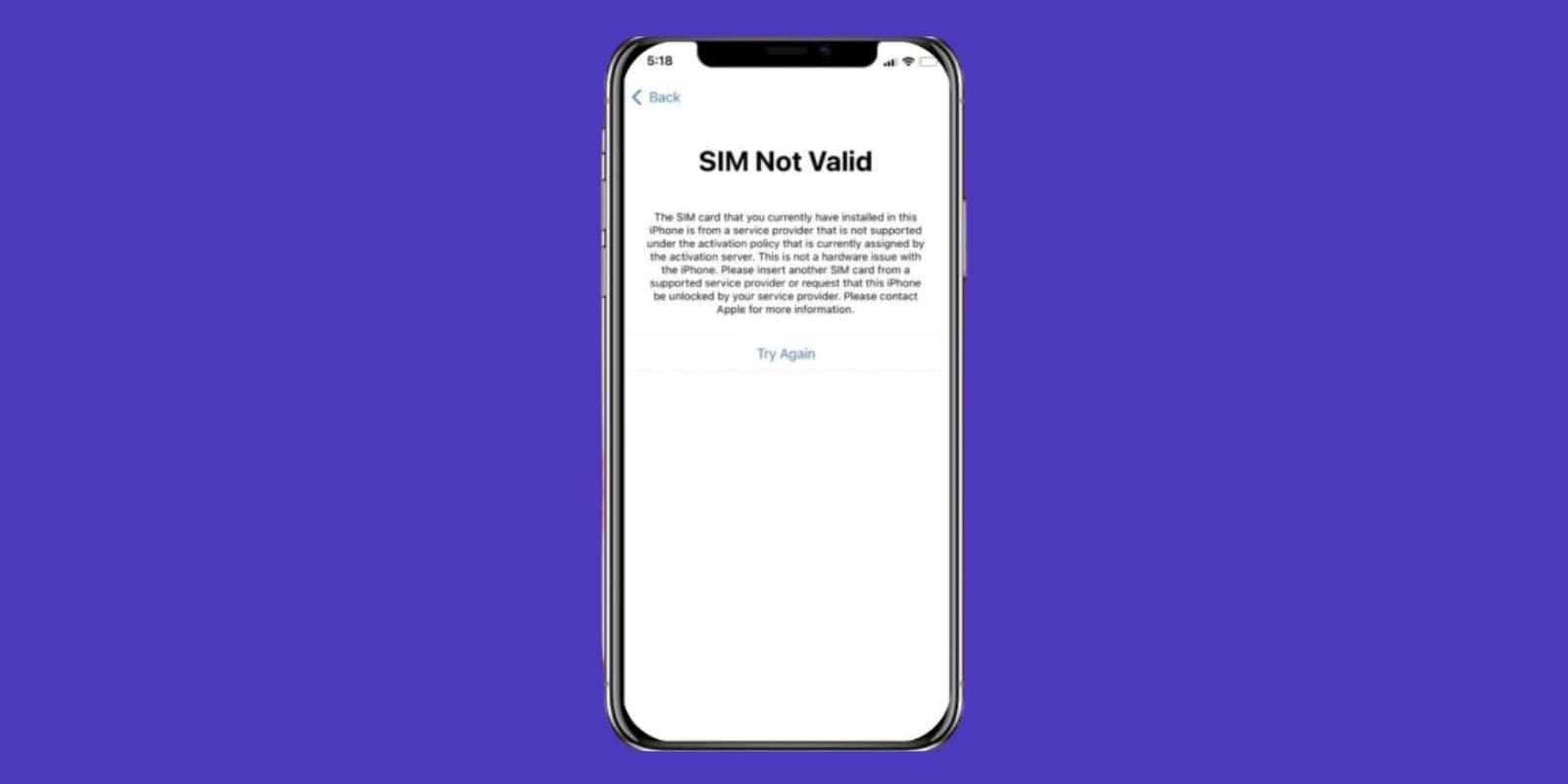
Most of the time, yes. If your iPhone is locked to your home carrier, it won’t accept a physical SIM card from another provider. Carriers usually unlock your iPhone after you finish paying off the device or the contract ends.
You can check your iPhone’s unlock status by going to Settings > General > About > Carrier Lock. If it says “No SIM restrictions,” your phone is unlocked and ready to use any international SIM card for travel.
With eSIMs, some carriers allow you to add data-only profiles even if your iPhone is locked. Still, the best option is to unlock your phone before you travel so you can use both SIM and eSIM plans freely.
How Does a SIM Card for International Travel Work on an iPhone?
An international SIM card for iPhone is programmed to connect to partner carriers in different countries. When you insert it, your iPhone automatically joins the network in the country you’re visiting. This lets you make calls, send texts, and use mobile data without relying on your home carrier’s roaming plan.
An eSIM works in a similar way but without a physical card. You buy a plan online, activate it in your settings, and your iPhone connects to local networks when you arrive. It’s the same process as a physical SIM, but it’s handled digitally.
For travelers visiting more than one country, an international SIM card for iPhone and eSIM are practical because they don’t require you to buy a new plan every time you cross a border.
Recommended Global eSIM Plans for 2025
Here are some of the most reliable providers for global and regional eSIMs in 2025:
Provider |
Coverage |
Typical Plans |
Why Choose It |
|
Jetpac |
100+ countries worldwide |
Flexible regional plans for Europe, Asia, and North America |
Transparent pricing, reliable coverage, and fast activation |
|
Holafly |
170+ countries |
Unlimited data options |
Easy setup, popular with short-term travelers |
|
Airalo |
200+ countries |
Regional bundles and pay-per-GB plans |
Budget-friendly and flexible |
|
Nomad |
150+ countries |
Daily or regional plans |
Useful for frequent travelers |
If you’re planning a trip across Europe, an eSIM for Europe is one of the easiest options. These plans often cover more than 30 countries, allowing you to move freely without needing to change SIMs. For longer trips that span multiple continents, global eSIMs are the most practical.
How to Get a SIM Card for International Travel with iPhone
There are a few ways you can get a SIM Card for international travel with an iPhone:
Order before you leave: Many companies ship international SIM cards to your home. You insert them when you arrive.
Buy at the airport or in a local store: Airports often have SIM counters, but prices are usually higher than online.
Purchase an eSIM online: The eSIM is the fastest and most convenient option. You buy a plan, get a QR code by email, and activate it through your iPhone’s settings.
Most travelers now choose eSIMs because they don’t involve shipping or waiting in line. You can activate them before your flight and connect as soon as you land.
Best International SIM Cards for iPhone in 2025
Not sure which international SIM card to get? Let’s take a look at some of the top options on the market today.
T-Mobile
T-Mobile is one of the most recognized carriers in the United States, and it offers a few international packages that can be used while traveling. Plans like Magenta and Go include international data, although speed and coverage vary by country. Some options may require you to pay additional roaming fees depending on where you’re headed.
AT&T
AT&T provides international SIM services in more than 200 countries. With AT&T’s international plans, you can make calls, send texts, and use data abroad. Travelers can pick a plan based on how much data they expect to use, and both prepaid and postpaid options are available.
Verizon
Verizon uses a TravelPass system for international coverage. You pay a flat fee of $10 per day to use your existing domestic plan in more than 200 countries. In Mexico and Canada, the fee drops to $5 per day. If you visit a country outside TravelPass coverage, Verizon switches you to a pay-as-you-go plan, charging per call, text, or megabyte of data.
Vodafone
Vodafone’s international SIM cards are a common choice for travelers leaving the UK or Europe. Customers can choose from prepaid options or use Xtra Plans, which allow them to access their UK allowance abroad. Vodafone currently supports roaming in more than 150 destinations, making it a solid option for frequent travelers.
Can You Use an eSIM for International Travel on iPhone?
Yes. eSIMs are fully supported on iPhones, and most travelers now use them instead of physical SIM cards. Apple has built eSIM support into all recent models, and the iPhone 16 eSIM allows you to install several profiles at once. This means you can keep your home number for calls and texts while using a travel eSIM for data.
This flexibility is one of the main reasons eSIMs have become the preferred option for international travel.
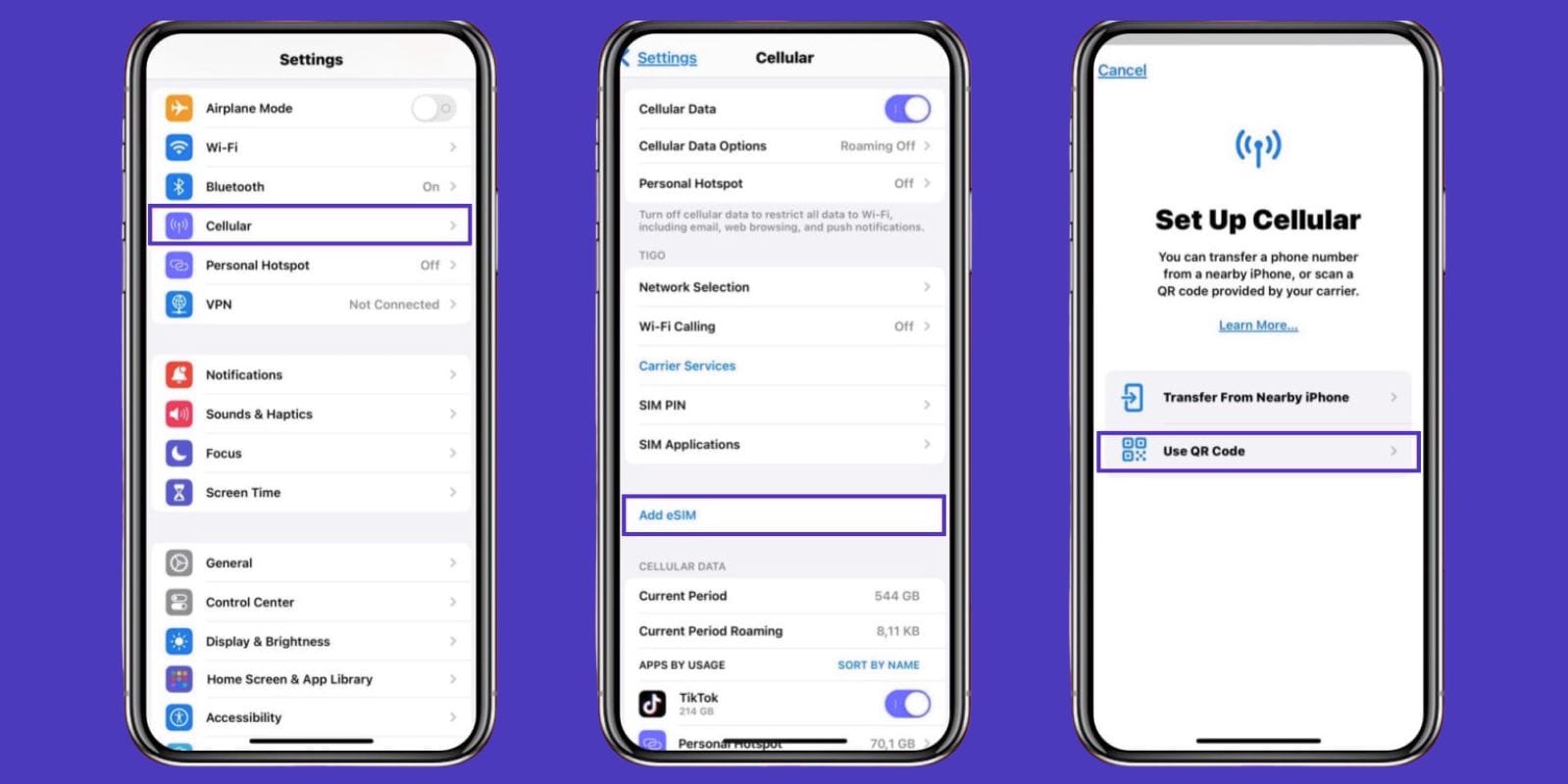
How to Set Up an eSIM for International Travel on iPhone
Here is how you can set up the eSIM on your iPhone:
Buy an eSIM plan online from Jetpac or another provider.
Open the email with your QR code.
On your iPhone, go to Settings > Cellular > Add eSIM.
Scan the QR code or enter details manually.
Choose which SIM is for data and which is for calls (if you’re keeping two active).
Within minutes, you’ll be connected to the best network available at your destination.
Where Can You Use an iPhone to Connect to the Internet Abroad?
With an iPhone, you can use an international SIM card or eSIM to stay connected in many popular destinations. Coverage depends on the provider and plan, but most include the regions below:
The United States
Strong connections with leading networks, including AT&T and T-Mobile.
Options for prepaid or daily plans, so you can control your costs.
Ideal for trips to New York, Miami, Los Angeles, or any other U.S. destination.
Europe
Up to 40 countries are included with many eSIM for Europe plans.
Connect automatically to the best carrier in each country.
Flexible plans for one week or up to a month, depending on the length of your trip.
Works across popular destinations such as France, Italy, Spain, and Germany.
Asia
Coverage is available in countries like Japan, South Korea, Thailand, Singapore, and Vietnam.
4G and 5G speeds are available in major cities and tourist areas.
Affordable prepaid eSIMs make it easier to budget your data use.
Good option if you’re traveling across multiple countries in the region.
North and South America
Coverage in Canada, Mexico, Brazil, Argentina, Chile, and many other countries.
Plans often include regional bundles so you can move across borders.
Useful for long trips that include more than one country on the same continent.
Middle East and Africa
Supported in popular destinations such as the UAE, Morocco, Egypt, South Africa, and Kenya.
Coverage is strong in major cities, with more limited service in rural areas.
Check the provider’s country list before traveling to smaller nations in these regions.
Before buying a plan, it’s always a good idea to check the provider’s coverage map to confirm your destination is included. That way, you’ll know your iPhone will connect without problems as soon as you arrive.
Why an eSIM Is the Smartest Choice for Travelers – Jetpac Guide
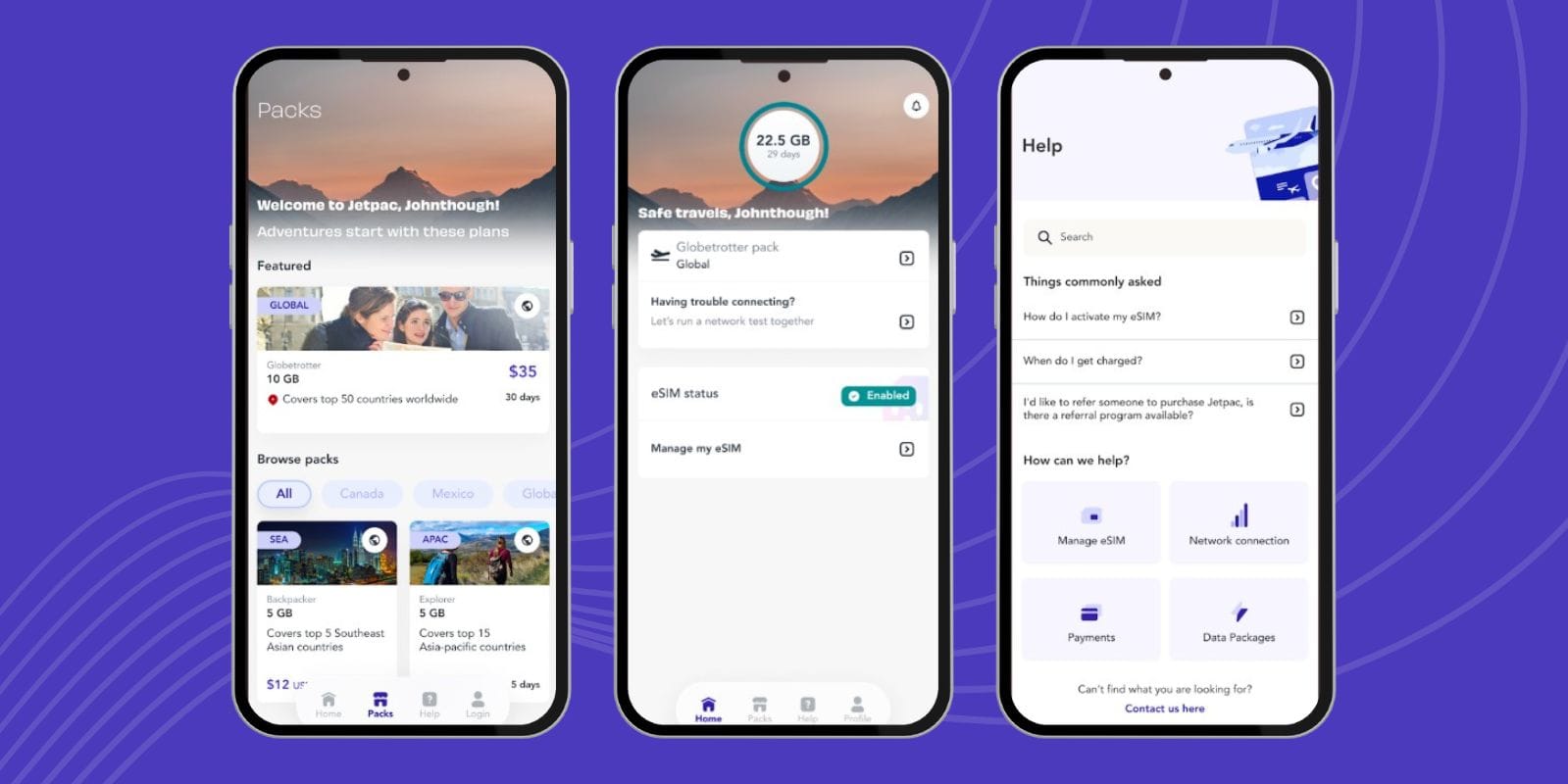
More travelers are choosing eSIMs because they make it much easier to stay connected abroad. Instead of searching for mobile shops, swapping tiny SIM cards, or paying roaming fees, you can activate a plan on your iPhone in minutes. With Jetpac, setup is quick, coverage is broad, and pricing is transparent, which is why many people consider it the most practical solution in 2025.
Simple activation process
With Jetpac, you don’t need to worry about inserting a SIM card or carrying extras while traveling. Once you buy a plan online, you’ll receive a QR code by email. You scan it in your iPhone’s settings, and the plan is ready to use right away. The entire setup usually takes less than five minutes.
Coverage across multiple regions
Jetpac partners with local carriers in more than 100 countries, so your iPhone connects to the best available network in each destination. Whether you’re in a busy European capital or a smaller city in Asia, you get access to reliable data without switching cards. This saves you from buying a different SIM card every time you cross a border.
No hidden costs
Traditional roaming plans often surprise travelers with extra charges, but Jetpac’s eSIMs are prepaid. You know exactly how much data you have and what it will cost before you start using it. This makes it easier to budget and avoids unexpected bills once you return home.
Flexibility with iPhone features
Modern iPhones, including the iPhone 16 eSIM, let you store multiple eSIM profiles at the same time. That means you can keep your home SIM active for calls and texts while using Jetpac for data. You can switch between plans in your settings whenever you need, without carrying multiple physical SIMs.
Convenience for frequent travelers
If you travel often, an eSIM saves you the hassle of managing multiple cards or visiting shops in every new country. You can install several regional plans in advance and simply toggle them on when you arrive. This makes Jetpac especially useful for business travelers and people taking multi-country trips.
For iPhone users, especially those with the iPhone 16 eSIM, this is the most seamless way to stay connected abroad. It’s no surprise that eSIM adoption has skyrocketed in 2025.
FAQs
Can you buy an international SIM card in the United States?
Yes, you can. Many companies ship physical international SIM cards to U.S. addresses, and they arrive ready to use when you travel. You can also buy an eSIM online from anywhere in the U.S. and activate it instantly without waiting for shipping.
How do I get my iPhone to work internationally?
First, check that your iPhone is unlocked; otherwise, it may not accept another carrier’s SIM card. Then, insert an international SIM or install an eSIM plan, and enable data roaming in your settings. Once that’s done, your phone will connect automatically when you arrive abroad.
Can I buy a SIM card to use internationally?
Yes. You can choose a physical SIM card that works across multiple countries, or purchase an eSIM for international travel. Many travelers prefer eSIMs now since they can be set up online in minutes and cover several destinations in one plan.
Does the international SIM card change your phone number?
With a physical SIM, you usually receive a new number from the foreign carrier. This can be useful for local calls, but it may make it harder to keep your original number active. With eSIMs, you can often keep your home number running alongside the travel data plan.
Do you keep your phone number with an international SIM card?
If you insert a physical SIM, your number changes to the one issued by that carrier. With an eSIM, many iPhones let you keep both your original number and your travel plan active at the same time. That way, you don’t miss important calls or texts while abroad.
What SIM card is best for international travel?
For most iPhone users, the best option is an eSIM for international travel. It gives you the freedom to activate a plan before leaving, use data in multiple countries, and avoid the hassle of swapping physical cards. Providers like Jetpac make this process simple and reliable.
The days of juggling tiny SIM cards are coming to an end. For most iPhone users, the smartest option in 2025 is to use an eSIM. Whether you’re crossing Europe by train, backpacking through Asia, or attending meetings across North America, an eSIM gives you peace of mind and flexibility.
If you’re wondering about other iPhone eSIM tips, check out our guide on how to transfer eSIM from Android to iPhone, especially useful if you’re upgrading devices before your trip.
With the right plan, your iPhone stays just as connected abroad as it does at home, and that makes travel smoother, safer, and more enjoyable.