Underrated Yet 20 Best Cities to Visit in Europe Ranked
The best cities to visit in Europe are often the ones beyond the spotlight, where architecture, food, and daily life feel authentic and unhurried. Discover destinations that reward curiosity and slower travel. While, a Jetpac eSIM supports seamless cross-border connectivity.
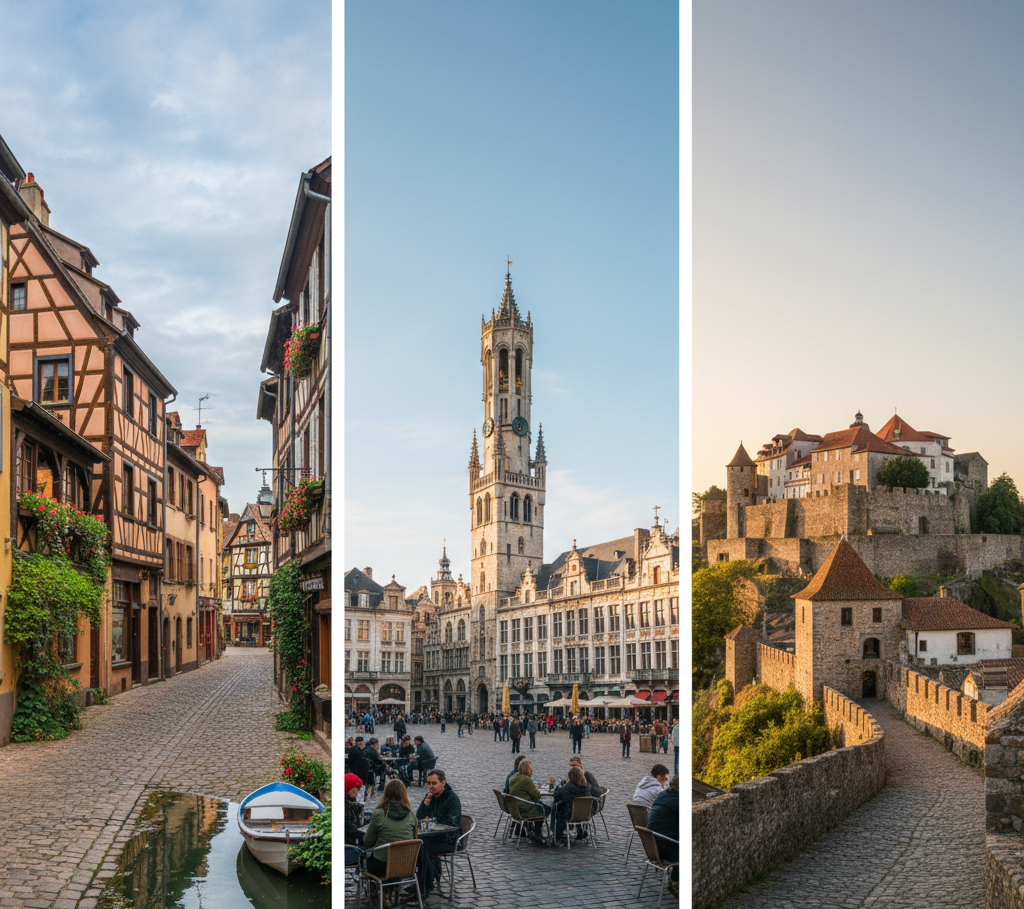
The best cities to visit in Europe stretch well beyond Paris, Rome, and Amsterdam. Across the continent, smaller and often-overlooked cities hold medieval old towns, extraordinary food scenes, and landscapes that stay with you long after you leave. The best part is that many of them cost significantly less and feel far more personal.
You might walk cobblestone lanes that smell faintly of wood smoke and fresh bread. You might find a harbor cafe where the coffee is strong, the view is free, and no one is rushing. Europe rewards slow, curious travelers, and these 20 cities are built exactly for that.
Before you go, one practical note: staying connected across borders is easier with a Jetpac Europe eSIM set up before departure, so you are not hunting for SIM cards the moment you land.
Which underrated cities in Europe are worth visiting for history?
When people think of the best cities in Europe to visit for history, they often land on Athens or Prague. These five cities offer just as much depth, with far less noise around them. If you're wondering how to plan a trip to Europe, consider adding these underrated historical gems to your itinerary.
1. Plovdiv, Bulgaria
Plovdiv is one of the oldest continuously inhabited cities in the world, with roots stretching back over 6,000 years (Plovdiv Municipality). Its Old Town sits across three hills, layered with Thracian, Roman, Ottoman, and Bulgarian Revival architecture, all within easy walking distance of each other.
The Roman amphitheater still hosts live performances under the open sky. The Revival-era houses lean over narrow cobbled lanes in shades of ochre and terracotta.
In the evenings, the Kapana creative quarter fills with the smell of grilled meats and local wine, and the pace drops to something close to perfect.
Why go: Few cities in Europe pack this much layered history into such a walkable, affordable, and genuinely warm setting.
2. Matera, Italy
Matera in southern Italy is one of the oldest human settlements on earth, with cave dwellings called Sassi that have been inhabited for roughly 9,000 years (UNESCO World Heritage List). It served as a European Capital of Culture in 2019 and has been slowly earning its place among the top European cities to see.
The city glows gold at dusk. Walking its ravine paths, you pass cave churches carved directly into rock, ancient grain stores, and small terraces that look out over a landscape that feels biblical in its stillness. Local food leans rustic: thick bread, aged cheese, and lamb slow-cooked with local herbs.
Why go: Matera is unlike anywhere else in Europe, a living cave city with an atmosphere no purpose-built destination can replicate.
3. Ghent, Belgium
Ghent often sits in the shadow of Bruges, but it arguably offers more. A university city with a medieval core, it sits at the confluence of the Leie and Scheldt rivers and has been a center of Flemish culture and trade since the Middle Ages.
Its skyline, three towers rising over the water, is one of the most quietly dramatic in northern Europe. The canal-side streets smell of waffles and hops. Ghent has a notably strong vegetarian food scene for a Belgian city, and its nightlife, galleries, and independent shops give it an energy Bruges simply does not have.
Why go: Ghent gives you the beauty of classic Flemish architecture with the pulse of a real, living city underneath it.
4. Valletta, Malta
Valletta is the smallest capital city in the European Union, but it carries an outsized cultural weight. Built by the Knights of St. John in the 16th century, it was designated a UNESCO World Heritage Site and served as a European Capital of Culture in 2018.
The city is dense with baroque churches, fortified walls, and sea views that stretch across the Grand Harbour. Afternoon light turns the honey-colored limestone warm and almost liquid.
Street food like pastizzi, flaky pastry filled with ricotta or mushy peas, costs less than a euro and tastes like the island itself.
Why go: Valletta is compact enough to cover in a day or two but layered enough to reward several.
Read more: Explore the best summer destinations in Europe for more inspiring warm-weather travel ideas across the continent.
5. Kotor, Montenegro
Kotor sits at the end of a deep Adriatic bay, ringed by steep limestone mountains and medieval walls that climb nearly 1,300 steps to a fortress above the city. It is one of the best-preserved medieval old towns in the Adriatic and a UNESCO World Heritage Site.
The old town is genuinely tiny, its lanes almost too narrow for two people walking side by side. Cats are everywhere, famously so. The air carries salt and stone.
Outside the walls, the bay is calm and extraordinarily blue, and small villages dot the shoreline in both directions.
Why go: Kotor offers Dubrovnik's drama and history at a fraction of the price and without the cruise ship crowds.
Which are the best cities to visit in Europe for art and culture?
These cities are among the best cities to visit in Europe if you want creative energy, layered local culture, and experiences that feel genuinely off the main tourist path.
6. Ljubljana, Slovenia
Ljubljana is the compact, walkable capital of Slovenia, a city of around 300,000 people that punches well above its size for culture, food, and livability. It sits in a valley surrounded by Alpine foothills, with a medieval castle on a forested hill rising directly above the old town.
The riverfront is lined with outdoor cafes, and in warmer months, the whole city seems to spill outside. Street art is common and often very good.
The food scene mixes Central European comfort, fresh Alpine produce, and a surprisingly strong coffee culture. Ljubljana is consistently ranked among the most sustainable cities in Europe.
Why go: It is one of the easiest, greenest, and most genuinely pleasant small capitals anywhere on the continent.
7. Tbilisi, Georgia
Tbilisi sits at the crossroads of Europe and Asia, and its culture reflects both. The city has been inhabited for at least 1,500 years and carries layers of Persian, Ottoman, Russian, and Georgian influence in its architecture, food, and daily life. Whether it counts as Euis for a reason.
The old town is all wooden balconies, sulfur baths, and narrow streets that turn and fold unpredictably. Georgian cuisine is extraordinary: khinkali dumplings, walnut-stuffed vegetables, slow-braised meats, and natural wine from one of the world's oldest wine regions.
The city hums with creative energy, particularly in its music and contemporary art scenes.
Why go: Tbilisi offers a depth and strangeness that few European cities can match, at prices that feel almost unreasonably low.
8. Porto, Portugal
Porto is one of the most atmospheric cities in all of Europe, built across steep hillsides above the Douro River. Its historic Ribeira district is a UNESCO World Heritage Site, and the city gave its name to port wine, which is still aged in lodges across the river in Vila Nova de Gaia.
Tiled facades, narrow staircase streets, and the smell of grilled fish and salt wind define the experience. The light in Porto has a particular quality, soft and slightly golden, even in winter. The Livraria Lello bookshop, often cited as one of the most beautiful in the world, is worth the short queue.
Porto is one of the most beautiful cities in Europe and is increasingly recognized as such.
Why go: Porto rewards slow exploration and has one of the most distinctive visual identities of any city in Europe.
9. Wrocław, Poland
Wrocław in southwestern Poland has changed hands many times over the centuries, passing between Polish, Bohemian, Prussian, and German rule before returning to Poland after World War II. That layered history left behind a remarkable mix of Gothic, Baroque, and Art Nouveau architecture clustered around one of the finest market squares in Central Europe.
The city sits on the Oder River, spread across a dozen islands connected by hundreds of bridges. Its gnome statues, scattered across the city as a nod to its anti-communist Orange Alternative movement, are genuinely charming rather than gimmicky.
The food and craft beer scene is excellent, and the student population keeps things lively year-round.
Why go: Wrocław is one of the most underrated and rewarding cities in Central Europe, with a historic center that rivals Kraków at a calmer pace.
10. Sarajevo, Bosnia and Herzegovina
Sarajevo is one of the most complex and compelling cities in Europe. It sits in a narrow valley in the Dinaric Alps and was historically known as the Jerusalem of Europe for the mosques, Orthodox churches, Catholic cathedrals, and synagogues that coexist within walking distance of each other.
The old bazaar, Baščaršija, smells of grilled cevapi and fresh-brewed Bosnian coffee served with Turkish delight on the side.
The city carries visible memory of the 1990s siege but also enormous resilience, and its people are among the most welcoming you will meet anywhere on the continent. History here is not distant; it is layered into every street corner.
Why go: Sarajevo is one of the most emotionally and culturally rich European cities to see, and one that deserves far more attention than it gets.
Read More: For meaningful keepsakes beyond typical souvenirs, read our blog 👉 best European souvenirs to bring home from each country
Which European cities are best for nature and scenic beauty?
These are among the most beautiful cities in Europe for travelers who want scenery, fresh air, and landscapes that feel genuinely spectacular.
11. Hallstatt, Austria
Hallstatt is a small lakeside village in the Austrian Salzkammergut region, sandwiched between a still Alpine lake and steep forested mountains. It is a UNESCO World Heritage Site and one of the most photographed places in Central Europe, yet outside summer peak weeks, it remains quiet and deeply beautiful.
The village has fewer than 800 permanent residents. Its wooden houses cling to the hillside above the lake, their reflections almost perfectly mirrored in the water on calm mornings.
Salt has been mined here for over 7,000 years, making it one of the oldest salt-mining sites in the world. The surrounding trails offer some of the finest Alpine walking in Austria.
Why go: Hallstatt is the rare place that actually looks like its photographs, and even better when the tour buses have left.
12. Sintra, Portugal
Sintra sits in the hills just 40 minutes west of Lisbon, and it feels like a different world entirely. Its forested ridges are dotted with colorful royal palaces, Moorish castle ruins, and eccentric 19th-century estates built by wealthy romantics who wanted to live inside a fairy tale.
The air is cooler and damper than in Lisbon, carrying the smell of eucalyptus and Atlantic wind. Fog drifts across the hilltops in the early morning.
The Pena Palace, painted in vivid yellow and red, sits above the clouds on clear days. Local pastry shops sell travesseiros, almond-and-egg custard pastries that are extremely good and hard to stop eating.
Why go: Sintra packs more visual drama and palace history into a small area than almost anywhere else in southern Europe.
13. Český Krumlov, Czech Republic
Český Krumlov in southern Bohemia is one of the best-preserved medieval towns in Central Europe. Its castle, the second largest in the Czech Republic after Prague, curves around a tight bend in the Vltava River and has been a UNESCO World Heritage Site since 1992.
The old town below the castle is almost absurdly picturesque: red-roofed buildings, riverside beer gardens, and stone bridges over green water.
In summer, visitors float the river in rubber rafts past the castle walls. Winter brings snow and near-silence, which is arguably when the town is at its most striking.
Why go: Český Krumlov is what Prague's old town might feel like if it had stayed smaller, quieter, and a little wilder.
14. Bergen, Norway
Bergen is the gateway to Norway's western fjords and one of the most dramatically situated cities in Northern Europe. It sits surrounded by seven mountains and looks out over a harbor that has been an active trading port since the 12th century. Its wooden wharf district, Bryggen, is a UNESCO World Heritage Site.
The city is famously rainy, which only adds to its atmosphere. Wooden houses in faded reds and yellows line the hillsides.
The fish market on the harbor sells fresh seafood alongside local jams, reindeer sausages, and cloudberry jam. The Fløibanen funicular climbs to a viewpoint that puts the whole city and its surrounding fjords into perspective in about eight minutes.
Why go: Bergen is one of the most beautiful cities in Europe for travelers who love coastal scenery, Nordic culture, and landscapes that feel genuinely immense.
15. Mostar, Bosnia and Herzegovina
Mostar is named for the bridge keepers who once guarded its famous Ottoman bridge, Stari Most, which was destroyed in 1993 and rebuilt in 2004 using stones from the original structure. It now stands as both a UNESCO World Heritage Site and a symbol of reconciliation in the Western Balkans.
The old bazaar around the bridge is one of the most atmospheric in the region: copper workshops, hand-woven textiles, strong coffee, and the sound of the Neretva River rushing green and fast below. Local divers still jump from the bridge in summer, a tradition that goes back centuries.
The surrounding landscape, limestone cliffs, turquoise water, and minarets visible above the rooftops, make Mostar one of the top European cities to see.
Why go: Mostar is small, striking, and genuinely moving, a city that has rebuilt itself and wears its history openly.
Which are the best European cities for food and local life?
These cities make the list of best cities in Europe to visit, not for grand monuments but for the quality of their daily life, markets, and food culture.
16. San Sebastián, Spain
San Sebastián, or Donostia in Basque, sits on a curved bay in the Basque Country of northern Spain and has more Michelin stars per capita than almost any city on earth. Its pintxos bars in the Parte Vieja old quarter are among the finest places to eat in all of Europe, with small plates of extraordinary quality lining every counter.
The city is also visually elegant: a long crescent beach, a Belle Époque seafront, and green hills on either side. The food culture here is deeply social. Eating is not just sustenance; it is the main event.
Txakoli white wine poured from height, fresh anchovy on bread, bacalao in a dozen preparations.
Why go: San Sebastián is the best place in Europe to eat well without a reservation, and one of the most beautiful small cities on the Atlantic coast.
17. Bologna, Italy
Bologna is the capital of Italian food culture. Ragù, mortadella, tortellini, and tagliatelle all trace their origins here, and the city's covered market, Mercato di Mezzo, and its surrounding delis and trattorias make it one of the most rewarding cities in Europe to eat in. It is also home to the oldest university in the Western world, founded in 1088 (University of Bologna).
The city center is almost entirely covered by medieval porticos, 38 kilometers of them, now a UNESCO World Heritage Site.
They keep you dry in the rain and cool in the heat, and walking them feels like moving through the city's living room. Bologna is one of the nicest places in Europe to visit for travelers who want food, history, and real Italian daily life rather than tourist-facing spectacle.
Why go: Bologna rewards visitors who eat slowly, walk its portico-lined streets, and resist the urge to rush to the next destination.
18. Chania, Greece
Chania is the second-largest city on Crete and widely considered its most beautiful. Its Venetian harbor, lighthouse, and old town lanes have a layered quality that reflects centuries of Minoan, Greek, Roman, Byzantine, Venetian, and Ottoman presence on the island.
The harbor at night is one of the better travel experiences in the Mediterranean: boat lights on water, the smell of grilled octopus and oregano, and enough open space to breathe.
The nearby White Mountains provide hiking and gorge walks, including the famous Samariá Gorge. Local food is deeply Cretan: dakos, lamb with stamnagathi, and honey from the mountain villages.
Why go: Chania gives you Greek island character, excellent food, real history, and access to some of the best hiking in the eastern Mediterranean.
19. Timișoara, Romania
Timișoara in western Romania was the first city in Europe to have electric street lighting, installed in 1884, and the first city where the 1989 Romanian Revolution began. It served as a European Capital of Culture in 2023. Despite this, it remains well below the radar for most visitors to Romania.
The city has a compact, walkable baroque center with three large connected squares, outdoor cafes, and a genuinely vibrant arts and music scene. It has a multicultural character shaped by Romanian, Hungarian, German, and Serbian communities living alongside each other for centuries.
Food is hearty and affordable: paprika-rich stews, smoked meats, and local wines from the surrounding region.
Why go: Timișoara is one of the best places to visit in Europe for travelers seeking Central European culture, history, and atmosphere without the crowds or prices of better-known cities.
20. Skopje, North Macedonia
Skopje is one of the most unusual capitals in Europe. Following a 2010 urban redevelopment project, the city center was filled with neoclassical statues, fountains, and facades at a scale that is hard to describe without seeing it. The result is divisive but undeniably memorable, and the contrast with the authentic Ottoman old bazaar, Čaršija, just across the river, makes it one of the most visually strange and fascinating cities on the continent.
The bazaar is one of the largest and best-preserved Ottoman bazaars outside Turkey. The smell of freshly baked bread, grilled meats, and Turkish coffee drifts through lanes lined with copperware and handmade textiles.
Skopje is one of the cheapest capitals in Europe and offers extraordinary value for travelers on a budget. It is among the best places to solo travel in Europe for those who want something genuinely different.
Why go: Skopje is odd, lively, affordable, and unlike anywhere else in Europe, which is exactly why it belongs on this list.
Staying connected across all these destinations
Traveling across 20 different cities and multiple countries means your phone connectivity needs to keep up. Switching SIM cards at every border is slow and adds up. Losing maps or translation tools in an unfamiliar city is more stressful than it sounds.
An international eSIM handles this cleanly. The best eSIM for Europe gives you coverage across multiple destinations without a physical SIM swap, and the best eSIM for Europe for unlimited data means you are not rationing hotspot use when you need it most.
Why Jetpac makes European city travel easier?
Travel across multiple countries requires consistent connectivity, not just data but flexible features that adapt to your movement. Here’s how Jetpac keeps everything smooth:
🌍 200+ Destinations Covered
A Jetpac eSIM works across more than 200 destinations worldwide, ensuring you stay connected whether exploring Belgium, Spain, or the Balkans.
🔥 Unrestricted Hotspot Sharing
Share your connection freely with laptops or travel companions without artificial limits, ideal for remote work and navigation.
📞 In-App International Calling
Jetpac offers in-app voice calling in 50+ countries, allowing you to contact hotels, taxis, or local businesses directly.
📡 Multi-Network Connectivity
Jetpac automatically connects to the strongest available carrier in each location for more stable service.
💸 Up to 70% Cheaper Than Roaming
Jetpac plans can cost significantly less than traditional roaming rates, helping control travel expenses.
An eSIM for Europe for unlimited data is especially useful when you are moving between countries quickly or relying on your phone for navigation, translation, and accommodation bookings all at once. If you’re comparing providers, explore the Best eSIM for Europe Travel to find the right option for your trip.
FAQs
What are the best cities to visit in Europe for first-timers?
For first-timers, the best cities to visit in Europe include Porto, Ljubljana, and Ghent. They are walkable, safe, visually rewarding, and less overwhelming than major capitals like Paris or Rome. Each offers a strong mix of history, food, and local atmosphere.
What is the best time to visit Europe?
The best time to visit Europe depends on your destination and travel style. Late spring (May to June) and early autumn (September to October) offer mild weather, fewer crowds, and lower prices than peak summer. Northern cities like Bergen are worth visiting year-round. Southern destinations like Chania and Valletta are best avoided in the August heat.
Which are the most beautiful cities in Europe for solo travelers?
For solo travelers, the most beautiful cities in Europe with the best atmosphere include Porto, Tbilisi, Sarajevo, and Wrocław. These cities are safe, easy to navigate alone, and have strong local social scenes that make it easy to meet people.
What should be on a packing list for Europe?
A practical Europe Packing List should include comfortable walking shoes, a lightweight rain jacket, a universal power adapter, a portable battery pack, and any required medications. A downloaded offline maps app and an eSIM set up before departure will save considerable stress on the road.
Which are the best places to solo travel in Europe beyond the tourist trail?
The best places to solo travel in Europe on the less-traveled side include Sarajevo, Skopje, Timișoara, and Plovdiv. All four are affordable, welcoming to solo visitors, easy to navigate on foot, and rich with history and food culture that rewards slow, independent travel.
What are the nicest places in Europe to visit on a budget?
The nicest places in Europe to visit without spending heavily include Skopje, Plovdiv, Sarajevo, Timișoara, and Kotor. Accommodation, food, and transport in the Western Balkans and Eastern Europe cost a fraction of what you would pay in Western European cities.
Which are the best sightseeing cities in Europe for history lovers?
The best sightseeing cities in Europe for history include Matera, Valletta, Kotor, and Mostar. Each carries UNESCO World Heritage status and offers a density of historical layers, from ancient cave dwellings to Ottoman bazaars, that holds up across multiple days of exploration.
What are the best places to visit in Europe beyond the usual tourist circuit?
The best places to visit in Europe that most travelers overlook include Wrocław, Chania, Bergen, Český Krumlov, and Sintra. These destinations sit just outside the standard tourist circuit but offer scenery, food, and history that rival anything on the classic route.
Which are the top European cities to see for art and creative culture?
The top European cities to see for creative culture include Ljubljana, Tbilisi, and Wrocław. Ljubljana has a strong, sustainable design and street art identity. Tbilisi has an internationally recognized music and contemporary art scene. Wrocław has a rich festival culture rooted in its complex, multicultural history.
What makes these European cities stand out from the standard tourist trail?
These European cities to see stand out because they offer the depth of better-known destinations with far fewer crowds, lower costs, and more direct contact with local life. They are best suited to travelers who want to explore at their own pace rather than move through an itinerary of famous landmarks.
Is eSIM cheaper than roaming?
In most cases, yes. Roaming rates from home carriers can be significantly higher than purchasing a regional eSIM plan. Travelers believe that a Jetpac Europe eSIM plan costs a fraction of standard roaming charges, especially for data-heavy usage.
Disclaimer
All information in this blog was accurate at the time of writing and is based on publicly available travel sources and historical records. City rankings, UNESCO references, transport access, pricing, and connectivity options may change over time. Travelers are advised to verify current details, opening hours, and service availability before making travel decisions. The publisher is not responsible for any updates or changes after publication.