15 Best Cities to Visit in Spain for First Timers
Spain is easiest to understand when your first trip focuses on a few well-chosen cities across regions. From Toledo and Córdoba to Valencia, Málaga, Cádiz, Bilbao, San Sebastián, and Ronda, streets, beaches, food, and history come together in a route that feels balanced and clear.
The best cities to visit in Spain range from hilltop medieval towns to reimagined industrial cities and ancient Atlantic ports, all connected by fast rail links.
The best places to see in Spain stretch from the Basque north to the Moorish south, and choosing a mix from both gives you the fullest picture. Spain's best travel destinations reward travellers who take the time to move beyond the two or three most famous names on the map.
Spain's best travel destinations are spread across the country, which means no two stops feel the same.
Before you fly, a Jetpac eSIM is a practical Spain travel eSIM option, with QR code activation and no airport SIM search needed.
Read More: Spain's history stretches back thousands of years and has plenty of details that surprise even well-travelled visitors. These fun facts about Spain are worth reading before you start building your itinerary from 20 Surprising Fun Facts About Spain You Didn't Know.

Which are the best cities to visit in Spain for first-timers?
Toledo
Spain's best travel destinations reward travellers who take the time to move beyond the two or three most famous names on the map. Toledo sits on a rocky hill above the Tagus River, about 34 minutes from Madrid by Avant high-speed train. It was Spain's imperial capital before Madrid and is known as "the city of three cultures" for its long shared history of Christian, Muslim, and Jewish communities.
- Top Sights: Toledo Cathedral, Alcázar of Toledo, Monastery of San Juan de los Reyes
- Cultural History: Toledo served as the Visigothic capital in the 6th century, then became a center of Moorish scholarship, and later a seat of Christian rule after the Reconquista. All three layers remain visible in the streets today.
- Local Food to Try: Marzipan, a Toledo tradition dating back to medieval times, is sold in bakeries across the old city.
Salamanca
Salamanca is a university city in western Castile and León, built almost entirely from warm golden sandstone that glows in the afternoon light. It is one of the most engaging places to go in Spain for anyone drawn to medieval architecture, academic history, and lively plaza culture.
- Top Sights: Plaza Mayor, University of Salamanca, Casa de las Conchas
- Cultural History: Salamanca's old city is a UNESCO World Heritage Site. Its university, founded in 1218, that helped shape the Spanish language and drew scholars from across medieval Europe.
- Local Food to Try: Hornazo, a savory pastry filled with cured pork loin and boiled eggs, is tied to the city's student culture.
Bilbao
Bilbao is a Basque city in northern Spain that went from industrial decline to one of Europe's most admired cultural transformations. The Guggenheim Museum Bilbao, opened in 1997, anchored a revitalised waterfront that now draws visitors from around the world.
- Top Sights: Guggenheim Museum Bilbao, Casco Viejo, Mercado de la Ribera
- Cultural History: Once a major steel and shipbuilding hub, Bilbao's collapse in the 1980s led to a city-wide cultural regeneration that became a global urban planning model.
- Local Food to Try: Pintxos with txakoli wine, best eaten standing at a bar in the Casco Viejo.
Read More: Spain has excellent value when you know where to look, from free museum hours to affordable set-price lunch menus. This blog on how to save money while travelling covers practical strategies that work especially well on a city-hopping trip, from How to Save Money While Traveling Without Sacrificing Fun.
San Sebastián
The best cities in Spain each carry a distinct identity shaped by geography, history, and culture. San Sebastián, known locally as Donostia, curves around a perfect bay on Spain's Atlantic coast in the Basque Country. It consistently ranks among the best cities to visit in Spain for food, with one of Europe's highest concentrations of Michelin-starred restaurants packed into its compact old city.
- Top Sights: La Concha Beach, Parte Vieja, Monte Igueldo
- Cultural History: A fashionable royal summer retreat in the 19th century, San Sebastián now hosts its internationally respected Film Festival every September.
- Local Food to Try: Gilda, a pintxo of anchovy, green olive, and pickled pepper on a skewer, considered the original Basque pintxo.
Cádiz
Cádiz is one of the oldest continuously inhabited cities in Western Europe, founded by the Phoenicians around 1100 BC on a narrow Atlantic peninsula. It stands among the most beautiful cities in Spain that many first-time visitors tend to overlook.
- Top Sights: Cádiz Cathedral, Torre Tavira, Castillo de San Sebastián
- Cultural History: Cádiz was Spain's primary Atlantic gateway during the colonial era. Spain's first liberal constitution was signed here in 1812, giving the city the nickname "La Pepa."
- Local Food to Try: Tortillitas de camarones, thin crispy shrimp fritters sold at markets and tapas bars throughout the old city.
Córdoba
Córdoba was the most powerful city in Western Europe during the Umayyad Caliphate in the 10th century, and its monuments reflect that extraordinary peak. It is one of the best places to travel in Spain for anyone drawn to Islamic architecture and layered medieval history.
- Top Sights: Mezquita-Catedral, Alcázar de los Reyes Cristianos, Jewish Quarter
- Cultural History: At its peak, Córdoba had an estimated population of 500,000 and was a world center of science, medicine, and philosophy. The Mezquita-Catedral layers centuries of mosque and cathedral construction under one roof.
- Local Food to Try: Salmorejo, a thick chilled tomato soup topped with olive oil, boiled egg, and jamón serrano.
Read More: If Barcelona is part of your Spain plan, this guide on how many days in Barcelona you actually need helps you build a realistic itinerary without overbooking or rushing nearby stops, from How Many Days in Barcelona Do You Really Need?
Ronda
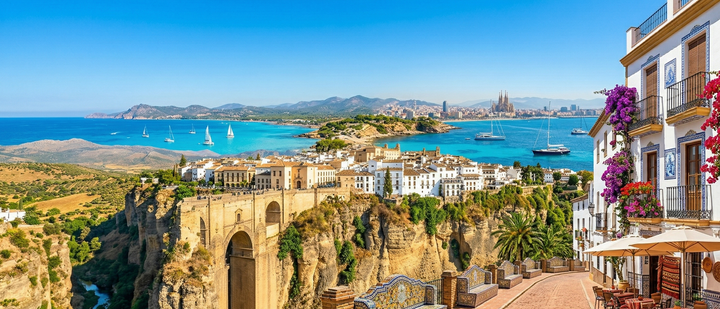
Ronda is consistently listed among the most beautiful cities in Spain for its dramatic gorge setting and intact Moorish architecture.
Ronda is a clifftop city in Málaga province, split by the El Tajo gorge, a canyon around 120 metres deep that cuts straight through the city centre. It is one of the most dramatic places to go in Spain and works well as a standalone destination or a day trip from the coast.
- Top Sights: Puente Nuevo, Plaza de Toros de Ronda, Arab Baths
- Cultural History: Ronda has Celtiberian, Roman, and Moorish roots spanning over 2,000 years. Its 1785 bullring is one of Spain's oldest and is linked to the Romero family's role in formalizing bullfighting.
- Local Food to Try: Migas, a pan-fried breadcrumb dish with pork and peppers, is common across Andalusia.
Valencia
Valencia is Spain's third-largest city on the Mediterranean coast, blending Roman history with a world-class food scene and futuristic waterfront architecture. It is widely considered among the best cities to visit in Spain for tourists who want variety, with coastline, culture, and cuisine all within reach.
- Top Sights: City of Arts and Sciences, Valencia Cathedral, Mercado Central
- Cultural History: Founded by the Romans in 138 BC, Valencia is the birthplace of paella, originally cooked over open wood fires using local rice, rabbit, chicken, and vegetables.
- Local Food to Try: Authentic Valencian paella with rabbit, chicken, green beans, and white beans.
Málaga
Málaga is a port city on the Costa del Sol with over 2,800 years of continuous settlement and a fast-growing contemporary arts scene. The birthplace of Pablo Picasso, it is one of the best places to travel in Spain for visitors who want culture alongside the coastline.
- Top Sights: Alcazaba of Málaga, Picasso Museum Málaga, Gibralfaro Castle
- Cultural History: Founded by the Phoenicians around 770 BC, Málaga was later shaped by Roman and Moorish rule. Its 11th-century Alcazaba is one of the best-preserved Moorish fortresses in Spain.
- Local Food to Try: Espetos, fresh sardines grilled on bamboo skewers over beach fires, best eaten at a waterfront chiringuito.
Madrid
Madrid is Spain's capital and largest city, sitting at the geographic center of the Iberian Peninsula. It is one of the best cities in Spain and a natural starting point for any first-time visit.
- Top Sights: Prado Museum, Retiro Park, Puerta del Sol
- Cultural History: Madrid became Spain's capital in 1561 under King Philip II. It is now home to the "Golden Triangle of Art," three world-class museums within easy walking distance of each other.
- Local Food to Try: Bocadillo de calamares, a squid ring sandwich sold at bars near the Plaza Mayor, a true Madrid street food staple.
Seville
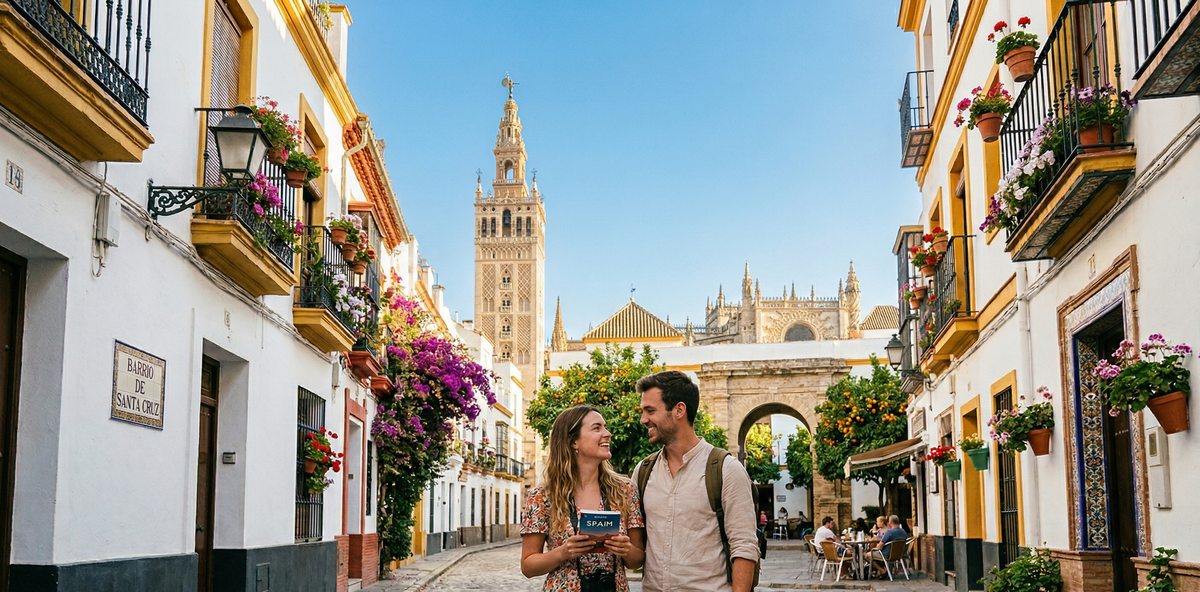
Seville is Andalusia's capital, known for flamenco, orange-tree-lined streets, and dramatic Moorish architecture. It is one of the best cities to visit in Spain for atmosphere and cultural depth on a first trip.
- Top Sights: Real Alcázar, Seville Cathedral, Plaza de España
- Cultural History: Seville was the center of Spain's trade with the Americas in the 16th and 17th centuries, making it one of the wealthiest cities in Europe at its peak.
- Local Food to Try: Huevos a la flamenca, baked eggs with tomato sauce, chorizo, and vegetables, served in individual clay pots.
Granada
Granada sits at the foot of the Sierra Nevada and is home to the Alhambra, one of the most visited monuments in Europe. It is among the best cities in Spain for Moorish history and mountain scenery.
- Top Sights: Alhambra and Generalife, Albaicín Quarter, Granada Cathedral
- Cultural History: Granada was the last Moorish kingdom in Spain, surrendering to the Catholic Monarchs in 1492. The Alhambra, built between the 13th and 14th centuries, stands as a pinnacle of Islamic architecture in Europe.
- Local Food to Try: Free tapas with every drink, a Granada tradition kept alive in bars across the city center and Albaicín.
Segovia
Segovia is a compact Castilian city 30 minutes from Madrid by high-speed train, home to one of the world's best-preserved Roman aqueducts. It is one of Spain's best travel destinations for a rewarding day trip from the capital.
- Top Sights: Roman Aqueduct of Segovia, Alcázar of Segovia, Segovia Cathedral
- Cultural History: Segovia's aqueduct was built in the 1st or 2nd century AD without mortar and supplied water to the city for centuries. The fairy-tale Alcázar reportedly inspired Walt Disney's Cinderella Castle design.
- Local Food to Try: Cochinillo asado, slow-roasted suckling pig with crispy skin, the city's most celebrated dish and a Castilian staple.
Pamplona
Pamplona is the capital of Navarre in northern Spain, known internationally for the San Fermín festival but rich in medieval history year-round. It is one of the most distinctive places to go in Spain.
- Top Sights: Pamplona City Walls, Casco Antiguo, Pamplona Cathedral
- Cultural History: Founded by the Roman general Pompey around 74 BC, Pamplona later served as the medieval capital of the Kingdom of Navarre and sits along the Camino de Santiago pilgrimage route.
- Local Food to Try: Pimientos del piquillo rellenos, small roasted peppers stuffed with salt cod or meat, a Navarrese specialty found throughout the old town.
Alicante
Alicante is a Mediterranean port city with a well-preserved hilltop castle, a lively old quarter, and a long seafront promenade. It is one of the best places to see in Spain for a relaxed coastal base.
- Top Sights: Santa Bárbara Castle, Explanada de España, Barrio de la Santa Cruz
- Cultural History: Alicante has been inhabited since at least the 5th century BC and served as a key Roman port known as Lucentum. Its 16th-century castle sits 166 meters above sea level on a clifftop over the city.
- Local Food to Try: Arroz a banda, rice cooked in fish stock and served in two courses, first the rice, then the fish separately, a genuine coastal tradition.
Stay Connected Across Every City in Spain
The best cities to visit in Spain span the entire country, and staying connected between them is essential. Moving through several Spanish cities means your connection needs to keep up. Whether you are checking high-speed train times between stops, looking up maps in an unfamiliar old town, or booking museum tickets on the go, reliable mobile data is a practical part of the trip. Spain's best travel destinations span nine distinct regions, each with its own carrier coverage requirements. Still searching for the best eSIM for Spain? QR code activation, multi-network 5G switching, and coverage across all nine destinations on this list make Jetpac a strong choice.
A Jetpac Spain eSIM activates via QR code before you leave home, so you are online from the moment you land. It runs on prepaid 5G, works in 200+ destinations, and switches between networks automatically for the best signal in each city. For those comparing eSIM plans for Spain across multiple providers, Jetpac is a flexible prepaid option with no physical SIM card required.
📡 One Plan Across Every Spanish Region: A Jetpac eSIM offers unrestricted hotspot sharing, no per-device fees, and no configuration required between islands and the mainland.
🗺️ Google Maps and WhatsApp Stay On After Data Runs Out: Jetpac makes sure that essentials like navigation and messaging keep working even at zero balance, so no one gets lost in the Albaicín or misses a Renfe connection.
⚡ Switches Automatically to the Strongest Spanish Carrier: From Barcelona's 5G to the Sierra Nevada's remote signal, Jetpac connects to the best available network at every location.
💸 Up to 70% Cheaper Than US Carrier Roaming: A Spain travel eSIM from Jetpac offers plans up to 70% cheaper than traditional roaming.
📞 Calls to the USA for $1.99 per 5 Minutes: A Jetpac eSIM makes sure you are always connected to your loved ones with its in-app calling feature. Built directly into the Jetpac app. No separate international plan needed.
✅ 100% Money-Back Guarantee: 24/7 support via WhatsApp and email throughout your time in Spain.
FAQs
Which is the prettiest city in Spain?
Many travellers point to San Sebastián for its La Concha Bay and elegant seafront promenade. Toledo and Ronda are also frequently cited for their dramatic hilltop and clifftop settings, which are unlike anything else in the country.
Which are the five largest cities in Spain?
As of 2026, Spain's five largest cities by population are Madrid, Barcelona, Valencia, Zaragoza, and Seville, in that order.
Which are the Top 3 Cities to visit in Spain?
For first-timers, Madrid, Barcelona, and Seville are the most commonly recommended starting points. Among the best cities to visit in Spain beyond those three, Valencia and San Sebastián rank consistently high. The best places to see in Spain span the whole country, so mixing northern and southern stops gives a richer experience.
What is the 97 Rule in Spain?
The 97 rule is not a widely standardised term in Spanish tourism or general travel guidance. In some property law and urban planning contexts, Spanish regulations reference high-percentage consensus thresholds for community decisions in buildings or redevelopment areas.
Where should I go for the first time in Spain?
The best cities in Spain for first-time visitors balance accessibility with genuine cultural depth. Toledo is a strong starting point. It is close to Madrid, walkable, and covers a wide stretch of Spanish history in one visit.
Disclaimer
This information is based on publicly available data at the time of writing and is intended for general reference only. Travel conditions, prices, and local experiences may vary. Jetpac is not responsible for network performance or third-party data accuracy. No endorsement of specific destinations or services is implied. Travelers should verify current travel advisories, entry requirements, and local conditions before making plans.