
Best Places to Live in Australia: Advantages, Disadvantages & Cost
The best places to live in Australia depend on what you value most: jobs, space, weather, or cost. Sydney and Melbourne offer big-city energy, while Brisbane, Adelaide, Perth, Canberra, and Hobart can feel calmer and more livable day to day. Plan around housing first, then lifestyle.
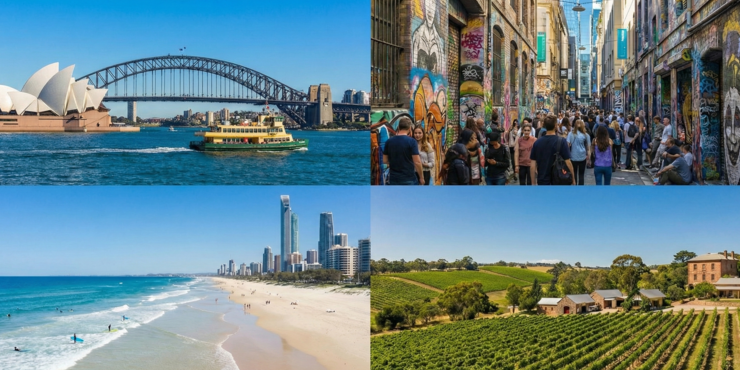
Sun hits differently in Australia. Bright, clean, almost sharp. Mornings can feel simple. Coffee in hand, a breeze off the water, people walking dogs in shorts, even when the air is cool. If you are moving, the first few weeks are usually a blur of apartment inspections, unfamiliar roads, and quick decisions that feel bigger than they should.
When people search best places to live in Australia, they are usually asking a practical question. Where will life feel easiest day to day, and where will it quietly drain you. A steady internet connection helps more than you expect during that settling phase. Jetpac eSIM for Australia is one option some travelers use to stay online while they handle maps, inspections, and admin on the move.
Australia does rank well in global liveability conversations, with Melbourne, Sydney, and Adelaide appearing in the top ten of the Economist Intelligence Unit’s 2025 Global Liveability Index. That said, housing pressure is real, and rental conditions can still feel tight even when rent growth slows.
How these picks were chosen
To narrow down the best areas in Australia to live, we have looked at the things that shape everyday life:
- Housing pressure and rental reality
- Job access and commute patterns
- Walkability and public transport
- Healthcare access
- Safety and general day-to-day ease
- Weather and outdoor lifestyle
- How easy it is to build routines
Best city to live in Australia
If you want the most balanced answer to the best city to live in Australia, it depends on what you value most:
- If you want the strongest mix of jobs and global-city energy, Sydney often wins.
- If you want culture, walkability, and a strong everyday rhythm, Melbourne is the usual pick.
- If you want breathing room on budget without giving up city comforts, Brisbane or Adelaide can feel more livable.
This is why the “one winner” approach rarely works. The best places to live in Australia change depending on your budget, your tolerance for commuting, and the kind of weekend you want.
Best place to live in Australia with a family
The best place to live in Australia with a family is usually not the flashiest city. It is the place where routines feel lighter.
Three strong family-oriented options tend to be:
- Adelaide for value and day-to-day simplicity, plus a strong liveability reputation.
- Brisbane for space and outdoor living, especially if you want warmer winters.
- Canberra for planned suburbs and predictable access to services, if the quieter social pace suits you.
If you need a single answer for the best place to live in Australia with a family, Adelaide is often the calm middle ground: manageable scale, easier housing pressure than Sydney, and a slower weekly rhythm.
1) Sydney
Sydney feels bright and high-energy. The harbour light, the coastal walks, the sense that you can finish work and still squeeze in a swim. It is also the city where housing can dominate your choices. Domain’s rental reporting has shown Sydney rents at record highs, even during periods of slower growth.
Advantages
- Big job market and strong earning potential
- Beaches and outdoor lifestyle are built into the week
- Great food across neighbourhood pockets
Disadvantages
- Housing cost pressure and competition
- Commutes can quietly take over your day
Best places to live in Sydney, Australia
- Newtown and Marrickville for food, pubs, and walkability
- Crows Nest and Neutral Bay for convenience and a calmer feel
- Manly and Dee Why for beach routines
- Randwick for access and a steady neighbourhood vibe
- Ryde for family practicality and space value
- Parramatta for a more central-west base with growing infrastructure
Sydney is one of the best areas in Australia to live if your priority is career momentum and coastal life, and you can handle the housing trade-off.
2) Melbourne
Melbourne is built around small rituals. A flat white in a quiet laneway café. Trams that shape the city’s pace. Markets, galleries, footy season, and dinners that stretch long without feeling rushed. In the EIU 2025 liveability list, Melbourne ranks very highly.
Advantages
- Strong cultural life and social variety
- Walkability in many inner areas
- Good balance for people who like routines
Disadvantages
- Weather mood swings
- Rental competition in popular inner suburbs
Best places to live in Melbourne, Australia
- Fitzroy and Brunswick for culture, cafés, and late nights
- Richmond for convenience and quick access across town
- St Kilda and Brighton for bayside routines
- Camberwell for a quieter, family-friendly rhythm
- Bentleigh for space and a practical day-to-day feel
- Footscray for value, food, and a changing inner-west edge
Melbourne is often the best city to live in Australia for people who want a strong everyday lifestyle, not just work and weekends.
3) Brisbane
Brisbane feels easier on the body. Warmer winters, more space, and a slower tempo that still supports city living. It suits people who want outdoor routines: early walks, weekend drives, evenings that do not require planning.
Advantages
- Often more space for your money compared with Sydney
- Warm weather supports year-round outdoor life
- A calmer weekly rhythm
Disadvantages
- Humidity in summer
- Storm season can affect plans
Brisbane is one of the best places to live in Australia if you want comfort and space, without losing the benefits of a major city.
4) Perth
Perth can feel like a reset. Wide skies, clean beaches, and a slower pace that makes weekdays feel less compressed. It is a great option if you like the ocean and prefer a city that does not constantly feel crowded.
Advantages
- Beach lifestyle with space
- Quieter commutes in many areas
- Strong local identity
East Coast
- Distance from the East Coast
- The job market can be more industry-specific
Perth fits the “nicest place in Australia to live” idea for many people who want sun, sea, and calm.
5) Adelaide
Adelaide has a gentle rhythm. Markets, wineries nearby, good food, and a city scale that is easy to learn. It also shows up strongly in global liveability rankings.
Advantages
- More manageable housing baseline than Sydney
- Easy access to nature and weekends away
- Slower pace that supports routines
Disadvantages
- Smaller job market in some fields
- Nightlife is quieter than in bigger cities
For many, Adelaide is the best place to live in Australia with a family because it balances comfort and cost without feeling isolated.
6) Canberra
Canberra is planned. Green. Quiet in a way that can feel comforting or flat, depending on your personality. It suits people who like structure, parks, and predictable services.
Advantages
- Stable work options in certain sectors
- Planned suburbs and lots of green space
- Clear day-to-day systems
Disadvantages
- Cooler winters
- Social life can feel smaller
Canberra often lands on lists of the best areas in Australia to live for people who prioritize stability and a low-friction daily routine.
7) Hobart
Hobart feels close to nature. Crisp air, slower streets, and a weekend culture that leans into food, art, and outdoors. It can be a beautiful fit if you do not need a large job market on your doorstep.
Advantages
- Nature-first lifestyle
- Compact city feel
- Slower pace that can be restorative
Disadvantages
- Smaller job market
- Winters feel colder and longer than many expect
Hobart can be the nicest place in Australia to live if your version of “nice” includes quiet evenings, cool air, and space to breathe.
Cost overview in USD
Housing is the biggest swing, especially in Sydney. Domain reporting highlights Sydney rents remaining at high levels, even when growth slows. The ABS (Australian Bureau of Statistics) also notes how rent changes vary by distance from city centres and tenant turnover, which is why two people in the same city can have very different housing stories.
To keep everything consistent, the USD conversions below use the Reserve Bank of Australia's AUD to USD representative rate (around 0.685 USD per 1 AUD in late January 2026).
These are broad ranges to help you plan, not promises. They blend rent, groceries, transport, and utilities using commonly referenced cost benchmarks and city comparisons.
If you are moving with a partner, costs often scale closer to 1.6x to 1.9x of a solo baseline, mostly because housing and utilities tend to rise with space needs.
Connectivity while you settle in
When you are finding housing, the internet becomes more than convenient. You need it for inspections, banking, maps, and quick calls with agents or landlords. If you land as a visitor first, an eSIM Australia for tourist setup can keep you online from day one, even before you lock in a long-term plan.
If you are comparing options, the best esim for Australia is usually the one that stays stable across different neighbourhoods, not the one that looks cheapest. Many people start with simple eSIM plans Australia travelers use, then switch once they know where they will live.
Jetpac eSIM for Australia is one option people use when they want a simple setup.
For many newcomers, having an eSIM Australia for tourist option during the first weeks keeps things simple while you settle.
FAQs
Is Australia a good place to live?
For many people, yes. Australia scores well on liveability, and cities like Melbourne, Sydney, and Adelaide have ranked in the global top ten in 2025. The trade-off is housing pressure, especially in major capitals.
What are the best places to live in Sydney, Australia?
The best places to live in Sydney, Australia, usually depend on whether you prioritise beaches, walkability, or commute time, but housing costs and rental competition are the main trade-offs for most newcomers.
What are the best places to live in Melbourne, Australia?
The best places to live in Melbourne, Australia, are often chosen for daily convenience and lifestyle, since Melbourne tends to score strongly in global liveability rankings and offers plenty of neighbourhood variety across inner and family-friendly areas.
What are the best areas in Australia to live if you want value without feeling remote?
The best areas in Australia to live for value are usually mid-sized capitals or well-connected outer hubs, because rent and overall housing pressure can be lower than in Sydney while still offering good services and day-to-day ease.
What is the nicest place in Australia to live for a calmer everyday lifestyle?
The nicest place in Australia to live often comes down to what “nice” means to you. Still, many people associate it with a slower pace, access to nature, and a shorter commute, rather than a high-density city lifestyle.
Disclaimer
Prices and data are based on publicly available information and may change. All cost ranges are approximate mid-range estimates, shown in USD using a representative AUD-to-USD rate from the Reserve Bank of Australia, and will vary by suburb, season, and lifestyle. eSIM performance depends on local networks and conditions. Jetpac is not responsible for network variations, coverage gaps, or third-party information. No product endorsement is implied. Always verify the latest details before making decisions.