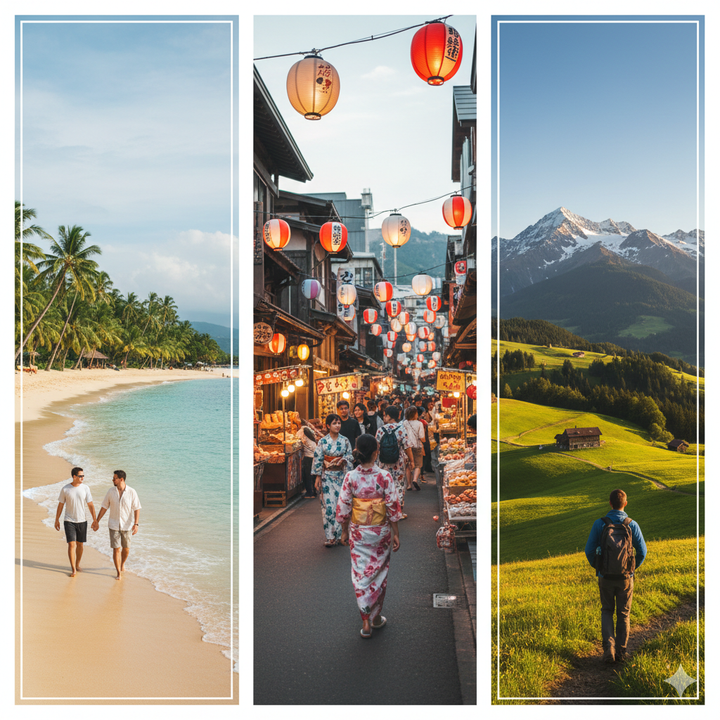
15 Cheap International Summer Vacation Destinations
Smart travelers are choosing cheap summer vacations abroad where exchange rates and lower daily costs are the real savings. Compare global destinations that deliver culture and value, stay connected from the moment you arrive with a Jetpac eSIM for seamless travel.

Summer travel in 2026 feels more expensive than ever at home. Domestic flights are crowded, hotels in US beach towns charge peak-season premiums, and even road trips add up faster than expected. What many American travelers miss is that cheap summer vacations outside the US can often cost less than a week in Miami or San Diego once you factor in exchange rates and the dramatically lower cost of living in much of the world.
A destination qualifies as budget-friendly when your daily spending on food, accommodation, and transport stays comfortably under USD 60, often under USD 40. Favorable exchange rates against the US dollar in Eastern Europe, Southeast Asia, and Latin America stretch your money further with every meal, taxi, and museum ticket.
These summer destinations on a budget offer more value, more culture, and more memorable experiences than most domestic alternatives at the same price.
Before you go, setting up a Jetpac eSIM saves you from expensive roaming charges the moment you land.

Europe
1. Krakow, Poland
One of the best-preserved medieval cities in Europe, Krakow sits beside the Vistula River in southern Poland with a castle, a vast market square, and a UNESCO-listed old town that costs almost nothing to explore on foot. The city is one of the most affordable summer vacations in Eastern Europe for US travelers, with the Polish zloty offering strong value against the dollar.
Daily budget: USD 35-50 approximately
Why go: History, food, and excellent craft beer at prices that feel unreal.
2. Sofia, Bulgaria
Sofia is one of the cheapest capitals in Europe and one of the most underrated budget summer destinations on the continent. Roman ruins, Orthodox churches, and Soviet-era monuments sit alongside a lively cafe and bar scene, all priced well below Western European standards.
Daily budget: USD 30-45 approximately
Why go: Maximum European city experience at minimum cost.
3. Sarajevo, Bosnia and Herzegovina
Sarajevo sits in a valley in the Dinaric Alps and offers one of the most culturally layered experiences in Europe. Ottoman bazaars, Austro-Hungarian architecture, and a resilient local food scene make it one of the most rewarding, affordable summer vacations you can take from the US. Bosnian coffee and cevapi grilled meat are both exceptional and extremely cheap.
Daily budget: USD 30-45 approximately
Why go: Depth of culture and history at some of the lowest prices in Europe.
4. Tirana, Albania
Tirana is emerging fast as one of Europe's most interesting cheap summer vacations. The Albanian lek goes a long way, the food scene is excellent, and the surrounding mountains and Adriatic coastline are within easy reach for day trips.
Daily budget: USD 25-40 approximately
Why go: One of the best places to travel in August if you want European beach and city culture without the crowds or costs of the West.
5. Tbilisi, Georgia
Tbilisi offers a rare combination of ancient culture, extraordinary food, natural wine, and some of the most affordable summer travel destinations anywhere in the broader European region. The lari is weak against the dollar, making every meal, guesthouse, and taxi ride remarkably inexpensive.
Daily budget: USD 30-50 approximately
Why go: World-class food and wine culture at Southeast Asian price levels.
Asia
6. Hanoi, Vietnam
Hanoi is one of the great cheap summer vacations in Southeast Asia. The Vietnamese dong stretches far, street food is world-class and costs under USD 2 a bowl, and the city's French colonial architecture and ancient Old Quarter reward days of slow exploration.
Daily budget: USD 25-40 approximately
Why go: One of the best places to visit in July for food lovers who want maximum flavor at minimum spend.
7. Chiang Mai, Thailand
Chiang Mai in northern Thailand is cooler than Bangkok in summer and far cheaper than the southern islands. Temple culture, night markets, cooking classes, and jungle treks are all accessible on a tight budget, and accommodation ranges from excellent hostels to boutique guesthouses at very reasonable rates.
Daily budget: USD 30-50 approximately
Why go: The best mix of culture, nature, and affordability in Southeast Asia.
8. Bali, Indonesia
Bali remains one of the most popular affordable summer vacations for Americans heading to Asia. The rupiah goes a long way, mid-range accommodation is excellent value, and the combination of rice fields, temples, surf beaches, and jungle makes it one of the most visually diverse destinations on this list.
Daily budget: USD 35-55 approximately
Why go: Resort-quality experiences at a fraction of what you would pay in comparable beach destinations.
9. Hoi An, Vietnam
Hoi An is a beautifully preserved ancient trading port on the central Vietnamese coast and one of the most photogenic and inexpensive summer vacations in Asia. Tailor-made clothing, lantern-lit riverside restaurants, and nearby beaches combine to make it an outstanding value.
Daily budget: USD 25-40 approximately
Why go: Combines beach access, history, food, and exceptional affordability in one compact town.
10. Siem Reap, Cambodia
Siem Reap is the gateway to Angkor Wat, the largest religious monument on earth, and one of the most rewarding cheap summer vacations in Southeast Asia. Outside the temple complex entrance fee, daily costs are extremely low, with cheap street food, affordable guesthouses, and free local markets.
Daily budget: USD 25-40 approximately
Why go: One of the world's great historical sites at one of the world's most affordable price points.
Latin America and Beyond
11. Medellín, Colombia
Medellin has transformed into one of the most talked-about affordable summer vacations in the Americas. The Colombian peso offers strong value for dollar travelers, the city's spring-like climate earns it the nickname City of Eternal Spring, and its food, nightlife, and cable car neighborhoods make it genuinely exciting.
Daily budget: USD 35-55 approximately
Why go: A modern, vibrant city with excellent infrastructure and a very favorable exchange rate.
12. Mexico City, Mexico
Mexico City is one of the cheap international summer vacations hiding in plain sight. Flights from the US are short and often inexpensive, the peso stretches well, and the city offers world-class museums, markets, food, and architecture at prices far below comparable European capitals. For a deeper look at neighborhoods, attractions, and planning tips, check out our Mexico City Travel Guide.
Daily budget: USD 40-60 approximately
Why go: Global-city experiences at developing-world prices, with easy access from most US airports.
13. Lima, Peru
Lima sits on the Pacific coast and has become one of the most respected food cities in the world, making it a standout choice for travelers who want serious culinary experiences without fine-dining prices. Ceviche, anticuchos, and pisco sours at local markets cost a few dollars each.
Daily budget: USD 35-55 approximately
Why go: World-class food scene, coastal scenery, and a strong cultural calendar at genuinely low daily costs.
14. Antigua, Guatemala
Antigua is one of the best-preserved Spanish colonial cities in the Americas and one of the most inexpensive summer vacations available to US travelers in Central America. Surrounded by three volcanoes, the city offers Spanish language schools, excellent coffee from nearby highlands, and easy access to indigenous markets and Mayan ruins.
Daily budget: USD 30-50 approximately
Why go: Colonial beauty, volcano scenery, and local culture at some of the lowest prices in the Americas.
15. Marrakech, Morocco
Marrakech offers one of the most immersive budget travel experiences accessible from the US. The medina, souks, riads, and the Djemaa el-Fna square deliver a sensory experience unlike anywhere else, and the Moroccan dirham makes it genuinely low-cost summer trip material for budget-conscious travelers.
Daily budget: USD 35-55 approximately
Why go: Extraordinary atmosphere, food, and architecture at price levels that make European beach destinations look expensive.
How to plan a summer vacation on a budget?
Finding Affordable Flights
Book at least three to four months ahead for summer travel. June through August is peak season globally, and prices climb quickly after March. Use flexible date search tools to find the cheapest travel windows, and check alternative departure airports if you live near a major hub. Flying midweek consistently costs less than weekend departures. Cities in Eastern Europe and Central America are often served by connecting flights through secondary hubs that undercut direct routes significantly.
Accommodation Tips
Hostels in Eastern Europe and Southeast Asia regularly offer private rooms for USD 15-25 per night, often cleaner and better located than equivalent budget hotels. Apartment rentals through short-term platforms beat hotel pricing for stays of four or more nights and add kitchen access, which cuts food spending considerably.
In cities like Krakow, Hanoi, and Medellin, staying one neighborhood away from the main tourist center typically halves your nightly rate without sacrificing safety or convenience.
Transportation Savings
Most cities on this list have reliable public transport at very low cost. Day passes and weekly MetroCards save money over individual fares.
In Southeast Asia, overnight trains and buses between cities eliminate a night of accommodation costs while covering distance.
Budget airlines operating within Europe, Southeast Asia, and Latin America offer fares that often beat long-distance buses when booked early.
Daily Spending Tips
Eating where locals eat is the single most effective way to keep costs down. Street food in Hanoi, market stalls in Marrakech, and local lunch menus in Krakow all cost a fraction of tourist-facing restaurants.
Most cities on this list have excellent free attractions: old towns, public markets, parks, and viewpoints.
City tourism cards covering museums and transport can offer real savings if you plan to use them fully.
Hidden costs to watch out for
Airport transfers are one of the most common budget traps. Official taxi fares from major airports can equal a full day of in-city spending. Research the cheapest transfer option before you land, whether that is a metro line, a shared shuttle, or a pre-booked app-based car.
Tourist taxes are increasingly common across Europe and Asia. Venice, Bali, and several other popular destinations now charge per-night visitor levies that do not always appear in booking totals.
Currency exchange fees at airport desks and hotels are almost always unfavorable. Use a fee-free debit card or withdraw from local ATMs using a bank that reimburses foreign charges.
Roaming charges abroad are one of the easiest costs to accidentally run up. Using your standard US carrier plan internationally can result in per-megabyte charges or daily fees that add USD 10-15 per day to your trip without you noticing until the bill arrives.
Read More: Managing your phone costs abroad goes beyond just choosing the right plan. Read our full blog 👉 How to Avoid Roaming Charges While Abroad: 7 Travel Hacks that keep your data costs down across every destination.
Staying connected without overspending
Mobile data is not optional when you are navigating unfamiliar cities, translating menus, booking last-minute accommodation, and sharing your location with family. The question is how to get it without it becoming a hidden cost.
Typical US carrier roaming plans charge USD 10-15 per day per country, which adds USD 100-150 to a ten-day trip before you have spent anything else. Airport SIM cards solve the single-country problem but require a physical swap, usually cost more than online alternatives, and only work in one destination.
Public WiFi in cafes and hotels is unreliable, often slow, and carries real security risks when you are logging into banking or booking platforms.
A travel eSIM eliminates all three problems. Here is what a solid option includes and why each feature matters for budget travelers:
🌍 One Plan, Every Country on This List
Travelers say Jetpac is the best travel eSIM that covers 200+ destinations with a single prepaid plan. Every country on this list is covered with no SIM swap needed between destinations. You activate before you leave home and arrive already connected.
⚡No Airport Queues, No Markup
Scan a QR code before departure, and your Jetpac eSIM is live the moment your plane lands. No airport kiosk, no inflated walk-in pricing, no fumbling with a SIM tray after 12 hours of travel.
📶 Fast Data, Fixed Cost
Jetpac’s travel eSIM has access to 5G where available. You know exactly what you are paying before you go, with no surprise per-day charges added to your bill at the end of the trip. It offers plans up to 70% cheaper than traditional roaming.
🔄 Best Signal Automatically
Your eSIM connects to the strongest available network in each location without manual switching. Reliable in cities, towns, and rural areas.
📡 One Plan for All Your Devices
A Jetpac travel eSIM offers unrestricted hotspot sharing. Your travel companions, laptop, and tablet all stay connected through your phone at no extra cost.
📞 Calls When You Need Them
Voice calls are available from USD 1.99 for 5 minutes, useful for hotel confirmations, local bookings, and staying in touch without committing to an expensive international calling plan.
💬 Help at Any Hour
Support is available around the clock via WhatsApp and email. If something goes wrong with your connection at midnight before an early flight, help is there.
FAQs
What are the cheapest places to travel in summer?
Eastern Europe and Southeast Asia offer the most wallet-friendly options for US travelers. Cities like Krakow, Hanoi, Sofia, and Siem Reap consistently come in under USD 50 per day, including accommodation, food, and local transport.
How much should I budget per day?
For the destinations on this list, a comfortable daily budget ranges from USD 25 in Southeast Asia to USD 60 in slightly pricier cities like Mexico City or Bali. USD 40-50 per day covers accommodation, meals, transport, and activities in most of these locations.
Is international travel cheaper than domestic?
It can be, especially with exchange rate advantages. A week in Sarajevo or Chiang Mai often costs less in total than a comparable week in a US beach destination when you account for accommodation, food, and activities. Flights are the main variable that determines overall cost.
How far in advance should I book?
For cheap summer vacations departing between June and August, booking flights three to four months ahead gives you the best combination of price and availability. Accommodation in budget destinations is generally more flexible, but popular hostels and guesthouses fill up in peak weeks.
How can I avoid hidden fees?
Use a fee-free bank card for withdrawals, research airport transfer options before arrival, check whether your destination charges a tourist tax, and read accommodation booking totals carefully for added fees. Avoid currency exchange desks at airports and hotels entirely.
What is the cheapest way to stay connected abroad?
A Jetpac eSIM is the most cost-effective option for most travelers on affordable summer vacations. It costs less than daily roaming charges, works across multiple countries without a SIM swap, and can be activated before you leave home. It removes one of the most common and avoidable hidden costs of international travel.
Disclaimer
The information in this blog is based on publicly available sources at the time of writing. Daily budget estimates are rough mid-range averages based on typical traveler spending patterns and will vary depending on travel style, season, and individual choices. Jetpac is not responsible for any changes. This content is intended for general informational and educational purposes only. Connectivity coverage and network performance may vary by location and provider. This guide does not constitute an endorsement of any specific product or service. We recommend verifying all practical details, including visa requirements, entry conditions, and current travel advisories, directly with official sources before your trip.