Is It Safe to Travel to France Right Now: France Travel Advisory 2026
France remains open and broadly safe for tourists in 2026, but travelers should expect heightened security, protests, strikes, transport disruption, and regional wildfire risks. Check your government's France travel advisory, transport updates, local conditions, and avoid active demonstrations.

France remains open to international tourists, and there is currently no general government recommendation from the countries reviewed here to avoid travel to France.
However, travelers should expect enhanced security precautions, periodic demonstrations and strikes, possible transport disruption, and seasonal wildfire risks in some regions.
The current situation is therefore less about France being broadly unsafe and more about knowing where disruption is happening, what could affect your itinerary, and what to check before departure.
If you are asking, “is it safe to travel to France right now?”, the short answer is yes, for most travelers, provided you use normal precautions and stay informed about local developments.

Quick Answer: Is It Safe to Travel to France Right Now?
Yes. France remains accessible to tourists, and normal travel continues across the country.
- General Status: France remains open and fully accessible to international tourists, with standard travel continuing throughout the country.
-
United States
 : Holds France at Level 2: Exercise Increased Caution, citing potential risks from terrorism and civil unrest.
-
Canada
 & Australia
  : Recommend travelers exercise a high degree of caution due to terrorism threats.
-
United Kingdom
 : Permits general travel to France while advising citizens to remain vigilant regarding terrorism, protests, industrial action, and local crime risks.
These advisories do not mean travelers should avoid France altogether. They mean that visitors should remain alert, particularly around crowded tourist sites, public transport, major stations, airports and demonstrations.
The practical situation can also vary considerably by location. A strike affecting a particular railway network or a wildfire in one region does not make the entire country unsafe.
Read more: Planning your trip to France from the US? Explore Travel to France from the US: Visa, Rules, Costs & Travel Tips for entry requirements, travel costs and practical planning advice.
France Travel Advisory at a Glance
Why Is France in the News Right Now?
The current France travel news is being driven by several overlapping issues rather than one single national emergency.

#1. Demonstrations and strikes
France has a long history of industrial action, and further mobilization is planned during September 2026.
A major CGT-backed day of strikes and demonstrations is planned for September 29, focusing on public services and wages. Other mobilizations are also scheduled during September.
For tourists, the biggest practical effect is usually transport disruption, including changes to trains, buses, local public transport and flights.
#2. Political and budget tensions
France's current protests also need to be understood in the context of the country's longer-running political and budget pressures.
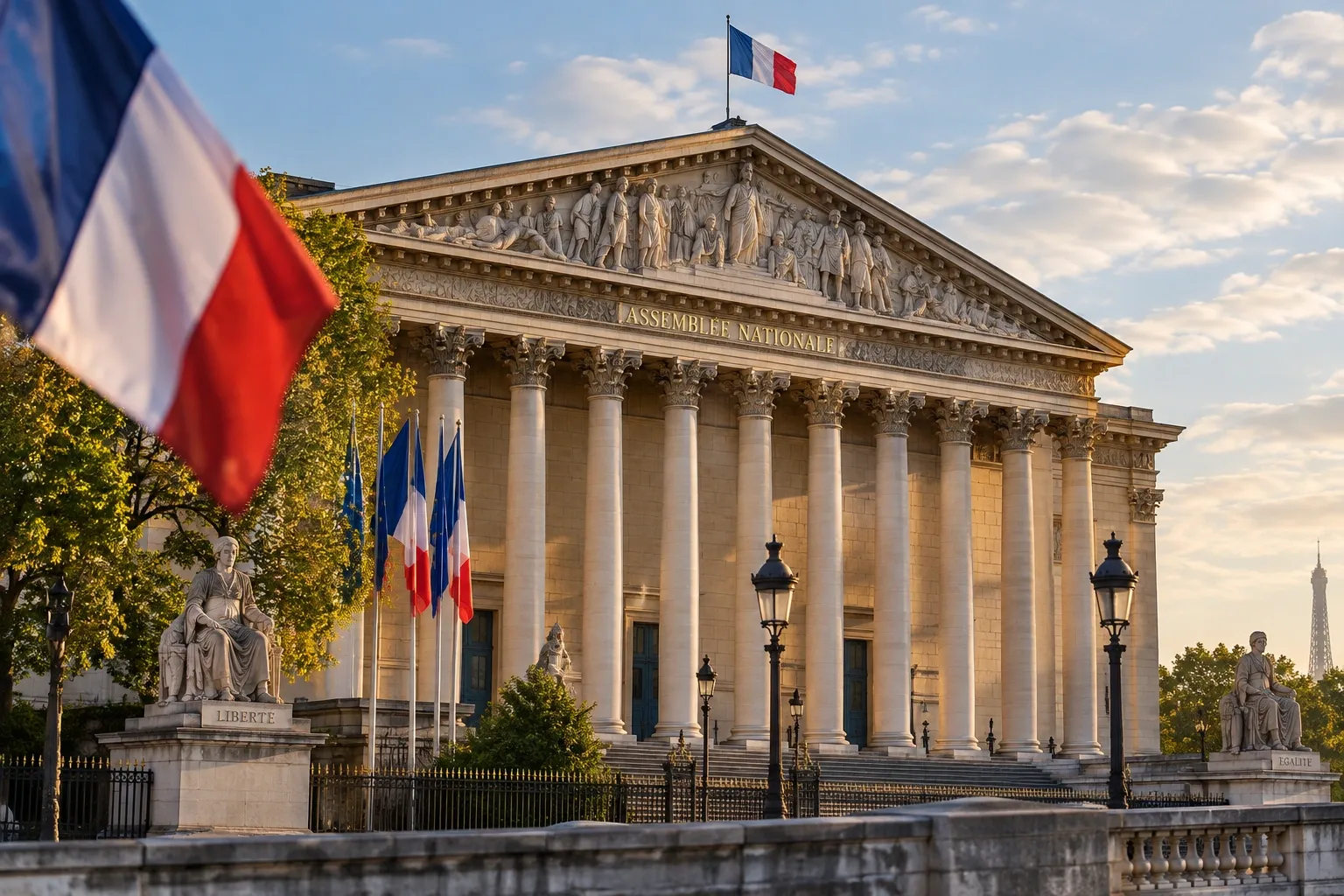
The situation intensified after President Emmanuel Macron dissolved the National Assembly in 2024. The resulting legislative election produced a fragmented parliament without a clear governing majority.
That made it difficult for successive governments to pass budgets and major legislation. Prime Minister Michel Barnier's government fell in December 2024 after lawmakers passed a no-confidence motion linked to the government's budget plans.
France eventually passed its delayed 2026 budget in February 2026, but the underlying fiscal debate has not disappeared.
The government is now preparing its 2027 budget while facing pressure to reduce the deficit, control spending and respond to concerns about purchasing power.
Those pressures are contributing to renewed union mobilization and political tension in September 2026.
France Situation Timeline: What Led to the Current Situation?
The key point: Today's situation did not appear suddenly. It is the result of several years of political fragmentation, budget pressure, industrial disputes and security concerns. For tourists, however, these issues generally translate into localized demonstrations, transport disruption and heightened vigilance rather than a nationwide travel shutdown.
What Does the Current France Travel Advisory Actually Mean?
“Exercise increased caution” and “do not travel” are very different recommendations.
A Level 2 advisory does not mean that a government is telling its citizens to stay away from France. Instead, it indicates that travelers should take additional precautions because of identified risks.
The current France travel warnings focus mainly on:
- Terrorism
- Demonstrations and civil unrest
- Petty crime and theft
- Transport disruption
- Seasonal environmental risks in certain areas
The wording also differs between governments. A US Level 2 advisory and Canada's “high degree of caution” recommendation do not represent identical scales, so travelers should always read the guidance issued for their own nationality.
Latest France Travel News Travelers Should Know
Demonstrations and strikes
Further demonstrations and strikes are scheduled during September, including the major CGT-backed mobilization on September 29.
Additional industrial action may be announced at short notice, so travelers should check their airline, railway operator and local public transport provider before traveling.
Public transport
Local strikes can affect buses, trams, metros and regional rail services without making an entire city inaccessible.
If you are traveling during a strike period, allow extra time and have an alternative route available.
Flights and airports
Airline industrial action can affect schedules even when airports themselves remain open.
Check your airline directly before departure, particularly if your itinerary includes a connecting flight.
Security
France's summer-autumn 2026 Vigipirate posture is currently at enhanced vigilance, with particular attention to tourist sites, crowded areas and public or institutional buildings.
This does not mean tourist attractions are closed or that visitors should avoid France. It means travelers should expect visible security measures and remain aware of their surroundings.
Wildfires and extreme weather
Wildfires remain a regional risk during the summer and early autumn period. Australia's current travel advice says wildfires are affecting parts of France and that large-scale evacuations have occurred in some areas of the southwest.
Conditions can change quickly, so travelers heading to southern or southwestern France should check local wildfire and weather alerts immediately before traveling.
What Are the Main Safety Risks When Traveling to France?
Terrorism and security alerts
Terrorism remains one of the main reasons foreign governments advise increased caution in France.
France's current Vigipirate posture is designed to strengthen protection around sensitive locations, public spaces, transport and tourist sites.
For visitors, the sensible approach is simple: remain aware in crowded places, follow instructions from authorities and avoid areas affected by an active security incident.
Protests and strikes
Demonstrations can occur with little notice, particularly in major cities.
Most demonstrations are peaceful, but some can become disruptive or lead to police intervention.
If you see an active demonstration:
- Do not attempt to walk through it.
- Follow police instructions.
- Avoid photographing or confronting protesters.
- Check transport alternatives.
- Allow additional travel time.
Pickpocketing, phone theft and tourist scams
Petty theft remains one of the most relevant day-to-day risks for tourists.
Be especially careful on:
- Metro and RER trains
- Train stations
- Airports
- Major tourist attractions
- Crowded streets and public spaces
Keep your phone and wallet secure, especially when boarding or leaving public transport.
Is It Safe to Travel to Paris Right Now?
Yes. Paris remains open and continues to operate as a major international tourist destination.
For anyone asking “is it safe to travel to Paris?”, the main practical concerns are not that the city is closed or inaccessible, but rather:
- Pickpocketing and phone theft
- Demonstrations
- Public transport disruption
- Terrorism-related security precautions
- Occasional major-event or strike-related congestion
The Métro and RER require particular attention because they combine large numbers of passengers with a higher risk of theft.
If a demonstration is taking place near a tourist attraction or transport hub, choose an alternative route rather than trying to pass through the crowd.
Read more: Planning to visit Germany as well? Explore Is it Safe to Travel to Germany Right Now? Fact-Checking War Myths and Travel Fears for current safety concerns and travel considerations.
Are Popular Tourist Destinations in France Safe?
Generally, yes, although conditions vary by region.
- Paris: Open to tourists; take extra care with theft, demonstrations and transport disruption.
- Nice and the French Riviera: Generally suitable for tourism; monitor local conditions during major events and periods of extreme weather.

- Provence: Generally suitable for tourism; wildfire conditions are the main seasonal consideration.
- Lyon: Standard urban precautions apply, with occasional protest and transport disruption.
- Bordeaux: Generally suitable for visitors; check local transport and weather conditions.
- Normandy: Generally suitable for tourism; monitor coastal weather when appropriate.
- Loire Valley: Generally low-risk for tourists; normal precautions apply.
- French Alps: Generally suitable for visitors; mountain weather and conditions matter more than the national security situation.
A local incident should not automatically be interpreted as a countrywide safety warning.
Read more: Considering nearby Switzerland as part of your trip? Explore Switzerland Travel Advisory for US & Canadian Travelers for current safety concerns, travel warnings and practical advice.
Do I Need a Visa for France in 2026?
The answer to “do I need a visa for France?” depends on your nationality, purpose of travel and length of stay.
Visa-exempt travelers from countries such as the United States and United Kingdom can generally visit the Schengen Area for up to 90 days in any 180-day period for permitted short-stay purposes.
Longer stays, employment, study and other purposes may require a visa or residence authorization.
If you are asking “do I need a visa to travel to France?”, check the rules that apply specifically to your passport rather than relying on another traveler's requirements.
Read more: Travelling to France from the UK? Explore Travelling to France from the UK: everything you need to know for entry rules, travel requirements and practical tips.
EES and ETIAS: What France Travelers Need to Know
The EU's new Entry/Exit System (EES) is now fully operational.
Since April 10, 2026, EES has replaced traditional passport stamping for covered non-EU nationals making short stays at the Schengen Area's external borders.
Travelers may have their:
- Passport and travel-document information recorded
- Facial image captured
- Fingerprints registered
The process does not require a separate application or fee.
What about ETIAS?
ETIAS is different from EES.
ETIAS is the planned pre-travel authorization system for visa-exempt travelers. It is not currently operating, and the EU has not yet announced a final launch date.
Do not pay for an ETIAS application through a third-party website while the system is not operational.
How to Stay Safe While Traveling in France
A few practical steps can significantly reduce the most common problems:
- Check the official France travel advisory for your nationality before departure.
- Check for demonstrations and strikes affecting your destination.
- Confirm your airline and train schedules shortly before traveling.
- Avoid active demonstrations and areas with heavy police activity.
- Keep your phone, wallet and passport secure in crowded areas.
- Store important documents and payment cards separately where practical.
- Keep copies of important travel documents.
- Purchase travel insurance appropriate for your itinerary.
- Save emergency contacts before arrival.
- Call 112 for general emergencies in France.
- Follow local authorities during wildfires, floods or other emergencies.
Should You Cancel or Postpone a Trip to France?
For most travelers, not automatically.
A France travel advisory or news report about protests does not by itself mean that an entire trip should be canceled.
Instead, consider:
- Your destination: Is there an active issue where you are going?
- Your dates: Are you traveling during a planned strike?
- Your transport: Are trains or flights likely to be affected?
- The weather: Are wildfires, heat or flooding affecting your region?
- Your government's advice: What does the advisory for your nationality say?
- Your insurance: What disruption or cancellation situations are covered?
The best approach is to reassess conditions shortly before departure rather than making a decision based on an older headline.
Stay Connected in France With an eSIM
When travel plans change, staying connected can give you one less thing to worry about. Whether you're already in France or traveling to France soon, an eSIM France plan can help you stay online without relying on hotel Wi-Fi or finding a local SIM.
With Jetpac, your France eSIM gives you free access to essential apps like Google Maps, WhatsApp, Uber, and Grab, so you can navigate, get around, check updates, and stay in touch with family and friends.
If you need to actually hear a familiar voice, Jetpac's in-app voice calling lets you call loved ones in 50+ countries for $1.99 for 5 minutes.
When comparing an eSIM France plan, look beyond just the price. The best eSIM for France is one that keeps you connected when you need it, whether that's checking a train update, finding your way around, or letting your family know you're safe.
From staying informed to hearing a familiar voice, a France eSIM can make traveling a little easier when plans don't go exactly as expected.

Read more: Not sure whether your phone will work after landing in France? Read Will My Phone Work in France? Explained Completely for phone compatibility, roaming and connectivity options.
Bottom Line: Is It Safe to Travel to France Right Now?
Yes, France remains open and broadly safe for tourists, but travelers should be prepared for disruption.
The current situation is best understood as a combination of ongoing terrorism precautions, political and budget tensions, demonstrations and strikes, transport disruption, and regional wildfire or extreme-weather risks.
For most visitors, none of these factors alone means they need to cancel a trip. The most useful thing you can do is check your government's latest France travel advisory, confirm transport schedules, monitor local conditions, and avoid active demonstrations.
In other words, traveling to France is still possible in 2026: but informed travel matters more than usual.
FAQs
What are the current France travel warnings from each government?
The US currently lists France at Level 2, Exercise Increased Caution, because of terrorism and unrest. Canada and Australia advise travelers to exercise a high degree of caution, while the UK permits travel but highlights terrorism, demonstrations, industrial action and crime.
Is France safe to visit in 2026?
For most tourists, yes. France remains open to visitors, but travelers should take standard precautions and stay informed about demonstrations, strikes, terrorism-related security measures, theft and regional weather or wildfire risks.
Are there any parts of France tourists should avoid?
There is no nationwide “do not travel” designation in the advisories reviewed for this article. However, travelers should avoid active demonstrations, areas affected by security incidents and locations subject to wildfire evacuations or other official emergency orders.
Do protests and strikes make France unsafe for tourists?
Not necessarily. The main impact on travelers is often disruption to transport and access rather than a nationwide safety threat. Avoid active demonstrations and check transport operators before traveling on strike days.
Is it safe to travel to Paris right now?
Yes. Paris remains open to tourists. Visitors should take particular care with pickpocketing on public transport and around major attractions and should check for demonstrations and transport disruption.
What are the most common tourist scams in France?
Pickpocketing and phone theft are among the most commonly reported tourist risks, particularly on the Métro and RER, at train stations and airports, and around crowded attractions.
What should I do if there is an emergency in France?
Call 112 for general emergency assistance. You can also contact your country's embassy or consulate if you require consular assistance.
Disclaimer
This article is for general informational purposes and is not a substitute for official government travel advice. Conditions, strike schedules, security measures, entry requirements, weather and transport operations can change quickly. Check the official travel advice for your nationality immediately before booking and departure. Jetpac is not responsible for losses arising from reliance on information that subsequently changes.