
How to Book Train Tickets in Europe: Complete Step-by-Step Guide
Book European train tickets through official railway websites or booking platforms after planning your route and comparing fares. For cheaper tickets, book high-speed and international routes 2 to 6 months ahead, choose advance fares, and reserve seats when required.
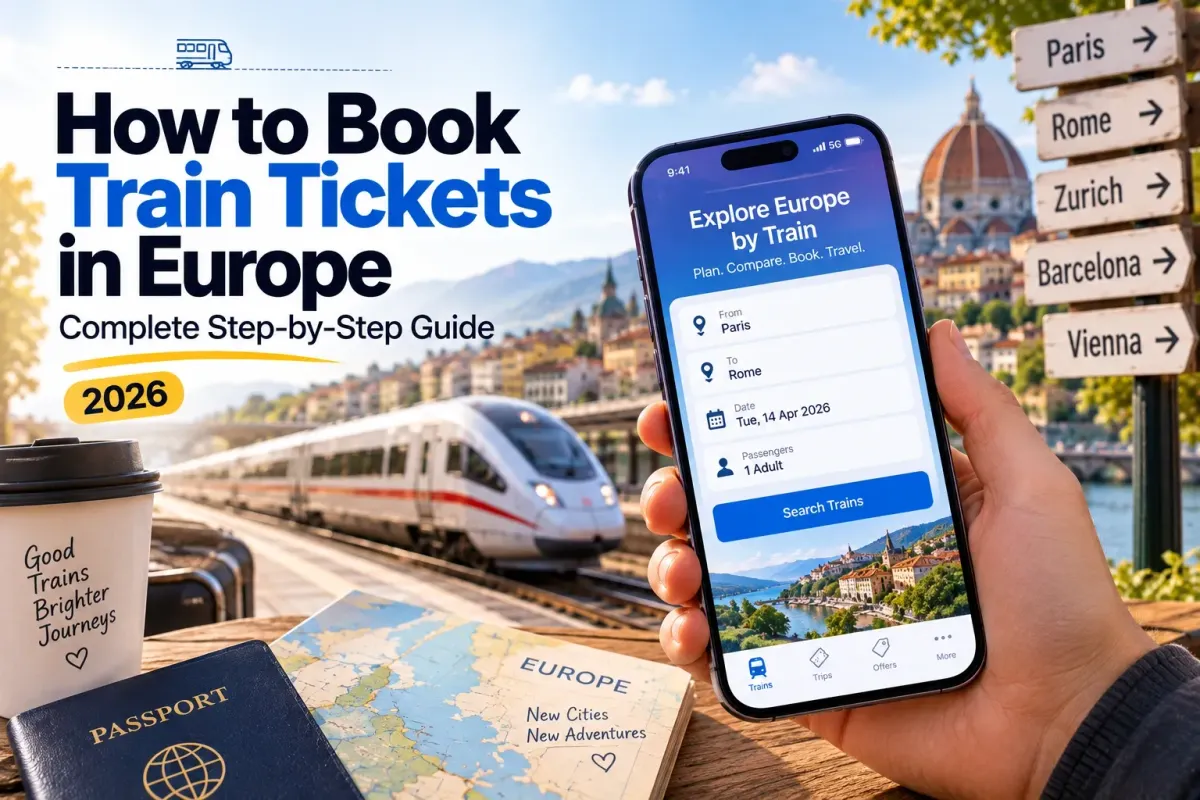
Booking train tickets in Europe is fairly straightforward once you know where to look and what to expect. There’s no single railway system covering the whole continent, so you’ll often book through individual railway operators or a booking platform, depending on your route.
For popular high-speed and international journeys, booking 2 to 6 months ahead can also help you find better fares and more departure options.
This guide explains "how to book train tickets in Europe step by step", including "where to buy European train tickets", when to book, "how to find cheap train tickets in Europe", and "what to check before you board".
How to Book Train Tickets in Europe
The process is largely the same regardless of country or operator. This is the core of the whole piece, so it's worth reading closely even if you skim the rest.
Step 1: Plan Your Route
Departure city, arrival city, date, and rough departure time. Decide early if you're open to a connecting train or want a direct one only.
Read more: Still deciding which cities to include in your route? Explore Underrated, Yet 20 Best Cities to Visit in Europe Ranked for lesser-known destinations and city ideas beyond the usual European stops.
Step 2: Search for Trains
Enter your departure and arrival stations, not just cities, since larger cities often have more than one station. Leave the time flexible to see more options.
Step 3: Compare Available Trains
Journey time, price, number of changes, train type, departure and arrival times, and whether a reservation is included. The cheapest option isn't always the fastest.
Step 4: Choose Your Ticket
Standard, discounted advance, or flexible. Covered in full detail further down.
Step 5: Enter Passenger Details
Full name, date of birth, and contact details for each passenger, matching the name on your ID for international routes.
Step 6: Select Seats
Some tickets assign a seat automatically, some let you choose from a map, and some (mostly regional trains) skip seat selection entirely.
Step 7: Pay
Most operators accept major cards, and many support PayPal or similar wallets. Keep a backup payment method handy.
Step 8: Receive Your Ticket
Usually a mobile ticket, PDF, or app ticket by email or in the operator's app. A few operators still require a printed ticket for certain fares.
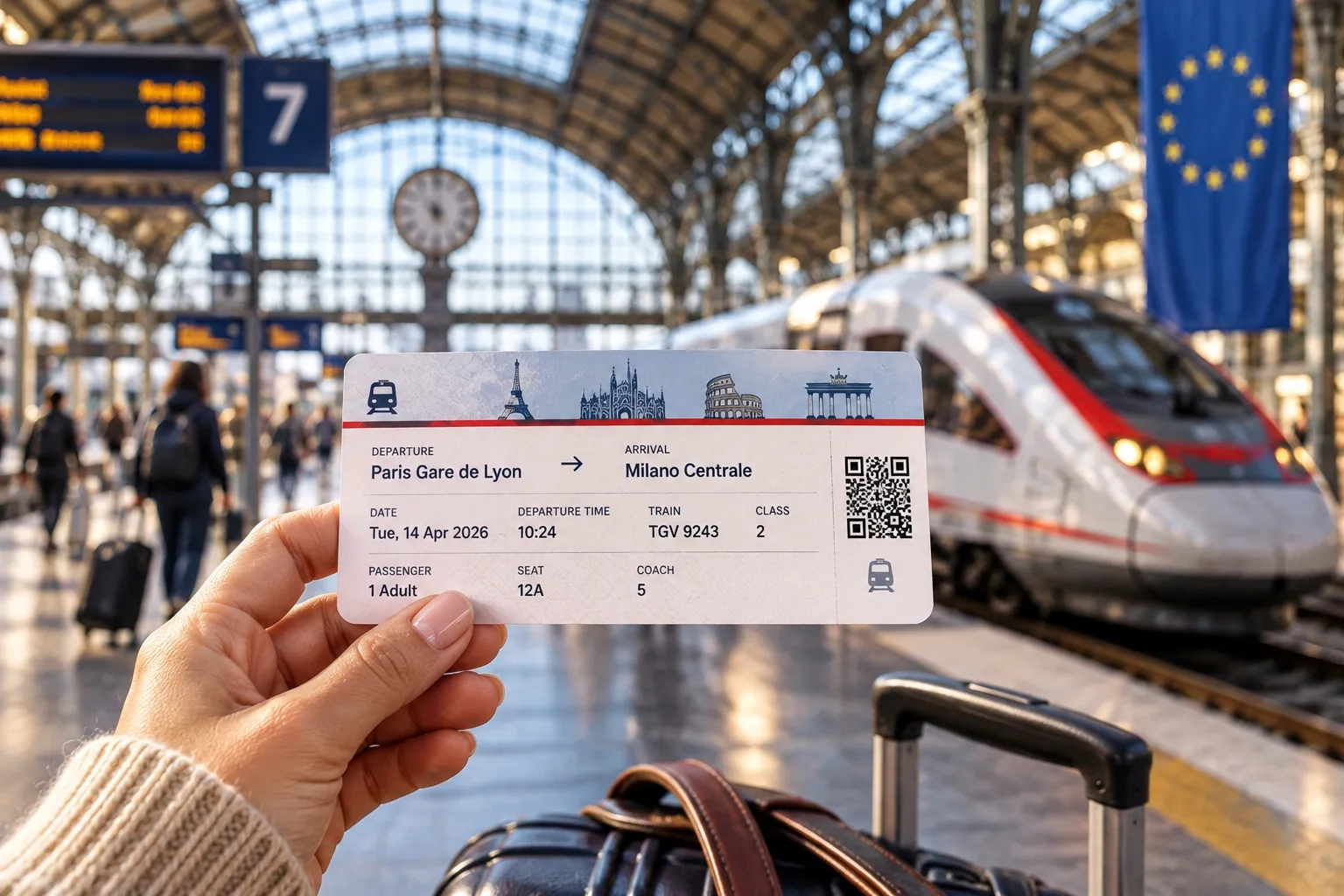
Step 9: Check Your Journey Before Departure
Recheck your train number, departure time, platform, any route or schedule changes, and general service updates in the days before travel, especially with a tight connection.
Read more: Planning a wider European adventure? Explore Europe Travel Guide 2026: Places, Costs, Transport and More for destinations, transport options, costs and practical travel advice.
Where Can You Buy Train Tickets in Europe?
Knowing how to buy train tickets starts with picking the right channel for your trip.
#1. Official Railway Websites & Apps
Anyone planning to travel Europe by train will end up choosing between these channels.
Booking directly with the operator (SNCF Connect from France's national railway, Deutsche Bahn, Trenitalia, ÖBB from Austria's national railway, Renfe) usually gets the operator's own best price, plus their own support and refund rules.
#2. Train Booking Platforms
Useful when your trip spans multiple countries and operators, since they let you search and book across several rail networks from one place.
#3. Train Station Ticket Machines
Widely available at larger stations, and one of the simplest ways to learn how to buy train tickets on the ground rather than online. Good for same-day purchases, usually support multiple languages and card payment.
#4. Ticket Counters
Still common at major stations. Useful for complex itineraries or questions a machine can't answer, though queues can be long at peak times.
Read more: Need help turning your destinations into a practical itinerary? Explore How to Plan a Trip to Europe: Step-by-Step Guide for choosing destinations, building routes and planning your days.
Can You Buy Tickets on the Train?
Sometimes, but don't count on it. Some regional trains allow onboard purchase, often at a markup. Many high-speed and international trains don't sell tickets onboard at all. Check the specific operator's policy.
Should You Book Directly or Use a Train Booking Platform?
Neither is always better; it depends on your trip.
For a single-country trip, the operator's own site is usually simplest. For a multi-country itinerary, a platform can save real time comparing options.
When Should You Book Train Tickets in Europe?
Booking your train at the right time can make a noticeable difference to both your choice of routes and what you pay.
While some European rail services allow flexible last-minute travel, popular high-speed and international trains often have limited seats at the lowest fares.
Knowing how booking windows change by season, route, and travel day can help you plan train travel in Europe with fewer surprises.
Read more: Planning your trip around European weather and seasons? Explore Best Time to Visit Europe: Ideal Months Revealed for regional weather patterns, crowd levels and the best months to travel.
How Far in Advance Should You Book?
There's no single booking window that works everywhere. European train tickets are released according to the country, operator, train type, and route, with many international and high-speed services opening bookings around 2 to 6 months ahead.
Booking early is particularly useful if you have fixed travel dates or want a specific departure time.
Peak Season
Summer, Easter, and the Christmas-to-New Year period see the highest demand, so popular trains can sell out quickly.
If you're planning to travel Europe by train during these periods, booking as soon as tickets are released gives you the best chance of finding suitable departures and lower fares.
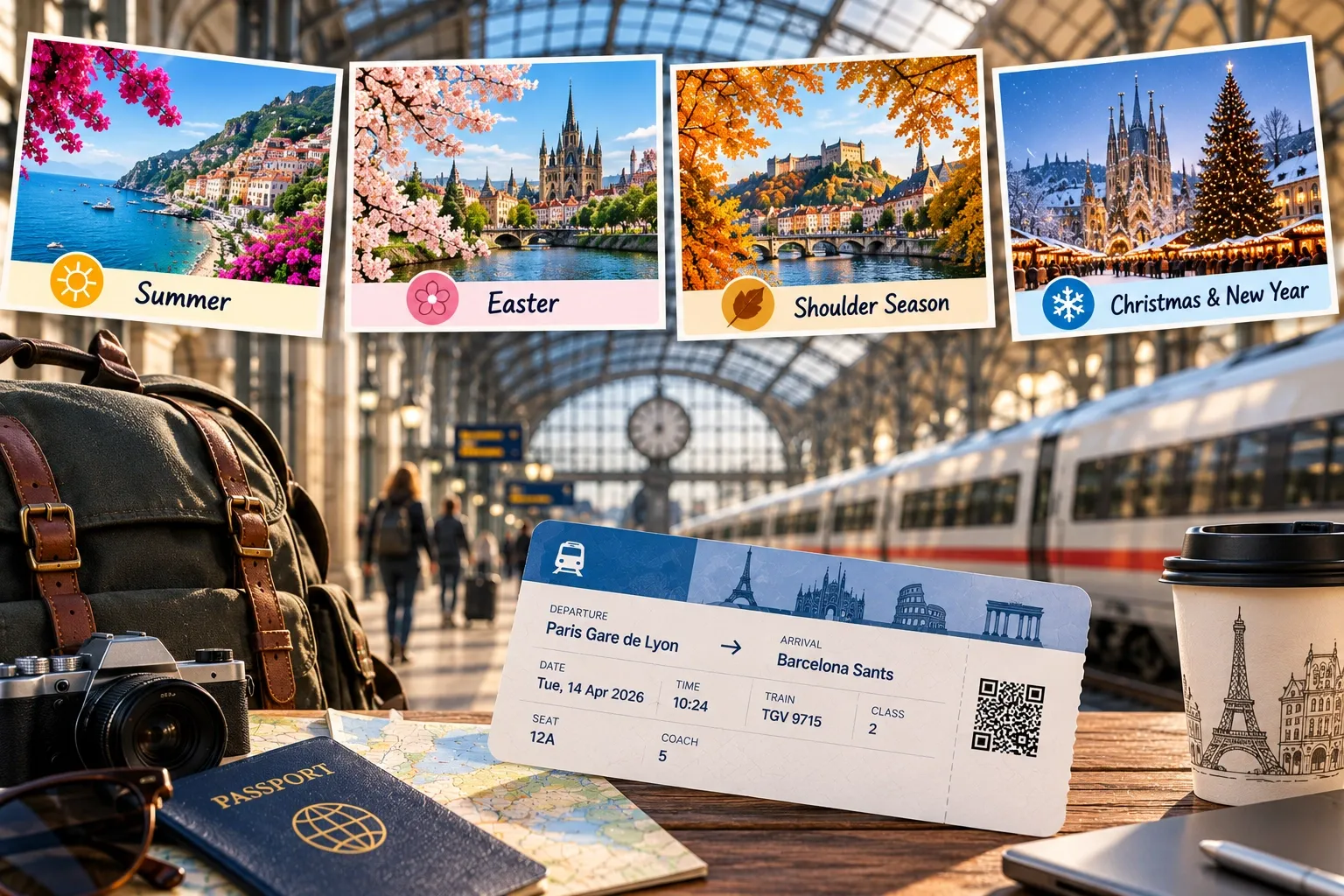
Shoulder Season
Spring and autumn generally offer better availability and less pressure to book far ahead. These periods can also make it easier to find cheap train tickets in Europe, particularly if you're flexible with your travel dates and times.
Last-Minute Booking
You can still buy tickets close to departure on many routes, but popular services may be sold out and fares are often higher. Waiting until the last minute can also leave you with fewer departure times to choose from.
Weekend vs Weekday
Weekend trains on popular leisure routes tend to fill up faster and can cost more than comparable weekday services.
If you're planning train travel through Europe in 2026 and have some flexibility, travelling midweek may give you more options and better-value fares.
How Much Do Train Tickets in Europe Cost?
How much is a train ticket in Europe? It depends on the trip, not a fixed number, since "how much is a train ticket for a short regional hop and a long international one" can differ by a factor of ten.
The price for one route can look completely different on another, based on:
- Route and distance
- Train type
- How far ahead you book
- Demand and season
- Class and ticket flexibility
- Whether a reservation is included
- The specific travel date
A couple of real examples show the range better than an average would. Amsterdam to Paris runs roughly $37 and up when booked ahead.
Prague to Budapest can be found for around $6.50 on a cheap advance fare, both good examples of what cheap train tickets Europe-wide can look like when booked early.
For the wider trip budget beyond train fares, see our breakdown of "how much does a trip to Europe cost".
Read more: Looking to keep your overall Europe trip affordable? Explore Top 17 Cheapest European Countries to Visit in 2026 for budget-friendly destinations, lower travel costs and affordable experiences.
Types of Train Tickets in Europe
European train tickets use terminology that differs by operator, so the same word can mean different things, one of the more confusing parts of train travel in Europe for first-timers.

#1. Standard Tickets
The default fare for a specific train. Not the cheapest, not the most flexible.
#2. Advance / Discounted Tickets
Cheaper fares tied to a specific train and date, released ahead of travel. Price rises as the train fills up.
#3. Flexible Tickets
Cost more upfront but allow changes, sometimes cancellation, without a penalty or with a reduced one.
#4. Refundable Tickets
Specifically allow a refund under the fare's conditions, a separate question from whether a ticket allows date changes.
#5. First vs Second Class
First class means more space and sometimes power outlets or a quieter carriage. Second class is comfortable and standard for most travelers.
#6. One-Way Tickets
The default in most of Europe, and often cheaper in total than a round trip.
#7. Round-Trip Tickets
Sometimes discounted versus two one-way fares, but not always; worth comparing both.
Do You Need a Seat Reservation?
Sometimes
- High-speed and international trains: almost always require one.
- Night trains: a reservation is part of booking a berth or seat.
- Regional trains: generally don't require one.
- Rail pass holders: still need to pay for and book a reservation separately on most trains that require one.
How to Reserve a Seat
Usually added during booking on the operator's site or app, or separately for pass holders through the same channel or a ticket counter.
What Happens If You Don't Reserve?
On a train where it's compulsory, you generally can't board without one, or risk a fine. Where it's optional, you can board but may not find a seat during busy periods.
Train Tickets vs Europe Rail Passes
Individual tickets may make sense when:
- You have a small number of journeys
- Your itinerary is fixed
- You can book discounted advance fares
A rail pass may make sense when:
- You're taking many eligible journeys
- Your itinerary is flexible
- Your itinerary involves multiple countries
For the full comparison, including when a pass actually saves money, see Europe Train Passes: Complete Guide.
How to Find the Cheapest Train Tickets in Europe
Finding cheap train tickets in Europe is usually less about finding one secret fare and more about knowing what to compare.
Prices can change significantly depending on the departure time, booking date, operator, and flexibility of your itinerary.
Whether you're booking a single journey or planning longer train travel through Europe, these simple habits can help you keep costs down.

Compare different departure times
Prices can vary significantly even between trains leaving just a few hours apart, so check multiple departures on the same day.
Book advance fares early
Check when tickets go on sale and book early if you're travelling on a popular route or have fixed dates.
Compare train operators
Where multiple operators serve the same route, check their fares directly rather than assuming they charge the same price.
Keep your dates flexible
Travelling a day earlier or later can sometimes open up considerably cheaper fares.
Compare classes
Check both first and second class before booking. The price difference can occasionally be smaller than expected.
Compare rail passes with individual tickets
If you're visiting several destinations, calculate the cost of individual fares against a rail pass for your specific itinerary.
Check nearby stations
A different departure or arrival station can occasionally offer a lower fare, particularly in larger cities with multiple stations.
Consider split-ticketing
Buying separate tickets for different parts of one journey can sometimes cost less than a through-ticket. This is well established on UK railways and can work on some continental cross-border routes, but availability is route-specific.
Skip unnecessary extras
Avoid paying for premium add-ons, such as priority boarding, when they offer little practical benefit on your particular journey.
The key is to compare the total journey cost, not just the headline ticket price. A slightly cheaper fare may not be the best deal if it involves an inconvenient station, longer connection, or extras you would otherwise need to pay for.
How to Book International Trains in Europe
Train travel through Europe usually means crossing at least one border.
Paris to Amsterdam and Vienna to Budapest count among the best train trips in Europe for a first international journey, and they're useful examples of how cross-border booking actually works.
- Tickets: sometimes from a single operator (Thalys/Eurostar), sometimes combining two national tickets on less common routes.
- Border crossings and passports: within the Schengen area, there are no routine border checks, but you must carry valid ID or a passport, and spot checks happen.
As of 2026, the EU's Entry/Exit System (EES) began full rollout in April, adding biometric checks for non-EU travelers. ETIAS (European Travel Information and Authorization System), an electronic authorization for visa-exempt visitors, is rolling out later in the year. - Non-Schengen crossings: the UK via Eurostar still requires full passport control, usually completed before boarding rather than on the train.
- Seat reservations: usually compulsory on international high-speed and Eurostar-style services.
- Different operators: often involved on the same overall journey, particularly on routes without a single direct high-speed link, like Prague to Budapest.
- Connections: generally protected on a through-booked itinerary if the first train is delayed.
- Rail passes: cover most international routes but exclude Eurostar entirely.
- Ticket validity: matters more here, since missing your booked train can mean buying a new one rather than catching the next departure.
Our roundup of the best places to travel in Europe is a good starting point if you're still deciding which cities to route this kind of trip through.
Read more: Travelling through Europe with kids or teens? Explore 10 Best European Vacations for Families with Kids & Teens for family-friendly destinations, activities and trip ideas.
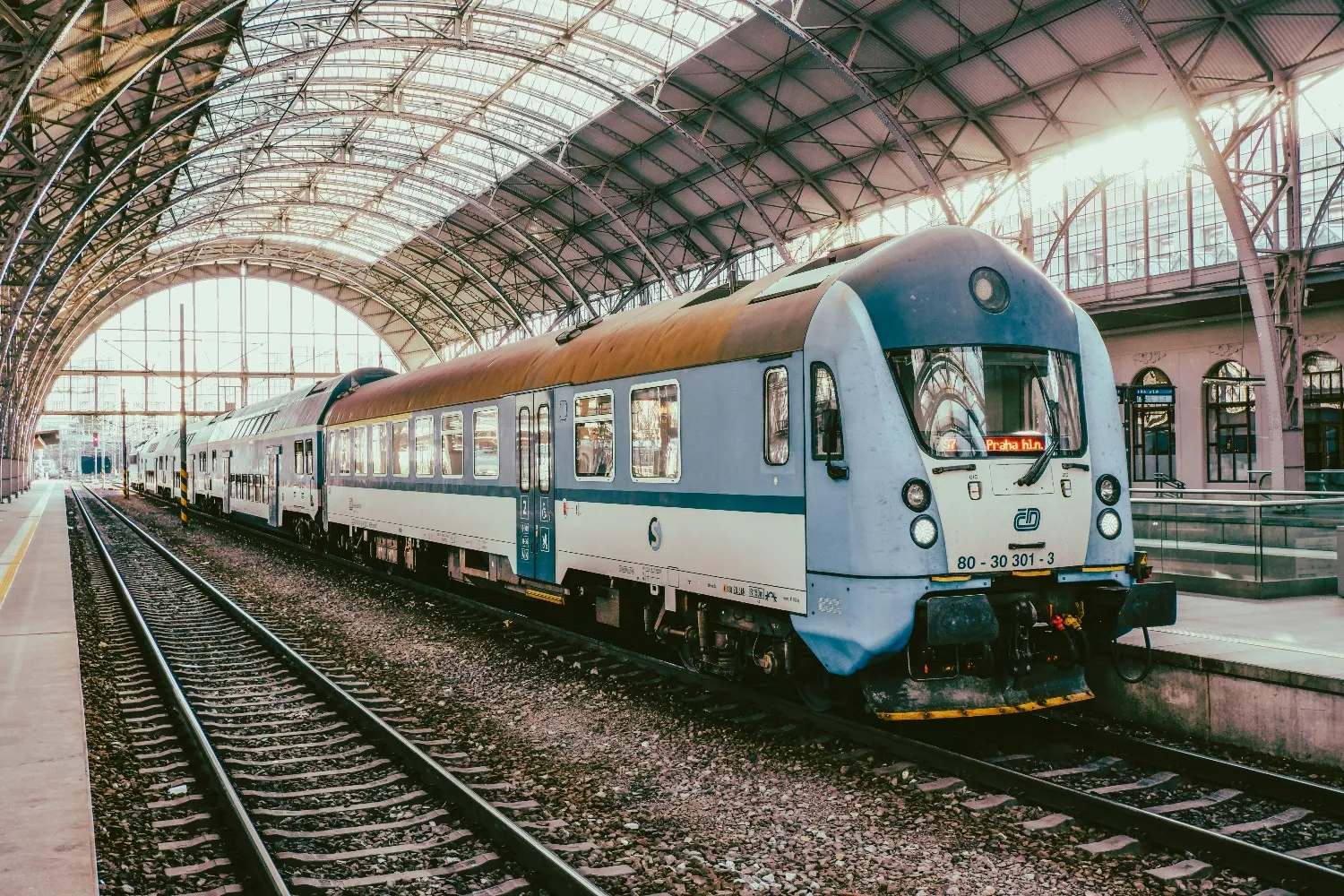
How to Book Connecting Trains
Journeys range from direct (A to B), to one connection (A to B to C), to multiple connections (A to B to C to D) on longer routes.
- Connection time: 30 to 45 minutes is safer than the 15-minute minimum some journey planners suggest, especially at large stations or when changing operators. This matters most for train travel through Europe on a multi-leg itinerary.
- Changing stations in the same city: needs even more buffer than changing platforms at one station.
- Separate tickets: carry more risk than a through-ticket, since a delay on the first train won't protect the second booking.
- Missed connections: usually rebooked automatically on a through-ticket, but often mean buying a new ticket outright on separately booked legs.
- Through tickets vs separate bookings: weigh the risk of a tight connection on separately booked legs against the flexibility they offer.
What to Check Before Buying a Train Ticket
- Departure station
- Arrival station
- Date
- Time
- Train number
- Journey duration
- Number of changes
- Ticket flexibility
- Refund policy
- Seat reservation
- Luggage rules (our Europe packing list covers this in more depth)
- Passenger information
What to Do After Booking Your Train Ticket
Download Your Ticket
Save the mobile ticket or PDF to your phone as soon as it arrives.
Save It Offline
Download it for offline access specifically; station Wi-Fi isn't always reliable exactly when you need it.
Check Your Train Number
Confirm it matches the departure board on travel day, the quickest way to spot you're at the wrong platform.
Check Your Platform
Platforms can change up until close to departure. Check again shortly before boarding.
Check for Schedule Changes
Delays and minor adjustments happen, particularly on longer or international routes. A quick check on travel day avoids surprises.
Know Your Seat/Carriage
Note both the carriage and seat number if reserved; coaches are usually marked on the platform to show where they'll stop.
What to Do at the Train Station
Large European stations can be genuinely confusing on a first visit, and this is where train travel in Europe most often trips up newcomers.
- Arrive with buffer time.
- Check the departure board for your train number and platform.
- Confirm the platform hasn't changed.
- Find your carriage using the platform markers.
- Board and find your seat if reserved.
What If You Miss Your Train?
The answer depends on the situation and your ticket type.
- You arrived late: a restricted ticket is typically not valid on a later train without a fee. A flexible ticket usually allows rebooking.
- Your previous train was delayed, and you missed a connection: on a through-booked itinerary, most operators will rebook you at no extra cost.
- Your connection was missed on separate tickets: you're generally on the hook for a new fare on the second leg.
- Your train was cancelled: usually triggers a rebooking or refund directly from the operator, regardless of ticket type.
- You have a flexible ticket: rebooking is usually straightforward.
- You have a restricted ticket: options are more limited, and a new fare may be required.
Check the specific fare conditions for your ticket, since passenger rights genuinely vary by operator.
Train Ticket Changes, Refunds & Cancellations
- Flexible tickets: generally allow date and time changes, sometimes for a fee.
- Non-refundable tickets: common among the cheapest advance fares, typically can't be refunded even if plans change.
- Changing travel dates: depends entirely on the fare conditions you booked under.
- Cancelling tickets: same, fare-dependent.
- Operator cancellations and delays: usually trigger compensation or a refund under EU passenger rights rules, though thresholds vary by operator.
Check the operator's own passenger rights page for your specific journey rather than assuming a blanket policy.
Train Travel With a Rail Pass
A pass covers the base fare for eligible trains, not necessarily the whole trip.
- Pass vs ticket: a pass replaces individual point-to-point tickets on covered networks.
- Reservations: frequently a separate cost and booking step, required on most high-speed, international, and night trains, optional on many regional ones.
- What's included: unlimited travel on covered networks within your pass's validity window.
- What isn't included: Eurostar, most seat reservations, and a handful of routes outside the standard Eurail and Interrail network.
For the full breakdown, see Train Travel Across Europe: Complete Guide. A pass often makes the most sense for exactly the kind of multi-country itinerary that includes several of the best train trips in Europe.
Staying Connected While Booking & Traveling
Staying connected matters for more than the train ride itself; booking and traveling both depend on it. You may need data to:
- Search train schedules
- Book tickets
- Receive ticket confirmations
- Manage digital tickets
- Download apps before you travel (our list of the best travel apps for Europe is worth a look)
- Check platform updates
- Navigate a new station
- Translate a sign or menu
- Message ahead to confirm a booking
Traveling across multiple European countries? An eSIM Europe plan can help you stay connected without relying entirely on station Wi-Fi, switching networks automatically as you cross borders.
Jetpac's eSIM Europe coverage spans 200+ destinations on a single install, with unlimited hotspot sharing and no data cap.
Free access to WhatsApp, Google Maps, Uber, and Grab is included, and in-app voice calling starts at $1.99 for 5 minutes. SmartDelay gives free airport lounge access at 1,300+ airports if an eligible flight is delayed 60 minutes or more.
Compare coverage, data allowances, and pricing against your route before choosing the eSIM for Europe. Our best eSIM for Europe travel comparison covers this in more depth.

Common Mistakes When Booking European Train Tickets
A few small mistakes can turn an easy trip to travel Europe by train into a stressful one.
- Booking the wrong station in a city with multiple stations.
- Ignoring connection time and cutting it too close.
- Assuming every ticket is refundable when many of the cheapest fares aren't.
- Forgetting a seat reservation on a train where it's compulsory.
- Confusing a rail pass with an actual ticket; a pass usually still needs a paid reservation.
- Booking separate tickets across a tight connection without enough buffer.
- Not checking luggage rules for the specific operator.
- Not saving your ticket offline before losing signal.
- Assuming every European railway works the same way as the last one you used.
FAQs
How do I book train tickets in Europe?
Plan your route, search an official site or booking platform, compare options, and book with passenger details and payment.
Is it easy to travel Europe by train as a first-timer?
Yes, for most routes between major cities. Smaller towns and multi-country loops take more planning.
What is the best website to book European trains?
Depends on the route. Official operator sites usually win on price for domestic routes; booking platforms are often easier for multi-country trips.
Is train travel in Europe hard to book for a first-timer?
No, the steps are the same everywhere, plan a route, compare trains, and book directly or through a platform.
Is it better to book European trains in advance?
Usually, yes, especially for high-speed and international routes.
How far in advance can I book European train tickets?
Generally, 2 to 6 months ahead for international and high-speed routes.
Are train tickets cheaper if booked early?
Often, yes, particularly for advance and discounted fare types.
Can I buy European train tickets at the station?
Yes, at machines or counters, though popular routes may already be sold out or pricier than an advance fare.
Do I need to reserve a seat on European trains?
On most high-speed, international, and night trains, yes. On many regional trains, no.
Can I buy train tickets for multiple European countries?
Yes, as separate national tickets, a single international ticket where available, or under a rail pass.
Is Eurail cheaper than buying train tickets?
Depends on your itinerary. A pass tends to pay off with several long-distance journeys packed into a short window.
Can I use my phone as my train ticket?
Yes, on most major operators, though it's worth saving a copy offline in case of connectivity issues.
What happens if I miss my train?
Depends on ticket type and reason. Flexible tickets and through-booked connections are generally protected, restricted fares and separate bookings often aren't.
Can I get a refund for a European train ticket?
Sometimes, depending on the fare conditions. Flexible and refundable fares generally allow it.
How much will a train ticket cost if I book last minute instead of in advance?
Often noticeably more, sometimes two to three times the advance fare on popular high-speed and international routes.
How much will a train ticket cost on average across Europe?
There's no meaningful average; fares range from a few dollars on a cheap regional fare to well over a hundred on a last-minute international ticket.
Disclaimer
This blog is for educational purposes only. All information, including 2026 prices, booking windows, and border requirements, is based on publicly available data and can change over time. Always check the official operator's website and current passenger rights information before booking or traveling. Jetpac is not responsible for any inaccuracies, changes, or losses arising from reliance on this information.