
Is It Safe to Travel to Israel in 2026? Latest Travel Advice
Travel to Israel in 2026 is not considered safe right now, with active conflict and major disruptions making typical trips unworkable. Missile alerts, closed airspace, suspended flights, and tight security around Jerusalem and border regions mean most travelers are better off waiting.
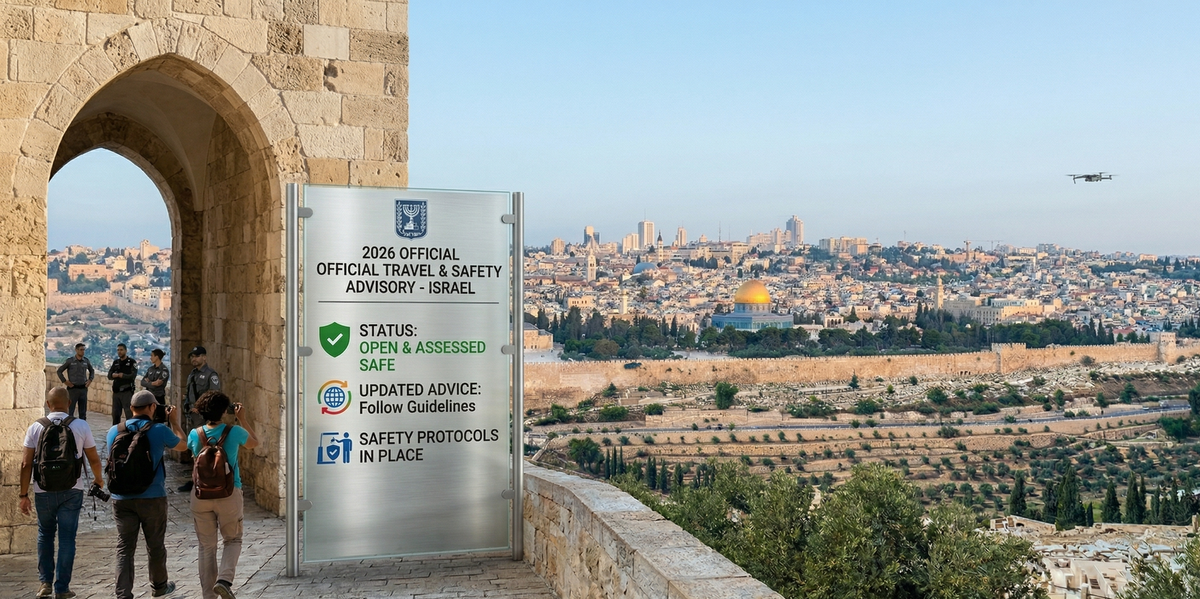
Is it safe to travel to Israel in 2026? As of April 2026, the answer for most travelers is no, at least not right now. Since February 28, 2026, Israel has been engaged in an active military conflict with Iran following the launch of US-Israel joint strikes (Operation Roaring Lion).
Iran has responded with sustained ballistic missile and drone attacks targeting central Israel.
Ben Gurion International Airport has been closed since February 28, and the closure has been extended until at least April 16, 2026. The Israel travel advisory from the US State Department rates the country at Level 3: Reconsider Travel, with Gaza and specific border areas at Level 4: Do Not Travel.
On February 27, 2026, the US also authorized the departure of non-emergency government personnel from Mission Israel.
For travelers planning a future trip, or for those currently in Israel, having a Jetpac eSIM for Israel means real-time security alerts and navigation access the moment connectivity is needed, without hunting for Wi-Fi.
A Gaza peace plan brokered by the Trump administration came into effect on October 10, 2025, ending the Israel-Hamas conflict that began in October 2023. A separate ceasefire with Lebanon was reached in November 2024.
However, both ceasefires have faced violations, and the broader regional situation deteriorated significantly when Israel and the US launched military strikes against Iran on February 28, 2026, triggering a sustained Iranian missile and drone campaign against Israeli territory.
The situation is actively evolving, and daily monitoring of official government sources is essential.

What does the current Israel travel advisory say?
The US State Department currently rates Israel at Level 3: Reconsider Travel overall. Specific areas carry Level 4: Do Not Travel designations:
- Gaza Strip
- Northern Israel within 4 km of the Lebanese and Syrian borders
- The Egyptian border is within 2.4 km (1.5 miles), except for the Taba crossing
On February 27, 2026, the State Department escalated its response by authorizing the departure of non-emergency US government personnel and their families from Mission Israel due to safety risks.
The State Department is now advising that persons in Israel may wish to consider leaving the country while commercial options remain available.
The US Embassy in Jerusalem is offering assisted departure via bus to Amman, Jordan's Queen Alia International Airport, for US citizens who need to leave.
This is a significant escalation from the standard Level 3 advisory. Enrolling in the Smart Traveler Enrollment Program (STEP) at step.state.gov is the single most important preparedness step for the US Citizens traveling to or currently in Israel, as it enables the US Embassy to reach you directly during emergencies.
Is Israel safe to visit for pilgrims or religious travelers in 2026? With organized tours suspended and the Old City of Jerusalem under heightened security restrictions, most faith-based travel operators are advising postponement until the conflict stabilizes and full flight operations resume
Ben Gurion Airport: What travelers need to know
Ben Gurion International Airport has been closed to commercial traffic since February 28, 2026, when Israeli and US airspace operations over Iran triggered an immediate shutdown.
Israel's airspace restrictions have been formally extended until at least April 16, 2026, subject to the security situation.
Only Israeli carriers, El Al, Arkia, and Israir, are operating a limited, restricted wartime schedule. Major international airlines, including Lufthansa, easyJet, and others, have cancelled all routes to Tel Aviv indefinitely, with some carriers suspending flights until autumn 2026 at the earliest.
Travelers who need to depart Israel should contact their airline directly and monitor the Israel Airports Authority website for official updates.
Alternative exit routes currently in use include land crossings to Jordan (via the Jordan River/Sheikh Hussein crossing) and the Taba crossing to Egypt.
Always confirm crossing status with the US Embassy before attempting land departures.
Which parts of Israel are safer to visit?
Is it safe to go to Israel for a standard tourist trip right now? Given the active military conflict with Iran and sustained missile attacks targeting central Israel, the US State Department and most international governments do not recommend visiting Israel at this time.
Is Israel safe for tourism under current conditions? No, the security environment is at its most complex since the October 2023 Hamas attack, and conditions are actively shifting without warning.
Is Israel safe for tourists who are already in the country? Those currently in Israel should identify the location of the nearest bomb shelter, keep the Home Front Command Red Alert app active, monitor security updates from the US Embassy, and consider departing via available land crossings if their safety situation requires it.
A eSIM for Israel keeps those emergency alerts reaching your device in real time, without depending on hotel Wi-Fi or local SIM availability.
Is it safe to go to Israel in the future, once the conflict stabilizes? Tel Aviv, Haifa, Eilat, the Dead Sea, and the Negev Desert are likely to reopen to normal tourism once the current military situation resolves and Ben Gurion Airport resumes full operations.
Travel operators and airlines will announce the resumption of services based on official Israeli authority guidance.
Also Read
Will My Phone Work in Israel?
Traveling to Israel soon? Find out if your phone will work, check compatibility, and learn the easiest ways to stay connected without expensive roaming fees.
Read More ↗Avoid Roaming Charges
Tired of high roaming bills? Discover simple ways to avoid roaming charges and stay connected affordably while traveling abroad.
Read More ↗Travel Tips for First-Time Flyers
Flying for the first time? Learn essential travel tips for first-time flyers to make your journey smooth, stress-free, and well-prepared.
Read More ↗Best Travel Apps
Want to travel smarter? Explore the best travel apps for navigation, bookings, and staying organized throughout your trip.
Read More ↗Entry requirements for US citizens in 2026
Is it safe to travel to Israel right now from a paperwork standpoint? While entry documentation requirements remain in place for future travel, the airport closure and active conflict mean that standard tourist entry is not possible for most travelers at present. When travel does resume, the following applies to US citizens:
No tourist visa is required for stays up to 90 days, but an Electronic Travel Authorization (ETA-IL) must be submitted at least 72 hours before arrival through the Israeli Population and Immigration Authority website.
Your passport must be valid for at least 90 days beyond your planned entry date. For US citizens, the ETA-IL approval process is typically quick, but apply well in advance to avoid last-minute delays.
On arrival, Israeli authorities issue an entry card; keep it safe, as it is needed for West Bank access.
A few things for US citizens to keep in mind at entry points when travel resumes:
Border officers may ask about prior travel to Arab countries. Personal devices can be searched at checkpoints. Social media content, including political posts, may be reviewed at entry points.
Jerusalem and the West Bank: what to know
Is Israel safe to visit if your itinerary includes Jerusalem? Jerusalem is subject to heightened risk during the current conflict period, with the US Embassy itself operating under restricted conditions.
The Embassy may further restrict US government employee travel to certain areas of Israel, including the Old City of Jerusalem, based on security incidents.
Confrontations near Temple Mount and the Al-Aqsa Mosque area remain a risk during normal periods, and these risks are compounded during active regional conflict.
During any future visit, travelers should move in groups, dress conservatively, and maintain active alert app notifications.
The West Bank carries significantly higher risks. Tensions remain elevated with frequent Israeli military operations, checkpoint restrictions, and settler-Palestinian clashes.
Most international governments advise avoiding all travel to the West Bank.
The Gaza Strip is entirely inaccessible for tourists and remains under a Level 4: Do Not Travel advisory.
Is Israel safe for tourism involving pilgrimage routes? Most organized religious tours operating out of Israel have suspended or postponed their 2026 seasons pending the resolution of the conflict and the reopening of Ben Gurion Airport.
Staying connected in Israel: why it matters more than ever
For travelers currently in Israel, and for those planning for when the security situation stabilizes, reliable connectivity is not optional; it is a safety tool. A Jetpac eSIM for Israel gets you connected without a SIM card swap, no airport Wi-Fi dependency, and no delay.
With eSIM plans for Israel through Jetpac, you get prepaid 5G, multi-network switching, and unlimited hotspot sharing, keeping your entire travel group online and alert-ready.
Jetpac works in 200+ destinations, activates via QR code scan, and includes 24/7 WhatsApp and email support.
Voice calls start at USD 1.99 for 5 minutes. Whether you need real-time navigation or instant access to Home Front Command missile alerts, a stable connection is your first line of awareness in a fast-changing security environment.
FAQs
Is it safe to travel to Israel right now?
No. As of April 2026, Israel is engaged in an active military conflict with Iran. Ben Gurion Airport is closed until at least April 16, 2026, and the US State Department is advising people in Israel to consider leaving while commercial options remain available. Check travel.state.gov daily for updates.
Is it safe to travel to Jerusalem?
Jerusalem carries an elevated risk during the current conflict period. The US Embassy has at times restricted its own employees from traveling to the Old City of Jerusalem. Once the broader military situation stabilizes, visitors should travel in groups, dress conservatively, and maintain active emergency alert apps.
Is it safe to travel to Israel right now from the US?
For US citizens, the State Department has authorized the departure of non-emergency government personnel and is urging those currently in Israel to consider leaving. New tourist travel from the US to Israel is not feasible while Ben Gurion Airport remains closed.
Do US citizens need a visa to enter Israel?
No tourist visa is required for stays up to 90 days. An ETA-IL must be submitted at least 72 hours before arrival when travel is possible. Apply through the Israeli Population and Immigration Authority website.
Is Israel safe for tourists traveling solo?
Solo travel in Israel is not advisable during the current active conflict period. When conditions stabilize, solo travelers in central Israeli cities should keep their phone charged and connected with a reliable Jetpac eSIM, download emergency alert apps, and monitor security updates daily.
Is Israel safe for tourism during religious holidays?
Tensions can increase during Ramadan, Passover, and Yom Kippur, particularly in Jerusalem. During the current active conflict, these risks are significantly amplified. Stay informed, avoid large gatherings, and follow US Embassy alerts closely.
Is Ben Gurion Airport open?
No. Ben Gurion International Airport has been closed since February 28, 2026, due to the active military conflict with Iran. The closure has been formally extended until at least April 16, 2026, and is subject to further extension depending on security developments. Travelers seeking to leave Israel should contact their airline and consider land crossings to Jordan or Egypt via the Taba crossing.
Disclaimer
This information is based on publicly available data at the time of writing and is for general reference only. Security conditions, access, and travel availability may change rapidly. Jetpac is not responsible for network performance or third-party data accuracy. No destination or service is endorsed. Travelers should verify official advisories, entry requirements, and local conditions before making plans.