Is It Safe to Travel to Mexico Right Now? April 2026 Update
Mexico is not a simple yes-or-no destination in April 2026. Tourist hubs like Cancun, Los Cabos, Mérida, Oaxaca, and central Mexico City are operating normally, while six states remain under Do Not Travel warnings. The key is checking the advisory for your exact destination, not Mexico as a whole.
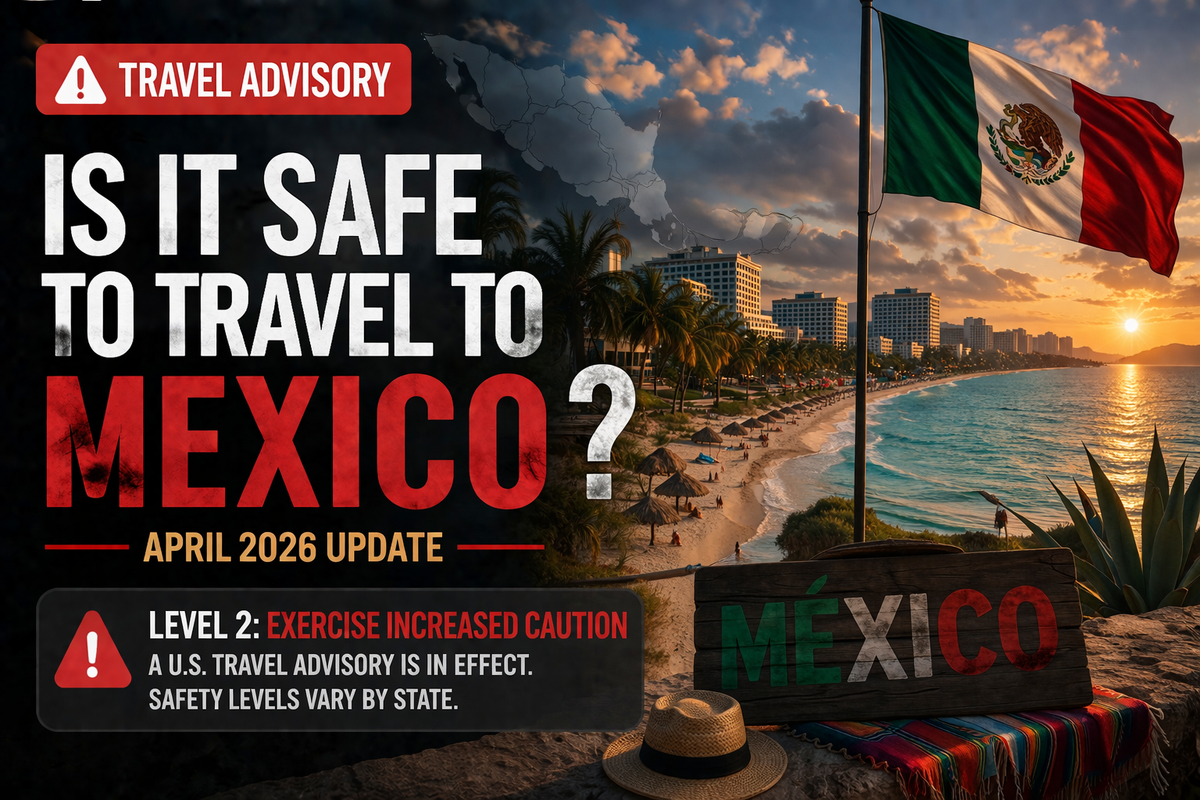
The US State Department says, "it depends on where you are going". Mexico is not treated as one uniform destination. It is assessed state by state, and the current advisory says major tourist areas like Quintana Roo, where Cancún sits, Baja California Sur, where Los Cabos sits, and Yucatán, where Mérida sits, are operating under lower warning levels than the highest-risk states. At the same time, six states carry Level 4: Do Not Travel warnings: Colima, Guerrero, Michoacán, Sinaloa, Tamaulipas, and Zacatecas. So the clearer answer is this: tourist trips to places like Cancún, Los Cabos, and Mérida are still happening, but you should judge safety by state, not by Mexico as a whole.
The gap between them is real and significant. Before you book or cancel, having a Mexico eSIM set up in advance means maps, embassy alerts, and ground transport apps are working from the moment you land - one less thing to sort in an unfamiliar place.
What Happened in Mexico in Early 2026?
The Fall of "El Mencho"
Mexican military forces, supported by US intelligence, killed Nemesio Rubén Oseguera Cervantes ("El Mencho"), the leader of the Cartel Jalisco Nueva Generación (CJNG), in a raid in Tapalpa, Jalisco. He was one of the most wanted men in the world with a $15 million US bounty.
🚨 Immediate Retaliation & Impact
CJNG launched coordinated strikes across 20 states. Attacks included burning vehicles, blocking major highways, and attacking infrastructure. 25 National Guard members were killed in Jalisco.
Southwest, Alaska, and Delta cancelled flights to Puerto Vallarta and Guadalajara. The US Embassy issued shelter-in-place orders for Jalisco, Tamaulipas, Michoacan, Guerrero, and Nuevo Leon.
📈 Stabilized Recovery
The retaliatory violence was intense but brief. Within days, blockades were cleared and airports resumed normal operations. No tourists were harmed during the events.
Current Status (April 2026)
By April 6, 2026, Juan Carlos Valencia González (El Mencho's stepson) emerged as the confirmed new head of CJNG. Contrary to analyst predictions, the organization has not fragmented dramatically, though long-term leadership stability remains a question for regional security.
Mexico Crisis Timeline: February to April 2026
Tap dates to view intel
February 22, 2026
Mexican military kills El Mencho in Tapalpa, Jalisco. CJNG launches retaliatory attacks across 20+ states. Road blockades, vehicle fires, and clashes reported. Jalisco Governor activates code red. Delta, Southwest, and Alaska Airlines cancel PV and GDL flights.
Is It Safe to Travel to Mexico Right Now in April 2026?
The honest answer is: yes for most tourist destinations, with clear and specific exceptions.
The US State Department issues individual state-level advisories for all 32 Mexican states on a scale of 1 to 4. The nationwide baseline is Level 2: Exercise Increased Caution—the same level assigned to France, Germany, Italy, and the United Kingdom.
Most major tourist destinations sit at Level 2. The key is knowing which applies to your specific destination.
🛡️ How the Advisory System Works
Exercise Normal Precautions: Same standard advice as Canada and most of Western Europe.
Exercise Increased Caution: Be aware of surroundings, use trusted transport, and take standard precautions. (Most tourist hubs)
Reconsider Travel: Serious safety concerns; specific risks are documented for these areas.
Do Not Travel: Highest level; life-threatening risks with limited US government assistance available.
Mexico Travel Advisory 2026: Official Warnings
🇺🇸 United States - State Department
The US assigns individual levels to each of Mexico's 32 states. The following breakdown is current as of April 2026.
- Yucatan (home to Merida)
- Campeche
- Quintana Roo (Cancún, Tulum, Playa del Carmen)
- Baja California Sur (Los Cabos, La Paz)
- Mexico City (CDMX)
- Oaxaca
- Nayarit (Sayulita, Punta Mita)
- Baja California, Chiapas, Chihuahua, Coahuila
- Guanajuato (San Miguel de Allende)
- Jalisco State (Excluding resort zones)
- Morelos, Sonora
- Colima, Sinaloa, Tamaulipas, Zacatecas
- Guerrero (includes Acapulco)
- Michoacan
🌍 International Perspectives
🇬🇧 United Kingdom: FCDO advises against travel to high-risk border zones but maintains that major hubs like Cancun and Los Cabos are not subject to blanket advisories.
🇦🇺 Australia: Advises a "High Degree of Caution" overall. Northern border states carry "Do Not Travel" status, but Yucatan and BCS remain clear of elevated warnings.
🇨🇦 Canada: Maintains a nationwide "High Degree of Caution" due to crime levels, specifically flagging the Level 4 states mentioned above as areas to avoid.
Which Parts of Mexico Are Safer for Tourists Right Now?
Yucatan Peninsula
Mexico's most consistently safe region. Yucatan State holds the only Level 1 advisory. Quintana Roo (Cancun, Tulum) remains at Level 2 with zero operational impact from the February 2026 events.
Los Cabos & BCS
Benefits from geographic isolation on the peninsula. The local economy is tourism-dependent, ensuring a strong security-first posture from local authorities. Currently rated as Level 2.
Mexico City (CDMX)
Central tourist neighborhoods—Polanco, Roma, Condesa, Coyoacan—are well-patrolled and generally safe. Common risks involve petty crime and express kidnapping rather than cartel violence.
Oaxaca & Merida
These cultural centers continue to operate normally in tourist zones. Oaxaca State maintains a Level 2 advisory and remains a top choice for international visitors in 2026.
Which Parts of Mexico Are Safer for Tourists Right Now?
Yucatan Peninsula
Mexico's most consistently safe region. Yucatan State holds the only Level 1 advisory. Quintana Roo (Cancun, Tulum) remains at Level 2 with zero operational impact from the February 2026 events.
Los Cabos & BCS
Benefits from geographic isolation on the peninsula. The local economy is tourism-dependent, ensuring a strong security-first posture from local authorities. Currently rated as Level 2.
Mexico City (CDMX)
Central tourist neighborhoods Polanco, Roma, Condesa, Coyoacan, are well-patrolled and generally safe. Common risks involve petty crime and express kidnapping rather than cartel violence.
Oaxaca & Merida
These cultural centers continue to operate normally in tourist zones. Oaxaca State maintains a Level 2 advisory and remains a top choice for international visitors in 2026.
Is It Safe to Travel to Cancun Right Now?
The Hotel Zone (Zona Hotelera) is well-lit, actively patrolled, and specifically designed for international visitors. Risks are standard for a major global hub: petty theft, drink spiking, and scams in crowded areas.
Safety Tool: The US Embassy recommends downloading the Guest Assist App for access to bilingual emergency services while in Quintana Roo.
✅ Practical Tips for Cancun
Book airport transfers through your hotel or a pre-arranged service. Do not take unmarked taxis.
Drink alcohol only in moderation. Contaminated alcohol is a documented risk; seek medical help immediately if you feel unwell.
Stay within the Hotel Zone and Playa del Carmen's 5th Avenue at night.
Avoid purchasing or using drugs. Drug possession is illegal in Mexico, and penalties for foreign nationals are severe.
Is Mexico City Safe to Travel to Right Now?
CDMX sits at Level 2. It is a functional, vibrant, extremely popular tourist city and millions of Americans visit annually without incident.
🏙️ The Tourist Core
Mexico City (CDMX) is generally safe in its main tourist neighborhoods. Polanco, Roma, Condesa, and the Historic Center are well policed, busy, and welcoming to visitors.
The city has long been largely insulated from the cartel violence that affects other parts of Mexico. Longtime residents describe the central tourist areas as having crime rates comparable to any large global city.
🚦 Urban Risks and Rules
The risks that do exist are urban rather than cartel based. Threats include express kidnapping, petty theft, and taxi crime.
- Use Uber or DiDi rather than hailing street cabs.
- Avoid walking alone late at night in unfamiliar neighborhoods.
- Stay highly aware of your surroundings around ATMs.
- Avoid riding the Metro during rush hour with visible valuables.
Are Puerto Vallarta, Cabo, Oaxaca, and Merida Safe Right Now?
Puerto Vallarta
Puerto Vallarta sits in Jalisco, which carries a Level 3 state advisory. However, the resort zone itself is well-patrolled and largely separate from the cartel activity that drives the state-level rating.
Following the February 22 disruptions, when flights were briefly grounded and the US Embassy issued a shelter-in-place order, the situation stabilized within days. As of April 2026, Puerto Vallarta has recovered and tourism is operating normally. It remains a destination that warrants vigilance above what you would apply in Cancun, but it is functioning and open. Monitor mx.usembassy.gov for updates before and during any visit.
Los Cabos
Cabo San Lucas and San Jose del Cabo are among the safest tourist destinations in Mexico right now. Baja California Sur is Level 2. The geographic isolation of the Baja Peninsula insulates it from mainland cartel conflict. Tourism infrastructure is strong, and the local economy depends heavily on visitor safety.
Oaxaca City
Oaxaca City is safe and thriving in April 2026. The state sits at Level 2, and the city is one of Mexico's most popular cultural destinations. Semana Santa drew record visitor numbers with no incidents. April is an excellent time to visit, being warm and dry before the summer rainy season.
Merida
Merida is arguably the safest city for tourists in all of Mexico. The Yucatan state holds the only Level 1 advisory in the country. The city is calm, walkable, and sees very little of the crime that affects other parts of Mexico.
What Are the Biggest Safety Risks for Tourists in Mexico?
Understanding actual tourist-facing risks matters more than headlines. The data and official advisories consistently identify these six specific threats. Expand each section for detailed prevention strategies.
Cartel violence is real, but mostly concentrated between criminal organizations. Cartels are not interested in targeting tourists, as doing so would bring additional government pressure on their operations. The risk to tourists from cartel violence is low in Level 2 destinations. It is serious in Level 3 states and a documented risk in Level 4 states.
Express kidnapping, where a victim is forced to withdraw cash from ATMs over several hours, is a documented risk in Mexican cities. It most commonly involves unlicensed taxis. Never hail a street cab. Use Uber, DiDi, or pre-arranged hotel transport exclusively.
Driving at night in Mexico is widely considered unsafe across all advisory levels due to poor road conditions, livestock, and the higher risk of criminal activity after dark. Stick exclusively to well-maintained toll roads during daylight hours.
The US Embassy has specifically flagged reports of travelers becoming ill or unconscious from contaminated or unregulated alcohol. Drink only in reputable establishments, watch your drink at all times, and seek medical help immediately if you feel unwell.
Fake prescription pills are a serious documented risk. Do not purchase medications outside of licensed pharmacies and never accept pills from unknown sources or street vendors.
Common tourist scams include false "closed" signs directing visitors to paid tours, wristband or entry fees for free public beaches, and ATM card skimming. Use hotel ATMs or bank ATMs located inside secure premises.
Is Mexico Safe for Families, Solo Travelers, and Women Traveling Alone?
Families
Mexico is a popular family destination and remains so in 2026. All inclusive resorts in Quintana Roo and Baja California Sur offer self contained environments with strong security. Stick to Level 1 and Level 2 states. Avoid road travel between states at night. Keep children close in crowded market areas and tourist sites.
Solo Travelers
Solo travel is entirely viable in Cancun, CDMX, Oaxaca, Merida, and Los Cabos. Use app based transport rather than street taxis. Share your itinerary with someone at home. Avoid isolated areas after dark. The risks for solo travelers are primarily urban crime rather than targeted violence.
Women Traveling Alone
Mexico has documented risks for women, including higher rates of street harassment and sexual assault, particularly at night and around bars and nightclubs. Travel in groups where possible after dark. Avoid accepting drinks from strangers. Use Uber rather than street cabs. Trust your instincts and leave any situation that feels uncomfortable. Merida and Oaxaca City are generally considered among the safer options for solo female travelers in Mexico.
Also Read
Is it Safe to Travel to Dubai During Israel War?
Wondering if Dubai is safe during the Israel war? Get the latest travel guidance, regional risks, safety tips, and what tourists should know before visiting.
Read More ↗Is It Safe to Travel to Israel?
Is it safe to travel to Israel now? Explore current security conditions, conflict zones, entry advice, and essential safety tips to plan your trip responsibly.
Read More ↗Is It Safe to Travel to Qatar Right Now?
Is it safe to travel to Qatar right now? Get the latest 2026 travel guidance, safety updates, regional considerations, and essential tips to help you plan your trip with confidence.
Read More ↗Travel Tips for First-Time Flyers
Flying for the first time? Get practical travel tips for first-time flyers to navigate airports, pack smart, and travel with confidence.
Read More ↗Best Travel Apps
Make every trip easier with the best travel apps for maps, bookings, and real-time updates while you’re on the go.
Read More ↗How to Travel to Mexico More Safely Right Now
Use only pre-arranged or app-based transport. Never take an unmarked taxi from the street.
Book through your hotel for airport pickups. This applies in every destination, including Cancun.
Stick to toll roads if driving. Travel during daylight hours only. Check Embassy restricted area maps before any road journey.
Enroll in STEP at step.state.gov before departure. It is free and takes five minutes.
Carry a photocopy of your passport. Keep the original locked securely in your hotel safe.
Limit cash on hand. Use hotel or bank ATMs inside secure premises only.
Drink only in moderation at bars and nightclubs. Watch your drink at all times.
Do not purchase or use drugs. This includes marijuana, which is illegal in Mexico regardless of your home state's laws.
Avoid displaying expensive jewelry, cameras, or electronics in public spaces.
Keep emergency contacts saved offline: US Embassy Mexico City +52-55-5080-2000, and local emergency number 911.
Health, Weather, and Seasonal Issues to Know
April Weather in Mexico
April is one of the best months to visit Mexico. It sits just before the rainy season of May to November. Temperatures in Cancun and the Riviera Maya average 28 to 32 degrees Celsius (82 to 90 degrees Fahrenheit) with low humidity. Mexico City is warm and dry. Oaxaca is pleasant in the mid 20s Celsius.
Water Safety
Tap water is not safe to drink in Mexico. Drink bottled water only, including when brushing teeth in budget accommodation. Ice in upmarket hotels is generally made from purified water. Confirm with staff if you are uncertain.
Sun and Heat
April sun in beach destinations is intense. Use high SPF sunscreen, drink plenty of water, and avoid extended beach exposure during midday hours.
Vaccinations
The US CDC recommends being up to date on routine vaccines before traveling to Mexico. Hepatitis A and Typhoid vaccines are recommended for most travelers. Consult your doctor at least four to six weeks before departure.
Medical Access
Major tourist destinations have adequate private medical facilities. Rural areas and smaller towns have limited medical infrastructure. Travel insurance with medical evacuation coverage is strongly recommended regardless of destination.
Should You Cancel Your Mexico Trip in April 2026?
It depends entirely on where you are going.
Do Not Cancel
If you are traveling to: Cancun, Playa del Carmen, Tulum, Cozumel, Los Cabos, Merida, Oaxaca City, Mexico City central neighborhoods, or Puerto Vallarta (with updated monitoring).
These destinations are operating normally. Semana Santa 2026 concluded without incident across all of them.
Reconsider
If you are traveling to: Jalisco outside resort zones, Guanajuato, Baja California (Tijuana, Ensenada), Chiapas, Sonora, or Morelos.
Level 3 states warrant genuine caution, not panic, but you should have a specific reason for going and a documented safety plan.
Cancel
If you are traveling to: Colima, Guerrero (including Acapulco), Michoacan, Sinaloa, Tamaulipas, or Zacatecas.
These are Level 4: Do Not Travel. No leisure trip justifies the risk.
Safest Places to Visit in Mexico Right Now
🏖️ Best Lower-Risk Beach Destinations
Cancun & Riviera Maya
Level 2Located on the Caribbean coast with consistently safe tourist infrastructure.
Tulum
Level 2A relaxed beach town featuring a strong and established tourist presence.
Los Cabos
Level 2Includes Cabo San Lucas and San Jose del Cabo. Benefits from geographic isolation and a heavily tourism-focused economy.
Cozumel
Level 2The island setting provides natural separation from mainland risks.
🏛️ Best Lower-Risk City Destinations
Merida
Level 1The safest city in Mexico for tourists. Renowned for colonial architecture and an excellent food scene.
Oaxaca City
Level 2A major cultural hub offering outstanding food and a thriving tourism sector.
Mexico City
(Central Neighborhoods)
Level 2
Enormous and vibrant. Central tourist areas have low exposure to cartel activity.
🔰 Best for First-Time Visitors
Cancun or Merida: Straightforward logistics, strong tourist infrastructure, and minimal navigation complexity.
Los Cabos: Offers a self-contained resort environment with easy access from US West Coast cities.
🛡️ Best for Cautious Travelers
Merida: Holds a Level 1 rating. It is highly walkable, calm, and lacks the risk profile of heavy nightlife destinations.
Cozumel: An island setting that is compact, easy to navigate, and focused heavily on water activities.
Final Verdict: Is Mexico Safe to Travel to Right Now?
Mexico travel warnings exist for good reason, but they do not apply evenly across an entire country the size of Western Europe. Is it safe to travel to Mexico right now?
For most tourists heading to established destinations, YES.
For anyone heading to a Level 4 state, NO.
Families
Cancun, Los Cabos, and Merida are all solid choices in April 2026. All-inclusive resorts in Quintana Roo offer the most controlled environment. Avoid road travel between states and book all transfers in advance.
Solo Travelers & Couples
Mexico City, Oaxaca, Tulum, and Cabo are all accessible and rewarding right now. Use app-based transport, stay in well-reviewed accommodation, and follow the standard safety practices that apply in any large city abroad.
Cautious or First-Time
Start with Merida or Cancun. Both have strong tourist infrastructure, Level 1 and Level 2 advisories respectively, and easy logistics from the US. Neither requires complex safety navigation.
The short version: read the state-level advisory, not the country headline. They are not the same thing.
Check official sources before any booking to ensure you have the latest intelligence for your specific destination.
Emergency Contacts in Mexico
Mexico Emergency Services (Police, Fire, Ambulance)
US Embassy Mexico City Main Consular Support
US Consulate Cancun Quintana Roo Region
US Consulate Guadalajara Jalisco Region
US State Dept 24/7 (From Abroad)
US State Dept 24/7 (US and Canada)
Report Contaminated Alcohol COFEPRIS Direct Line
STEP Enrollment Smart Traveler Program
State Dept Crisis Intake Emergency Web Form
Your Connection, Your Safety Net: eSIM Mexico
Good data connectivity in Mexico is not just about staying in touch. It is about getting a safe ride home from a bar, checking Embassy alerts the moment something changes, and pulling up offline maps when your resort Wi-Fi drops. An eSIM Mexico installed before you fly means your phone works the moment wheels are down, no hunting for a SIM card vendor in a crowded arrivals hall, no relying on airport Wi-Fi.
Must-have apps for Mexico
🗺️ Google Maps offline
Download your destination city before departure. Works without data.
🚗 Uber and DiDi
Safer than street taxis across all Mexican cities. Always use app-based transport.
🇺🇸 STEP / mx.usembassy.gov
Enroll before you travel for direct Embassy security alerts.
Standard for communicating with hotels, drivers, and tour operators throughout Mexico.
🔒 VPN
Useful for secure connections on hotel Wi-Fi.
Why Jetpac's Mexico eSIM works when it matters most
Instant activation
Scan a QR code before you travel. No store, no kiosk, no paperwork. Works the moment you land.
Essential apps stay on after data runs out
WhatsApp, Google Maps, Uber, and DiDi keep working even after you hit your limit. Getting home safely does not depend on having data remaining.
Redundancy
Keep your home SIM live for banking authentication. Run Jetpac alongside it for local Mexican data. Two lines, two options, zero gaps.
Multi-network switching
Automatically finds the strongest available signal, useful when moving between resorts, cities, and coastal roads.
Works across 200+ destinations
One plan, no swapping, whether your trip takes you from Cancun to CDMX or on to Central America.
Unlimited hotspot sharing
Share your connection with travel companions, useful for a family or group where not everyone has local data.
In-app voice calls
From USD 1.99 for five minutes. Useful for calling your hotel, confirming a pickup, or reaching an emergency contact when messaging is not enough.
70% cheaper than standard roaming
A fraction of the cost of activating your home carrier's international plan.
Prepaid, no bill shock
You pay upfront. No surprise charges on your next statement.
24/7 support via WhatsApp and email
Help available in any time zone if something is not working.
FAQs
Is Mexico safe for American tourists right now?
Yes, in most major tourist destinations. Cancun, Los Cabos, Merida, Oaxaca, and Mexico City are all operating normally in April 2026. Six states carry Level 4: Do Not Travel warnings and should be avoided entirely. Read the state-level advisory, not the country headline.
Is Mexico City safe for tourists?
Generally yes. The central neighborhoods of Polanco, Roma, Condesa, and the Historic Center are well-patrolled and popular with international visitors. Use app-based transport, stay aware around ATMs, and avoid walking alone late at night in unfamiliar areas.
What parts of Mexico are under a Do Not Travel warning?
As of April 2026: Colima, Guerrero (including Acapulco), Michoacan, Sinaloa, Tamaulipas, and Zacatecas. These six states carry Level 4 advisories. Do not travel to these areas for leisure or tourism.
Is it safer to stay at a resort in Mexico?
All-inclusive resorts in Quintana Roo and Baja California Sur offer a self-contained environment with strong in-house security. They represent the lowest-risk option for first-time or cautious visitors. The risks inside resort zones are minimal compared to moving around independently in unfamiliar areas after dark.
Should I cancel my Mexico vacation?
Only if your destination is in a Level 3 or Level 4 state, and you are not comfortable with the risk profile. Cancun, Los Cabos, Merida, and Oaxaca are not destinations that warrant cancellation based on current advisories. Puerto Vallarta has stabilized following the February 2026 events and is operating normally, though it warrants more active monitoring than the Caribbean coast.
Do tourists get targeted in Mexico?
Cartels do not generally target tourists - doing so draws attention that is bad for their operations. The risks tourists face are primarily urban crime: petty theft, express kidnapping via unlicensed taxis, drink spiking, and scams. Following standard safety practices - secure transport, watching your drink, staying in busy areas at night - addresses the vast majority of tourist-facing risk.
Is it safe to travel to Mexico from the US right now, given the travel warning?
Yes, for most destinations. The State Department's travel warning for Mexico is a nationwide Level 2, with state-level exceptions. Level 2 is the same rating as France, Germany, and the UK. The six Level 4 states are the exceptions, not the rule. Book according to your specific destination's advisory level.
Are there any Mexico travel restrictions affecting flights?
No. All major airports, including Cancun, Mexico City, Los Cabos, and Puerto Vallarta, are operating normal schedules as of April 2026. The brief flight disruptions following the February 22 El Mencho operation were resolved within days.
Disclaimer
This blog is for educational and awareness purposes only. Prices, flight data, advisory levels, and safety assessments are based on publicly available information as of April 9, 2026. Advisory levels can change at any time. Always verify the latest guidance at travel.state.gov and mx.usembassy.gov before making any travel decision. Budgets and safety assessments are general estimates and may vary by destination, time of year, and individual circumstances. Jetpac is not responsible for network variations or outcomes related to travel decisions made based on this content. Mention of any product, service, or platform does not constitute an endorsement.,