14 The Most Beautiful Places in Europe to Visit in Summer (2026 Guide)
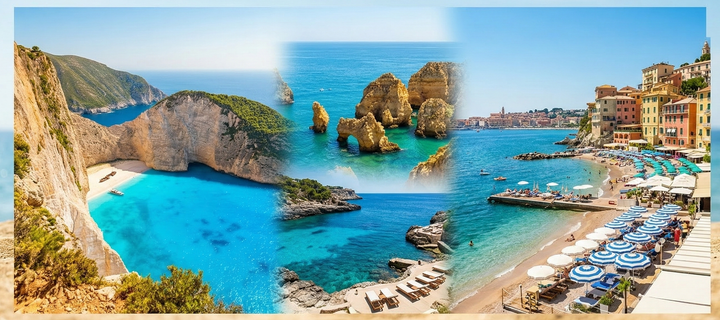
Europe in summer stretches the day and sharpens every color, from glacier-fed lakes to sunlit stone villages above the sea. From Plitvice to Kotor, the Swiss Alps to Sintra, these cliffs, waterfalls, rooftops, and trails remind you why some landscapes stay with you long after the flight home.
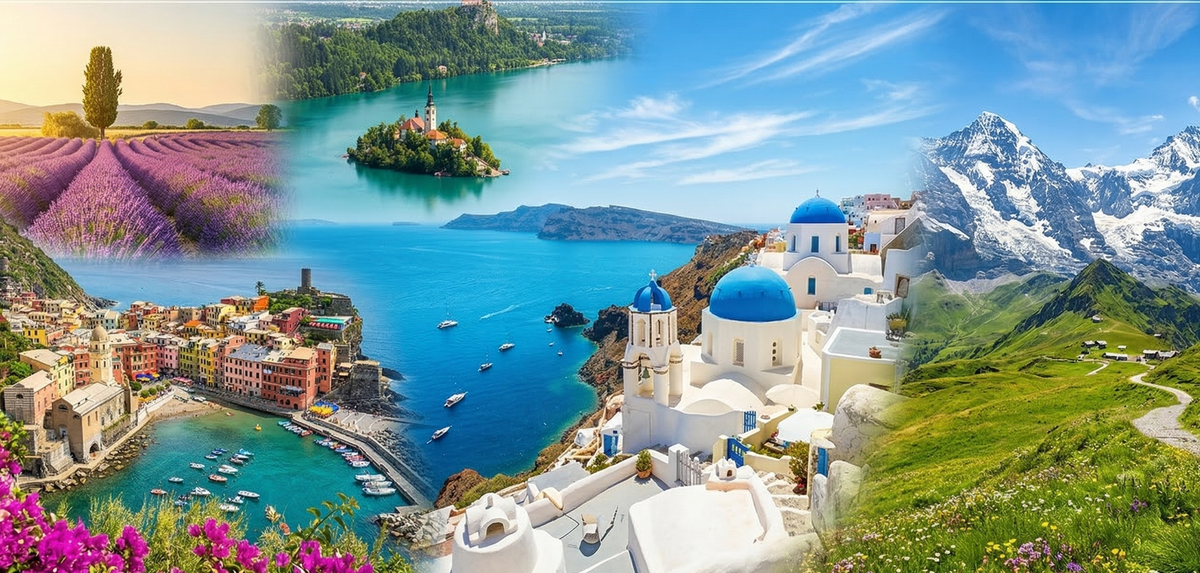
Budget uncertainty is one of the biggest barriers US travelers face when booking a European trip. Europe in summer is unlike anywhere else on earth. Snow-capped Alpine peaks reflect in turquoise lakes, medieval hilltop villages glow gold in the evening light, and Adriatic coastlines shift through a dozen shades of blue before sunset.
This guide covers the most beautiful places to visit in Europe in summer 2026, chosen specifically for the USA travelers making the trip across the Atlantic and wanting more than the standard itinerary.
From dramatic natural landscapes to baroque city centers and clifftop villages most travelers never find, every destination in this list earns its place on visual merit alone. Before you go, install a Jetpac eSIM so you are connected to your loved ones from the moment you land.

Why is summer the best time to see Europe's most beautiful places?
Summer unlocks a version of Europe that no other season can match. Daylight stretches to 9 or 10 pm across much of the continent, giving travelers three to four extra hours of golden-hour light per day compared to winter visits. Outdoor festivals, mountain cable cars, boat trips to sea caves, and rooftop terraces all operate at full capacity from June through August.
Wildflower meadows are in bloom across the Alps and the Dolomites. Lavender fields in Provence peak in late June and early July. Adriatic and Mediterranean water temperatures reach their warmest, making coastal destinations fully swimmable.
For Americans planning their first or second European trip, summer offers the widest range of transport options, the most reliable ferry schedules to islands, and the longest opening hours at major sites.
The trade-off is crowds and cost at the most famous spots, which is exactly why this guide includes hidden alternatives alongside the iconic destinations.
The most beautiful places to visit in Europe in summer 2026
The destinations below span nine countries and cover coastlines, mountain regions, historic city centers, and landscapes that exist nowhere else on earth. None overlap with destinations covered in our previous European travel guides.
1. Hallstatt, Austria
One of the most beautiful destinations in Europe, Hallstatt is a pastel Alpine village stacked against a sheer mountain face above a glacier-carved lake, endlessly photographed and genuinely worth every image.
Summer brings boat trips, salt mine tours, and treeline hiking trails with views across the entire Salzkammergut district.
Best For: Alpine lake scenery, architecture photography, and day trips from Salzburg.
Approximate Cost Per Person: $80 to $130 per day (excluding accommodation).
Best Time to Visit: Arrive by 8:00 am to 9:00 am before day-tripper buses arrive, or return after 5:00 pm for the quietest and most photogenic light.
2. Cinque Terre, Italy
Five pastel fishing villages clinging to sheer cliffs above the Ligurian Sea, Cinque Terre is one of the most beautiful places to see in Europe and a UNESCO World Heritage site where the villages are the attraction as much as the water.
The Sentiero Azzurro coastal trail connects all five with some of the most dramatic clifftop walking in the Mediterranean.
Best For: Coastal hiking, clifftop villages, Italian Riviera scenery.
Approximate Cost Per Person: $90 to $150 per day.
Best Time to Visit: 7:00 am to 10:00 am for the trail before heat and crowds peak; evenings in Vernazza from 6:00 pm onward for the best atmosphere.
3. Santorini, Greece
Santorini's caldera is one of the most beautiful destinations in Europe by any measure, with white cubic buildings perched on the rim of a submerged volcanic crater with the deep blue Aegean 300 meters below. Black sand beaches, ancient ruins at Akrotiri, and caldera boat trips make it worth the trip beyond the famous view.
Best For: Volcanic scenery, Aegean sunsets, iconic photography.
Approximate Cost Per Person: $130 to $220 per day.
Best Time to Visit: Oia at 7:00 pm to 8:30 pm for sunset; Akrotiri ruins from 8:00 am to 10:00 am before peak heat.
4. Plitvice Lakes, Croatia
Sixteen terraced lakes connected by over 90 waterfalls, with water shifting from emerald to turquoise depending on light and mineral content, Plitvice is one of the most beautiful places to visit in Europe for pure natural scenery. Wooden boardwalks run directly above the water, putting visitors inside the landscape rather than beside it.
Best For: Waterfalls, turquoise lakes, nature walks.
Approximate Cost Per Person: $60 to $100 per day.
Best Time to Visit: Gates open at 7:00 am, arrive at opening for the lightest crowds and best morning light on the water.
5. Swiss Alps, Grindelwald, Switzerland
The Grindelwald valley sits directly below the Eiger's north face, with the Aletsch Glacier, the longest in the Alps, visible from the Jungfraujoch platform at 3,454 meters. Summer hiking trails through wildflower meadows and multi-day ridge routes make this one of the most beautiful places to travel in Europe for mountain travelers.
Best For: Alpine hiking, glacier views, mountain scenery.
Approximate Cost Per Person: $180 to $280 per day.
Best Time to Visit: Cable cars from 8:00 am; aim for the summit platform by 9:00 am to 10:00 am before afternoon cloud cover builds.
6. Kotor, Montenegro
A UNESCO medieval walled city at the innermost point of a fjord-like bay, Kotor is one of the most beautiful places to see in Europe for dramatic coastal geography, with limestone mountains rising directly from the water on all sides. The 1,355-step fortress climb delivers a panoramic view across the entire bay.
Best For: Walled city exploration, Adriatic bay scenery, and budget travel.
Approximate Cost Per Person: $50 to $85 per day.
Best Time to Visit: Fortress climb from 6:30 am to 8:00 am for sunrise views; old town exploration from 8:00 am to 11:00 am before cruise ship crowds arrive.
7. Meteora, Greece
Six Orthodox monasteries perched on top of rock pillars of sandstone and conglomerate rising to 300 meters, Meteora is one of the most visually extraordinary places on the continent and one of the most beautiful places to visit in Europe that most American travelers have never considered. The landscape looks part geological wonder, part medieval engineering achievement.
Best For: Monastery visits, otherworldly landscapes, photography.
Approximate Cost Per Person: $55 to $90 per day.
Best Time to Visit: Arrive at dawn around 5:30 am to 6:30 am, for golden light on the rock formations; monasteries open from 9:00 am.
8. Amalfi Coast, Italy
A 50-kilometer cliff road connecting Positano, Amalfi, Ravello, and Praiano above the Tyrrhenian Sea, the prettiest place in Europe for many travelers who have seen both Italian coasts. Positano stacks pastel buildings down a near-vertical hillside to a pebble beach, while Ravello sits 350 meters above the sea with clifftop gardens overlooking the entire coastline.
Best For: Coastal scenery, clifftop villages, slow travel by boat.
Approximate Cost Per Person: $120 to $200 per day.
Best Time to Visit: Drive the coastal road from 7:00 am to 9:00 am before traffic builds; boat hire from 9:00 am for the full coastline without road delays.
9. Colmar, France
A medieval Alsatian city with half-timbered pastel houses leaning over narrow canals, Colmar is one of the finest examples of medieval canal architecture in Western Europe and one of the most underrated for its quality. The Alsatian wine route runs directly from the city center into the Riesling and Gewurztraminer vineyards.
Best For: Architecture photography, canal walks, and wine culture.
Approximate Cost Per Person: $85 to $140 per day.
Best Time to Visit: Little Venice canal quarter from 7:00 am to 9:00 am for the best light and emptiest streets; evening market from 5:00 pm onward.
10. Lake Bled, Slovenia
A Baroque island church, a medieval clifftop castle, and the Julian Alps as a backdrop, Lake Bled combines natural and man-made beauty in a single viewpoint that makes it one of the most beautiful destinations in Europe. Traditional motorless Pletna boats have ferried visitors to the island for centuries.
Best For: Island church, castle views, Alpine lake scenery.
Approximate Cost Per Person: $60 to $100 per day.
Best Time to Visit: Sunrise from the castle viewpoint at 5:30 am to 7:00 am; Pletna boat to the island from 8:00 am.
11. Dolomites, Italy
Sheer pink-orange limestone towers rising above turquoise lakes and green meadows in a landscape that looks geologically improbable from every angle, the Dolomites offer some of the most spectacular mountain scenery anywhere in Europe. The Tre Cime di Lavaredo, three spires reaching 2,999 meters, the loop trail around the spires takes three to four hours.
Best For: Mountain scenery, hiking, via ferrata.
Approximate Cost Per Person: $90 to $160 per day.
Best Time to Visit: Start hikes by 7:00 am to 8:00 am; wildflower meadows peak through July, with the best trail conditions from late June through August.
12. Sintra, Portugal
A UNESCO cultural landscape of forested hills with 19th-century Romantic palaces built into the hillside, Sintra is 40 minutes from Lisbon and delivers more visual variety per square kilometer than almost anywhere in Europe. The Pena Palace is the prettiest place in Europe for Romantic-era architecture.
Best For: Palace visits, forested hillside scenery, day trips from Lisbon.
Approximate Cost Per Person: $70 to $110 per day.
Best Time to Visit: Pena Palace from 9:00 am at opening before coach tours arrive; palaces close around 6:00 pm, so a full day from 9:00 am to 5:00 pm covers all main sites.
13. Ronda, Spain
A clifftop Andalusian town divided by a 120-meter gorge, with the 18th-century Puente Nuevo bridge connecting the old and new towns across the chasm. The view from the bridge ranks among the most dramatic pieces of urban geography on the Iberian Peninsula and makes Ronda one of the most beautiful places to visit in Europe for architectural drama.
Best For: Gorge views, Andalusian old town, day trips from Seville or Malaga.
Approximate Cost Per Person: $60 to $100 per day.
Best Time to Visit: Bridge viewpoint from 7:00 am to 9:00 am or 6:00 pm to 8:00 pm for the best light on the gorge walls.
14. Dubrovnik, Croatia
A perfectly preserved medieval walled city on the Adriatic coast, Dubrovnik is one of the most beautiful places to visit in Europe for Old World urban scenery, with golden limestone walls rising directly from a cobalt blue sea.
The 2-kilometer City Walls walk circumnavigates the entire old town at rooftop level, with uninterrupted views across the Adriatic and the islands of the Dalmatian coast.
Best For: Walled city exploration, Adriatic views, island day trips to Lokrum and the Elaphiti Islands.
Approximate Cost Per Person: $100 to $160 per day.
Best Time to Visit: City Walls from 8:00 am at opening before cruise ship crowds arrive; Stradun main street from 7:00 am to 9:00 am or after 7:00 pm for the quietest conditions.
Explore Europe's beautiful hidden gems
Beyond the iconic destinations above, these four places rank among the most beautiful summer destinations in Europe for travelers willing to go slightly further off the standard itinerary.
Matera, Italy-A city of cave dwellings carved into a ravine in Basilicata, southern Italy, continuously inhabited for 9,000 years and now a UNESCO World Heritage site with boutique cave hotels and a landscape unlike anywhere else in Europe.
Gjirokastra, Albania- A UNESCO-listed Ottoman hilltop city in southern Albania with a 13th-century castle, cobblestone streets, and slate-roofed tower houses preserved almost entirely intact. One of the least-visited beautiful cities in the Balkans.
Monsanto, Portugal- A hilltop granite village in central Portugal where houses are built between and beneath enormous boulders, creating a settlement that appears to have grown organically from the rock itself.
Transfagarasan Highway, Romania- A mountain road crossing the Carpathian Alps at 2,042 meters, built through some of the most dramatic mountain scenery in Eastern Europe, with Balea Lake at the summit and Transylvanian valleys below.
How many days do you need at Europe's most beautiful destinations?
The right duration depends on whether a destination is a base or a day trip. Here is a practical framework for the destinations in this guide.
Half-day to full-day visits (best as day trips from a nearby city): Hallstatt from Salzburg, Sintra from Lisbon, Meteora from Athens or Thessaloniki, Ronda from Seville or Malaga.
Two to three days (enough to see the main sites without rushing): Kotor, Lake Bled, Colmar, Cinque Terre.
Three to five days (to do the destination full justice): Santorini, Amalfi Coast, Plitvice Lakes combined with the Dalmatian Coast, Dolomites, Swiss Alps.
For travelers coming to the USA, a two-week itinerary works best as one long-stay anchor destination of three to five days paired with two or three shorter stops of one to two days each, using budget airlines or trains for the connections between them.
Stay connected where it matters most
Europe's most scenic destinations are also its most digitally unpredictable. The monastery at Meteora has no gift shop or Wi-Fi. The boardwalk at Plitvice puts you 30 minutes from the nearest town.
The boat to Cinque Terre's hidden coves leaves on a schedule that changes daily. None of these places waits for you to find a signal. A Jetpac eSIM for Europe means your phone is fully live before your flight lands, no airport SIM hunt, no roaming surprise, no dead screen at the trailhead.
Here is what Jetpac delivers specifically for scenic travel across Europe:
📍 Always know where you are going: Remote trails, unmarked coastal paths, and mountain switchbacks all require live navigation. A Jetpac eSIM keeps your data active right up to the moment you step into a dead zone, giving you the window to download offline maps before you need them.
🏔️ Signal across 200+ destinations without swapping SIMs: Austria, Italy, Greece, Croatia, Switzerland, Montenegro, France, Slovenia, Portugal, and Spain, all covered under one plan. Every border crossing on this itinerary is seamless. No new SIM, no top-up kiosk, no roaming charge from your home carrier.
⚡ Automatic network switching: A Jetpac eSIM connects to the strongest available 4G or 5G network in each country automatically. In mountain regions and coastal areas where single-carrier coverage is patchy, this matters more than it does in any city.
💸 Prepaid plans up to 70% cheaper than traditional roaming: Standard US carrier roaming runs $10 to $15 per device per day. Two people, two weeks, two phones; that is up to $420 added to your trip before you buy a single entrance ticket. If you want to Avoid Roaming Charges, switching to a prepaid eSIM can significantly reduce costs. Jetpac costs a fraction of that with no roaming shocks on your home bill.
📞 In-app international calls for the USA: Starting at USD 1.99 for 5 minutes. Jetpac ensures you never miss out on an update or lose connection with your loved ones.
✅ 100% money-back guarantee with 24/7 support via WhatsApp and email: Our customer support team takes care of everything around the clock.
Connectivity sorted before departure means the first thing you do when you land is navigate, not search for a SIM card.
If you are weighing your options before departure, the best eSIM for Europe travel for scenic multi-country is the one that switches networks automatically, activates before you board, and covers every destination on this list under a single prepaid plan.
Jetpac is built to handle exactly that, across all 200+ destinations, without a single SIM swap.
FAQs
Which are the most beautiful places to visit in Europe?
The most beautiful places to visit in Europe include Hallstatt, Santorini, the Amalfi Coast, Cinque Terre, Plitvice Lakes, Meteora, Lake Bled, and the Dolomites. Each offers a completely different visual experience across nine countries, from volcanic calderas to turquoise lake systems and Alpine peaks.
Which European country has the most scenic landscapes?
Italy, Switzerland, and Greece consistently top lists of the most beautiful destinations in Europe for landscape variety. That said, scenic quality is distributed remarkably evenly across Europe; the specific destination matters more than the country.
What is the best time to visit the most beautiful places in Europe?
June through September covers the most beautiful places in Europe at their peak. June is best for wildflowers and lighter crowds. July and August offer the longest days. September delivers summer conditions at lower prices.
Are the most beautiful places in Europe expensive to visit?
It depends on where you go. Switzerland and the Amalfi Coast are the most expensive. Montenegro, Slovenia, and Romania offer stunning scenery at a fraction of the cost. Traveling in June or September reduces costs at every destination.
Which European destinations are the best for nature lovers?
Plitvice Lakes, the Dolomites, the Swiss Alps, and Meteora are the strongest nature destinations in this guide. For even wilder scenery, the Norwegian fjords, the Faroe Islands, and the Scottish Highlands are worth adding to the list.
How many days do you need to explore Europe's most beautiful spots?
Hallstatt, Sintra, and Ronda work as day trips. Kotor, Lake Bled, and Colmar need two to three days. Santorini, the Amalfi Coast, and the Dolomites reward three to five days each. For travelers coming to the USA, a two-week trip works best as one long anchor destination combined with two or three shorter stops.
Do I need a sim card or eSIM when traveling around Europe?
For multi-country scenic travel, yes. Local SIMs cover only one country and are often unavailable at remote destinations. A Jetpac plan covers all countries in this guide under a single prepaid plan at up to 70% less than standard US roaming rates.
Which are Europe's most beautiful countries to visit?
Italy, Greece, Croatia, Slovenia, Switzerland, and Portugal rank as the most beautiful places to visit in Europe for summer travel. Italy offers the most variety. Slovenia delivers extraordinary scenery in a country smaller than New Jersey. All six are on standard transatlantic routes from the US.
Disclaimer
The information in this blog is based on publicly available sources at the time of writing. Opening hours, entry fees, crowd levels, and travel conditions are general assessments based on historical patterns and will vary by year and specific travel dates. Entry requirements and ETIAS timelines are subject to change. We recommend verifying all practical details directly with official sources before your trip. Jetpac is not responsible for any changes after publication.