Train Travel Across Europe: Tips, Routes & Everything You Need to Know
Train travel in Europe is convenient for most short and medium-distance trips, with high-speed trains connecting major cities and regional trains reaching smaller towns. Book 2 to 6 months ahead for better fares, compare rail passes with individual tickets, and reserve seats where required.

Train travel in Europe is one of the easiest ways to explore the continent, especially if you're planning to visit several cities on the same trip. Major stations are often located close to city centers, high-speed trains connect many popular destinations in just a few hours, and scenic routes can make the journey part of the experience.
For shorter journeys across Western and Central Europe, taking the train can often be more convenient than flying.
The tricky part is knowing how the rail network works, which trains to take, whether you need a rail pass, and when you need to reserve a seat. Understanding these basics before you leave can save you time, money, and unnecessary stress during your trip.
In this guide, we'll explain how to travel Europe by train, how to plan your journey, choose between individual tickets and rail passes, and how to book train tickets in Europe.
We'll also cover practical advice for getting around Europe, along with useful travel tips for Europe to help you plan your budget, packing, accommodation, and connectivity options like Jetpac eSIM for a smoother 2026 trip.
You can also check our travel tips for Europe if you're planning the wider journey and need help with flights, accommodation, visas, and getting around Europe beyond the rail portion of your trip.
Is Train Travel in Europe Worth It?
For most short and medium-distance journeys, travel by train in Europe is worth considering. Trains often take you from city center to city center without airport check-in, security lines, baggage claims, or lengthy transfers.
Depending on the route and how early you book, they can also be competitive with or cheaper than flights once airport transfers are included.
For getting around Europe, trains offer another advantage: you get to enjoy the journey itself. Scenic routes through the Alps, along coastlines, and across the countryside can be a highlight of the trip, while trains generally have a lower environmental impact than flying.
Flying can still be the better choice for very long journeys, limited rail connections, or when time is the priority. For example, London to Athens is a different calculation when a train journey can take around two days compared with a much shorter flight.
For most shorter trips, however, train travel in Europe is a convenient and enjoyable way to explore the continent.
How Train Travel Across Europe Works
Understanding how the network fits together makes travel by train in Europe far less confusing to plan. Each country runs its own national railway system, SNCF in France, Deutsche Bahn in Germany, Trenitalia in Italy, and so on, and most trains you'll ride belong to one of these.
Private operators also run some routes alongside the national companies; Italo in Italy and the European Sleeper night train are two examples, usually competing on price or on a specific route the state operator doesn't cover as well.
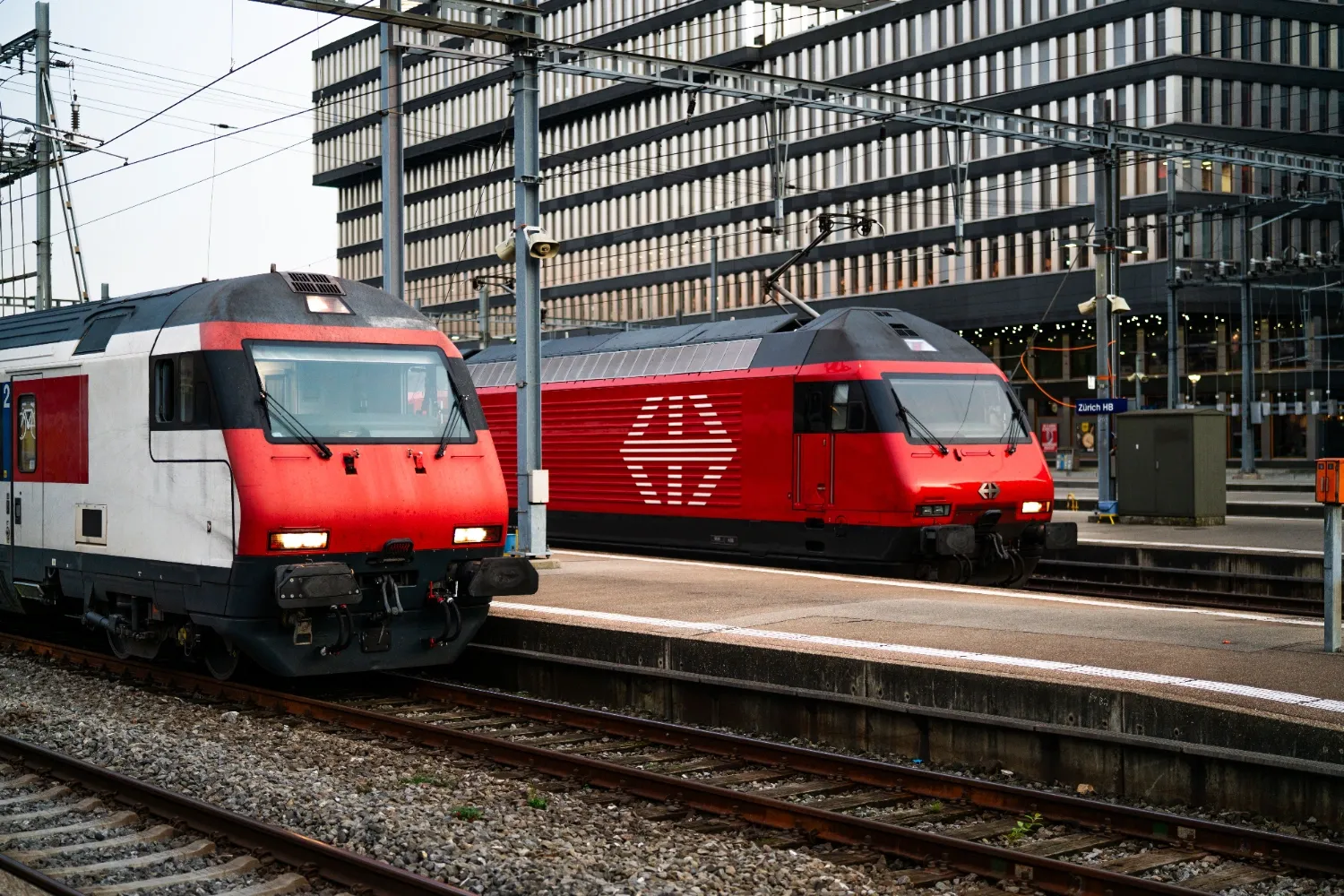
#1. High-Speed Trains
High-speed trains, France's TGV, Germany's ICE, Italy's Frecciarossa and Italo, and Spain's AVE, are the backbone of getting around Europe quickly. They connect major cities directly, usually require a seat reservation, and run at speeds up to 300 km/h on dedicated lines.
#2. Regional Trains
Regional trains are slower, stop more often, and almost never require a reservation. They're the best way to reach smaller towns that high-speed lines skip entirely, and they're usually the cheapest option for short hops.
#3. International Trains
International trains cross borders directly, Eurostar (London-Paris-Brussels-Amsterdam), Thalys and Eurostar's European network, EuroCity services through the Alps, and various bilateral connections between neighboring countries.
These often require reservations and can sell out on popular dates.
#4. Overnight Trains
Night trains, largely operated by ÖBB Nightjet and a handful of others like the European Sleeper, cover longer distances while you sleep, saving a hotel night. Cabin types range from basic seats to private sleeper compartments, and prices scale accordingly.
How to Plan a Train Trip Across Europe
For anyone wondering how to travel Europe by train for the first time, here's a workable process, roughly in order.
- Choose your destinations, and be realistic about how many cities fit in the time you have.
- Map your route, ideally as a rough loop or line rather than backtracking across the continent.
- Check train connections between each stop, since not every city pair has a direct or convenient route.
- Decide how much time to spend in each place before booking anything, since travel days eat into sightseeing time.
- Choose between individual tickets or a rail pass, covered in detail below.
- Book accommodation once your route is roughly locked in.
- Reserve your trains, especially on high-speed and international routes where reservations are compulsory.
- Download tickets and travel apps before you leave, since some stations have unreliable Wi-Fi for last-minute downloads. Getting around Europe smoothly from here mostly comes down to following this order rather than skipping steps.
For a fuller walkthrough of turning this into a day-by-day plan, see our Europe itinerary content, which covers pacing and city order in more depth than fits here.
Best Train Routes Across Europe
Once you understand how the different train services work, the next step is choosing train routes in Europe that fit your itinerary.
Some are ideal for connecting major cities quickly, while others are worth taking mainly for the scenery. The routes below are a mix of convenient city connections and scenic journeys that work well for a first trip around Europe.
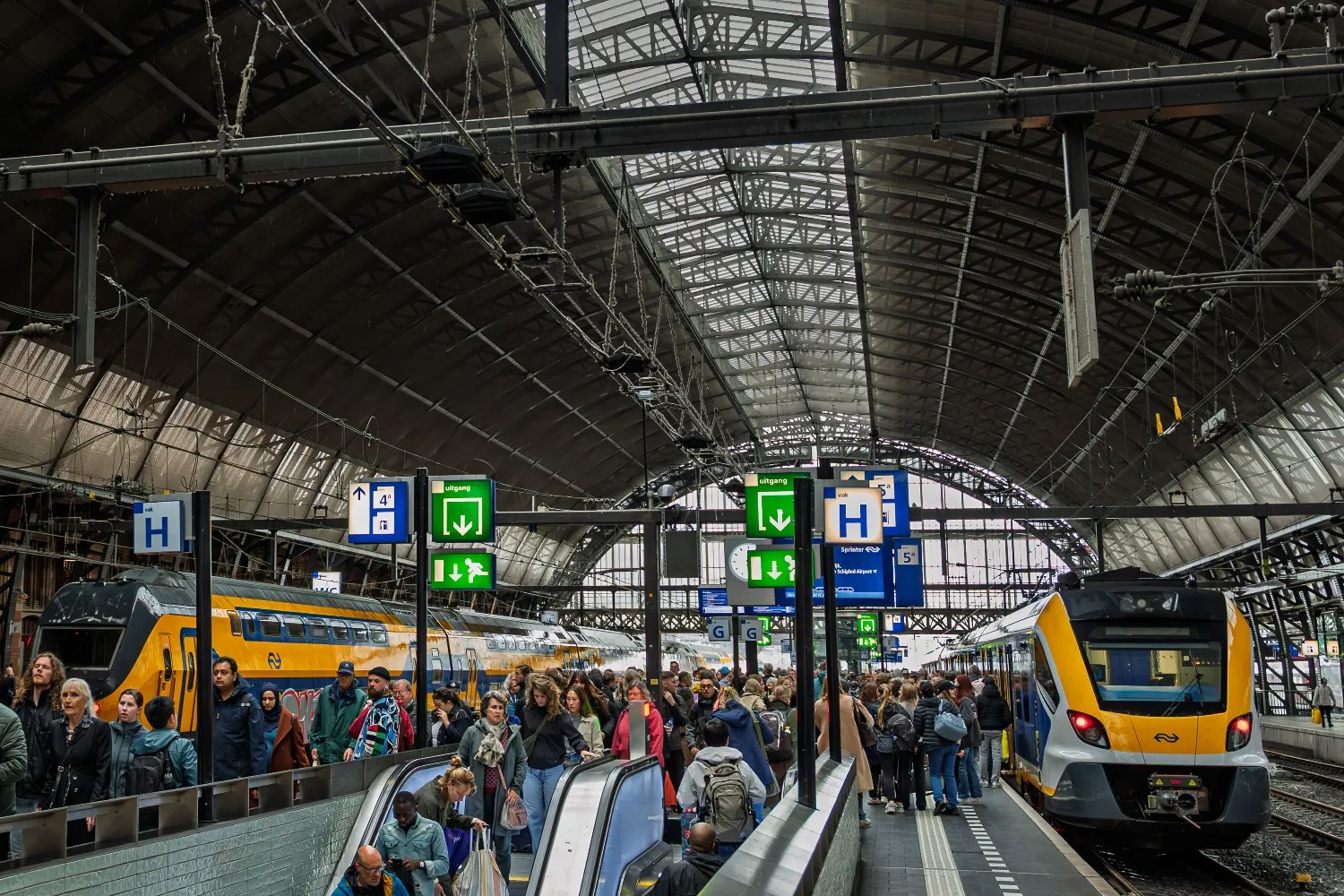
#1. Paris to Amsterdam
Around 3 hours 25 minutes on Thalys or Eurostar, one of the easiest and most scenic short international hops in Europe, and a natural way to combine two major cities in a single trip.
#2. Paris to Brussels to Amsterdam
Breaking the same route into two legs adds Brussels, roughly 1 hour 25 minutes from Paris, then another 2 hours on to Amsterdam, a good option if you want three cities instead of two.
#3. Amsterdam to Berlin
Around 6 hours direct, running through the Netherlands and Germany with decent scenery along the way, a reasonable one-day journey without needing to break it up.
#4. Vienna to Prague to Budapest
Vienna to Prague runs about 4 hours, and Prague to Budapest is notably longer at roughly 6 hours 45 minutes since there's no direct high-speed line between them, so this works better as a multi-day loop than a rushed single trip.
#5. Milan to Zurich
Around 3 hours 30 minutes through the Gotthard Base Tunnel, the world's longest rail tunnel, with the Alpine scenery on either side of the tunnel among the best on this list.
#6. Rome to Florence to Venice
Rome to Florence takes about 1 hour 30 minutes on Frecciarossa, and Florence to Venice around 2 hours, making this one of the most popular short Italian rail loops for a reason.
#7. Other Popular European Rail Routes
Barcelona to Madrid, London to Paris via Eurostar, Munich to Salzburg, and Copenhagen to Stockholm are all worth building into a wider itinerary of train routes in Europe, and a dedicated route-by-route breakdown is worth checking before finalizing a longer trip.
Our roundup of the best places to travel in Europe is a good starting point if you're still deciding which cities to include.
Read more: Looking for a relaxing coastal escape? Explore 17 Best European Beach Vacations for beautiful beaches, seaside destinations and European summer getaway ideas.
Europe Train Tickets vs Rail Passes
Choosing between individual tickets and a rail pass is one of the key decisions when planning train travel across Europe. The better option depends on how often you'll travel, how fixed your itinerary is, and how much flexibility you want.
Buying individual train tickets
Individual tickets work well if you have a simple itinerary, know your travel dates in advance, and won't be taking many trains.
Booking early for routes such as TGV or Frecciarossa can mean significantly lower fares than buying tickets close to departure. For travelers taking only a few journeys, this is often the simpler approach.
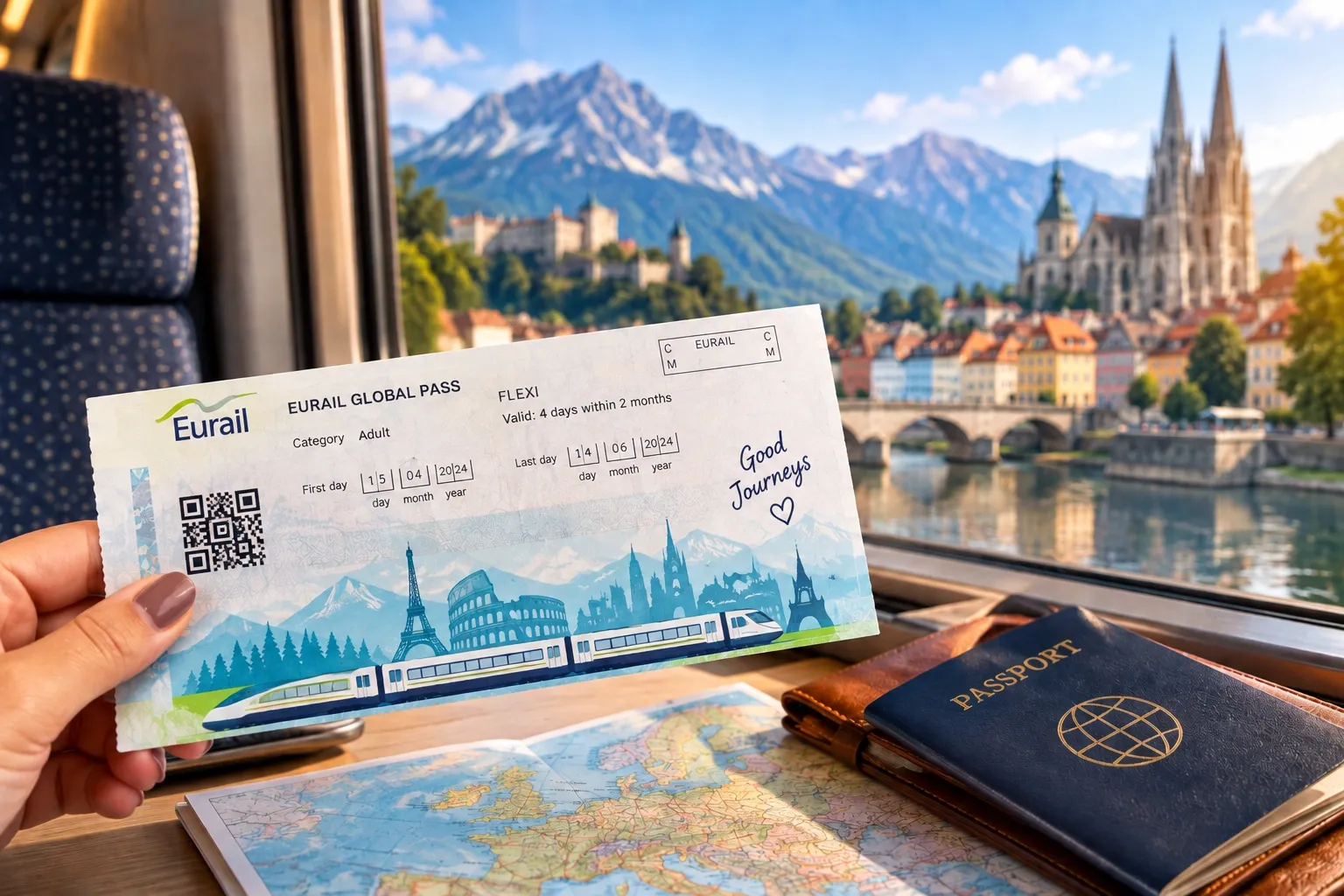
Using a rail pass
A Eurail or Interrail pass can make sense if you're taking several eligible journeys, want to change your plans along the way, or don't want to buy every ticket separately.
Eurail is generally for travelers who live outside Europe, while Interrail is for European residents. Both offer digital passes in 2026.
However, a rail pass doesn't mean every journey is automatically covered. Some high-speed and international trains require a separate seat reservation and fee.
Eurostar services between London and continental Europe, for example, require a reservation even for pass holders, so check the rules for each journey before you travel.
For train travel across Europe tips and passes, the simplest rule is to compare the total cost of your planned individual tickets with the price of a rail pass, including any required reservations.
If your itinerary is fixed and includes only a few journeys, individual tickets may be better. If you're covering several countries and want more flexibility, a rail pass may be worth considering.
Which is cheaper?
There’s no fixed winner between individual tickets and a rail pass. For train travel in Europe, the cheaper option depends on your route, how early you book, how many journeys you take, and how much flexibility you need.
- Few planned journeys: Individual tickets booked early are often the better value.
- Multiple journeys: A rail pass can make more sense when you're covering several countries or taking frequent trains.
- Reservations: High-speed and overnight trains may charge extra reservation fees, even with a pass.
- Flexibility: A pass can be worth paying more for if you want to change plans along the way.
- Best approach: Compare the total cost of individual tickets with the pass price and reservation fees before deciding.
These tips and passes for train travel across Europe can help you work out which option fits your itinerary without assuming a rail pass is always cheaper.
How to Book Train Tickets in Europe
Booking trains across Europe is usually straightforward once you know where to look and when to book. If you're planning to travel by train in Europe, these are the main things to keep in mind.
When should you book?
Booking 2 to 6 months ahead can help you find lower fares on international and high-speed routes. Last-minute tickets are usually still available, but popular services can sell out during summer, Easter, and the Christmas and New Year period.
Where to buy tickets
The easiest way to learn how to book train tickets in Europe is to start with the train operator. National websites and apps such as SNCF Connect, Deutsche Bahn, Trenitalia, ÖBB, and Renfe usually sell tickets directly. Eurail and Interrail platforms are used for rail passes and reservations, while station machines and ticket counters can be useful for last-minute bookings.
Digital or paper tickets?
Most tickets are digital, either in an app or as a PDF. Some regional operators may still require a paper ticket or a ticket printed at the station, so check the instructions when booking.
Do you need a seat reservation?
It depends on the train. High-speed, international, and overnight services often require reservations, while many regional trains do not. Check the reservation requirements when booking rather than assuming a seat is included.
What happens after booking?
You'll usually receive a digital ticket or booking reference by email or in the operator's app. Download it for offline access and keep a screenshot as a backup in case you have connectivity issues while getting around Europe.
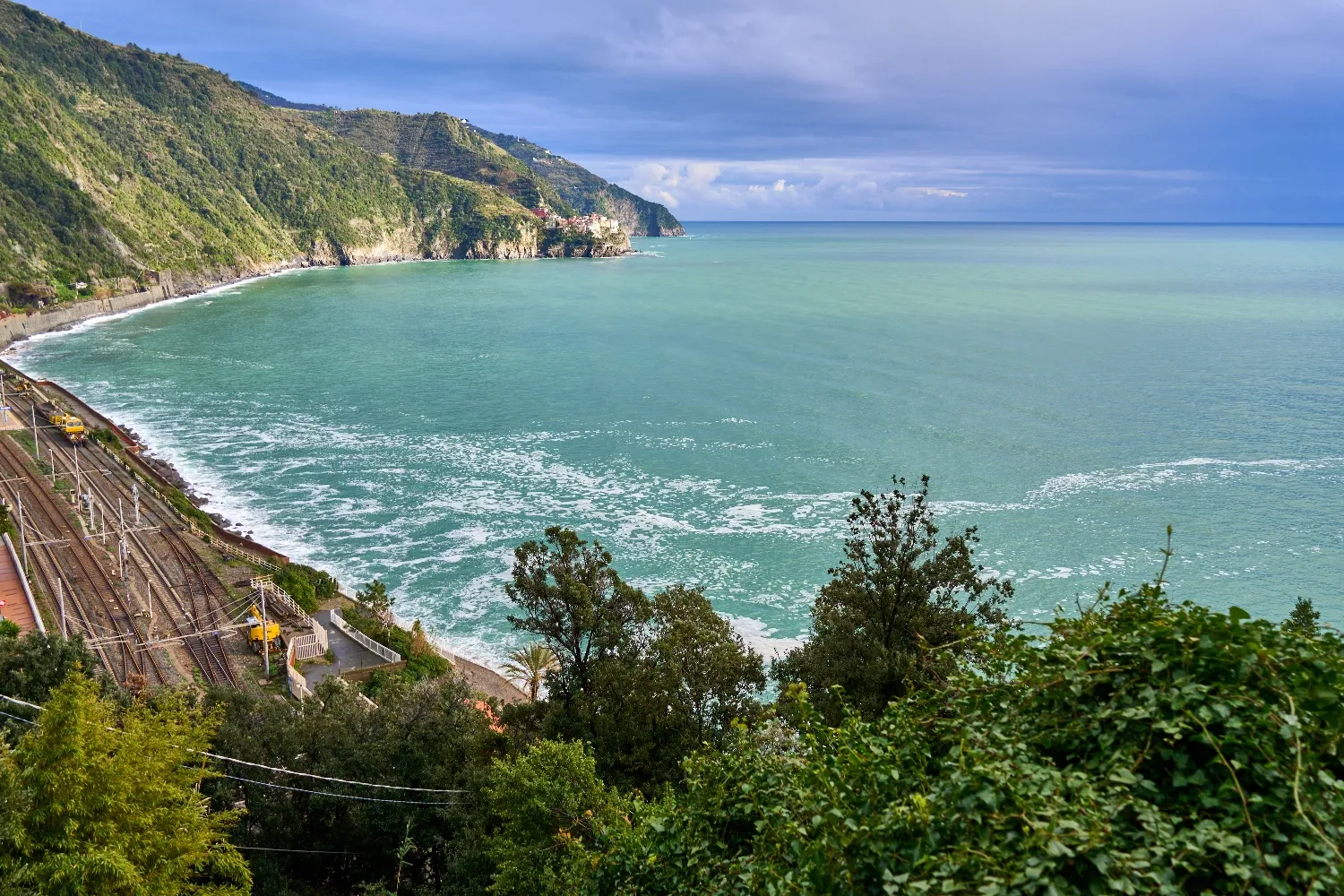
Read more: Travelling with children or teenagers? Explore 10 Best European Vacations for Families with Kids & Teens for family-friendly destinations, activities and trip ideas.
Understanding European Train Tickets
A few basic ticket terms can make train travel in Europe much easier to navigate, especially if it's your first rail trip.
#1. One-way vs round trip
Most European rail tickets are sold as one-way journeys. Depending on the route and operator, buying two single tickets can sometimes be cheaper than a return fare.
#2. Flexible vs fixed tickets
Fixed tickets are usually cheaper but tied to a specific train and date. Flexible fares cost more but allow changes under the operator's fare conditions.
#3. First vs second class
First class generally offers more space and may include extras such as power outlets or quieter carriages. Second class is comfortable on most European trains and is usually sufficient for most travelers.
#4. Reserved vs unreserved seats
A reserved ticket guarantees a specific seat, while an unreserved ticket allows you to board without guaranteeing a seat. On busy services, finding a seat can be difficult.
#5. Ticket validity
Point-to-point tickets are usually valid for the specific journey, date, or train stated on the ticket. Rail passes work differently, with travel days and validity periods depending on the pass you choose.
#6. Refunds and changes
Refund and change policies vary by operator and fare type. Check the conditions before booking if your plans aren't fully fixed.
two singles can sometimes cost less
Flexible = easier to change
Second = better value
Unreserved = no seat guarantee
train, or pass
and fare type
How to Navigate European Train Stations
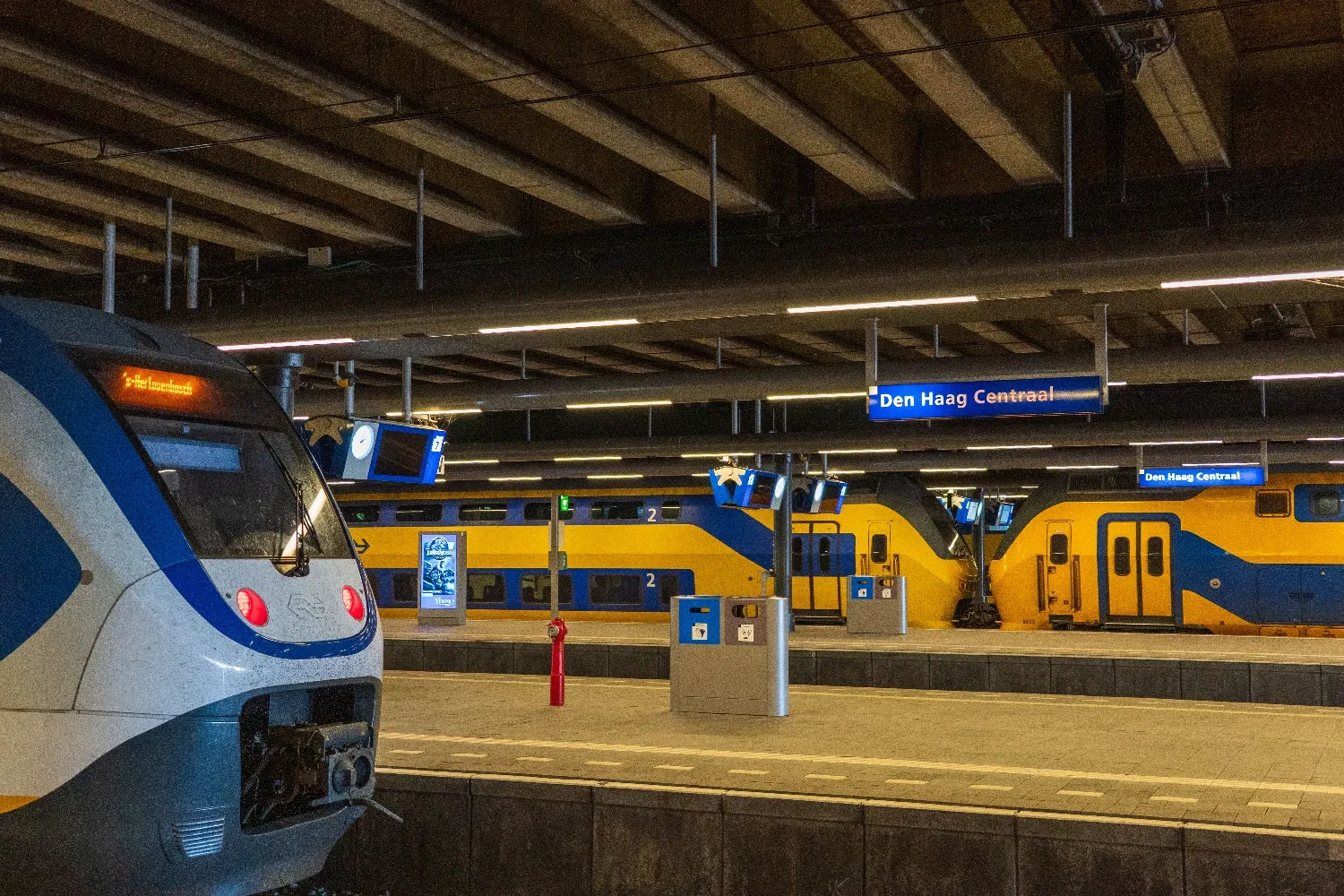
European stations can look overwhelming at first, especially when you're carrying luggage and trying to find a train in an unfamiliar city. The good news is that you usually only need to keep track of three things: your train number, destination, and platform.
Check the departure board when you arrive, then check it again before heading to the platform. Platforms can change, particularly at busy stations. Once you're there, look for the coach number and seat information, and follow the signs rather than relying only on your phone's directions.
How early should you arrive?
You don't usually need to arrive at a European train station hours before your train.
- Small regional station: 5–10 minutes may be enough.
- Large city station: 15–30 minutes gives you time to find your platform.
- High-speed or international train: Aim for 30–45 minutes or more.
- Eurostar: Allow extra time for security and passport checks.
If it's your first time at a large station, arriving a little earlier is worth it. Finding the platform can take longer than the journey planner suggests.
Changing trains in Europe
A tight connection can look fine on an app but feel very different when you're actually walking through a large station with luggage.
For simple connections, 15–20 minutes may be enough. At larger stations or when crossing platforms, changing trains, or going through additional checks, 30–45 minutes is a safer buffer.
If your first train is delayed, don't panic. Check the next departure and speak to station staff if you've missed your connection. Whether you can take the next train depends on your ticket, reservation, and operator.
Luggage on European trains
You won't normally check a suitcase like you would on a flight. You take your luggage onto the train and store it yourself.
Smaller bags can usually go above your seat or between the seats, while larger suitcases go in designated luggage areas. Keep your passport, wallet, phone, and other valuables with you rather than leaving them in a luggage rack.
The easiest approach is to pack light. Carrying a large suitcase through a busy station, up stairs, or between platforms can make a simple connection surprisingly stressful.
Food, drinks and amenities
Don't assume every European train has a café or Wi-Fi. Amenities depend on the operator and type of train.
High-speed and long-distance trains often have toilets, power outlets, Wi-Fi, and some form of food or drinks. Regional trains may offer little beyond a seat and a toilet.
For longer journeys, it's a good idea to carry water and a few snacks, especially if you're changing trains or traveling through smaller stations. Download your ticket before leaving your hotel too, so you aren't dependent on station Wi-Fi or mobile data.
Read more: Want to experience Europe without overspending? Explore Top 17 Cheapest European Countries to Visit for affordable destinations, lower travel costs and budget-friendly experiences.
Staying Connected While Traveling by Train
Staying connected makes travel by train in Europe much easier, from checking platforms and digital tickets to navigating unfamiliar stations.
Your phone will usually work throughout the journey, but there are a few things worth knowing before you rely on mobile data or onboard Wi-Fi.

Will mobile data work on European trains?
Mostly, yes. Mobile coverage is generally good along major rail routes, but you can lose signal temporarily in tunnels, rural areas, and mountainous sections.
Don't worry if your connection disappears for a few minutes. Download tickets, maps, and important travel information before departure so you can still access them offline.
Wi-Fi on European trains
Many high-speed and long-distance trains offer free Wi-Fi, but the quality varies. It's usually good enough for messaging, email, browsing, and checking travel information, but streaming and video calls can be unreliable, particularly through tunnels or remote areas.
Regional and slower trains may not offer Wi-Fi at all, so one of the most useful tips for train travel in Europe is to treat onboard Wi-Fi as a bonus rather than your main connection.
SIM vs eSIM
A physical SIM can mean finding a store, changing cards, and waiting for activation. An eSIM for Europe can be installed before your trip and lets you stay connected as you move between countries without changing the physical SIM in your phone.
For a multi-country itinerary, check that your eSIM Europe plan covers every country on your route rather than assuming one plan works everywhere.
Why an eSIM can be useful for train travel
An eSIM can be particularly useful when you're moving between cities and countries. You may need mobile data to:
- Pull up a digital ticket at the station
- Check platform changes or delays
- Navigate a large station
- Translate signs or menus
- Message your hotel about your arrival
- Book a rideshare after getting off the train
- Use maps when onboard Wi-Fi isn't available
Jetpac's eSIM for Europe covers 200+ destinations through a single install, with unlimited hotspot sharing without a data cap. You can also get free access to essential apps such as Google Maps, WhatsApp, Uber, and Grab, helping you stay connected when you need basic navigation or messaging.
Jetpac also offers in-app voice calling, with voice packs starting at $1.99 for 5 minutes. Plus, its SmartDelay airport lounge access can provide free lounge access at 1,300+ airports when an eligible flight is delayed by 60 minutes or more.

When choosing the best eSIM for Europe, compare coverage, data allowances, hotspot terms, and pricing against your actual route.
Train Travel in Europe by Season
The best time for train travel in Europe depends on the weather, crowds, prices, and the routes you want to take.
Spring
Mild weather, blooming scenery, and fewer crowds than summer make spring a good time for travel by train in Europe. Mountain routes can still have snow early in the season, so check conditions if you're traveling through the Alps.
Summer
Summer is peak season for train travel across Europe, bringing higher prices and busier trains. Book popular high-speed and international services well ahead, especially if your itinerary includes major tourist cities.
Fall/autumn
Fall brings mild weather, thinner crowds, and some of the best scenery of the year. Changing foliage also makes scenic train routes in Europe particularly enjoyable during this season.
Winter
Winter means shorter daylight hours and a higher chance of weather-related delays on mountain routes. Prices are often lower outside the December holiday period, although popular Christmas market and ski destinations can still be busy.
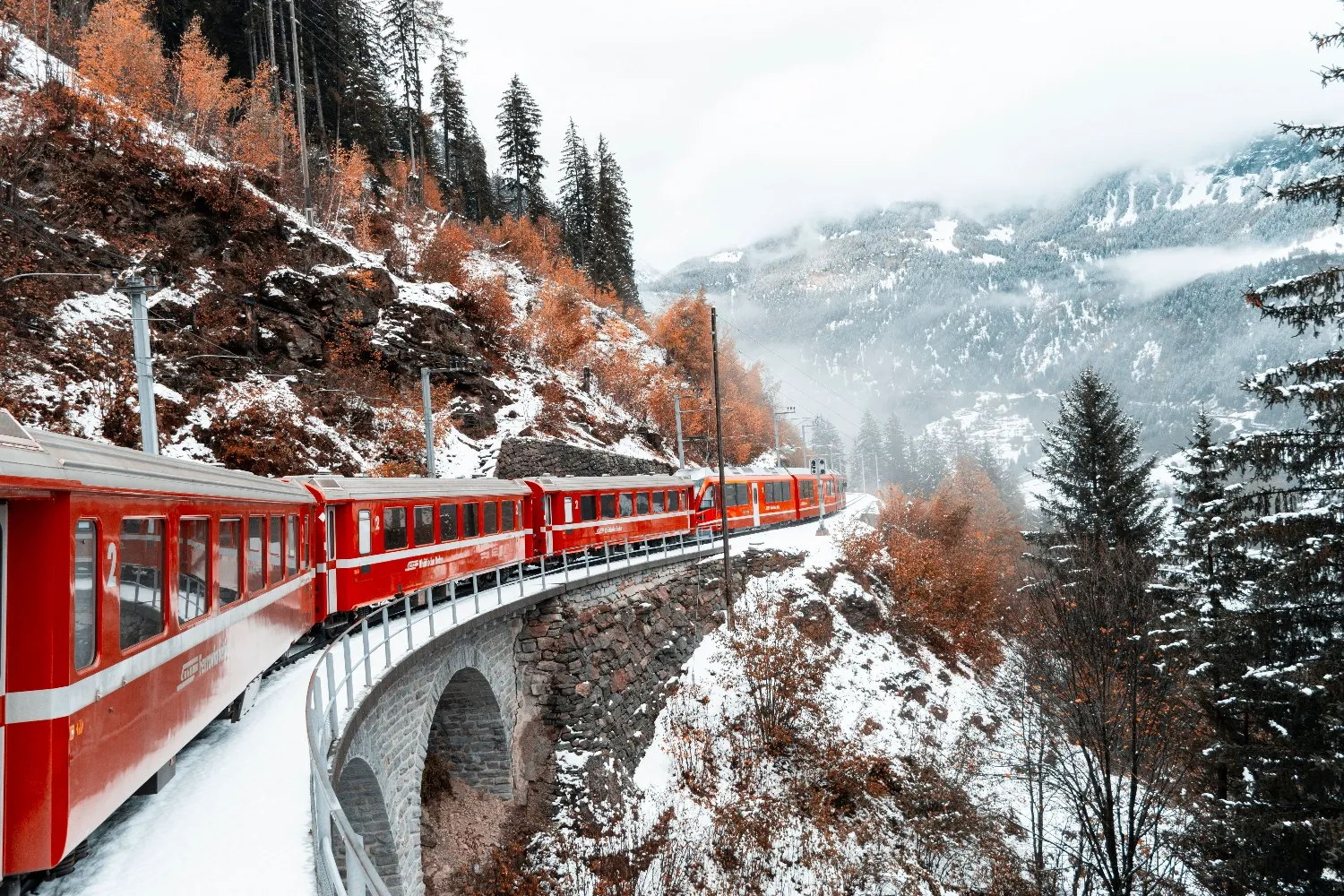
Winter train travel in Europe
Winter rail travel needs a little more planning. Snow can affect mountain and Alpine routes, so leave extra time between connections. Pack warm layers and waterproof footwear, as station platforms are often exposed to the weather.
Read more: Planning your Europe trip around the weather? Explore Best Time to Visit Europe: Ideal Months Revealed for the best travel seasons, regional weather patterns and ideal months.
Christmas market journeys through Germany, Austria, and Central Europe are particularly popular, while Austrian and Swiss Alpine destinations get busier once ski season begins. If winter rail travel is part of a longer trip, our Europe packing list can help you prepare.
Train Travel in Europe on a Budget
If you're looking for train travel in Europe tips that can actually save money, focus on when you travel, how early you book, and which type of train you choose.
- Book early: Advance fares are often cheaper than last-minute tickets.
- Compare tickets and passes: Check the total cost for your specific itinerary before choosing a rail pass.
- Travel off-peak: Fares can be lower outside busy travel periods.
- Consider regional trains: They can cost less if you don't mind a longer journey.
- Skip unnecessary upgrades: Second class is comfortable for most journeys.
- Try overnight trains: You can cover longer distances while potentially saving on a hotel night.
- Mix transport: A bus or budget flight can make sense when rail connections are slow or expensive.
When planning train travel across Europe and passes, compare the total price, journey time, and flexibility of each option. Trains aren't automatically the cheapest choice on every route.
How Much Does Train Travel Across Europe Cost?
There isn't one useful average cost for train travel in Europe. Prices depend on the country, distance, train type, booking time, travel class, flexibility, season, and whether you buy individual tickets or use a rail pass.
A few examples give a better idea of the range. Amsterdam to Paris can start at around $37 when booked ahead, while Prague to Budapest can cost around $6.50 on cheaper fares. A two-month continuous rail pass can cost roughly €600–€650 before reservation fees, based on recent traveler reports.
Remember to factor in reservation fees when comparing a rail pass with individual tickets. Frequent use of high-speed and overnight trains can add €20 or more per travel day. For your overall trip budget, see our guide to How much does a trip to Europe cost?
Train Travel Across Europe for Different Travelers
First-time travelers
Keep your first trip simple. Stick to well-connected train routes in Europe and avoid packing too many cities into a short itinerary. Paris, Amsterdam, and Berlin, for example, can make a manageable first rail trip.
Solo travelers
Train travel in Europe is easy to manage alone, with no need to coordinate schedules with other travelers. Book accommodation and popular train reservations ahead if you're traveling during peak season.
Couples
Consider first class or a private sleeper on longer journeys. The extra cost can be worthwhile when you're spending several hours or an entire night on the train.
Families
Regional trains can be more forgiving than tightly timed high-speed connections. Check luggage space, family seating, and reservation requirements before booking.
Budget travelers
For train travel across Europe, tips that save money focus on advance fares, regional trains, and off-peak travel. Compare a rail pass with individual tickets for your actual itinerary rather than assuming one option is always cheaper.
Read more: Want to bring home something memorable from your trip? Explore Best European Souvenirs to Bring Home from Every Country for unique keepsakes and gift ideas from across the continent.
5 Useful Train Travel Safety Tips
One of the most useful train travel tips across Europe is to stay aware without becoming overly cautious. European trains are generally safe, but a few simple habits can help you avoid common problems.
#1. Keep valuables close: Keep your passport, wallet, phone, and other valuables on you or within sight rather than in an overhead rack you can't easily see.
#2. Watch your luggage: Pay extra attention when boarding and at busy stations, where distraction theft can occur.
#3. Be sensible on night trains: Night trains and quieter carriages are generally safe. If you're traveling alone late at night, choose a compartment with other passengers or move to a busier carriage if an empty one makes you uncomfortable.
#4. Keep tickets backed up: Download your digital tickets and keep a screenshot or offline copy in case your phone loses battery or connectivity.
#5. Be cautious with unsolicited help: Be wary of strangers offering unexpected help with luggage, ticket machines, or tickets. Around busy stations, distraction scams and fake ticket inspections are more realistic concerns than violent crime.
The goal isn't to travel anxiously. A little awareness is usually enough to make train travel in Europe comfortable and stress-free.
9 Common mistakes when traveling Europe by train
A few small mistakes can turn an easy journey into a stressful one. Keep these train travel in Europe tips in mind when planning your itinerary:
#1. Booking a connection that's too tight: Allow extra time at large stations and for potential delays.
#2. Assuming every train needs a reservation: Many regional services don't require one, while high-speed, international, and overnight trains often do.
#3. Confusing train and platform numbers: Check both on the departure board before heading to your platform.
#4. Not checking the departure station: Major cities can have multiple stations, so confirm the exact station before leaving.
#5. Ignoring luggage storage: Find out where you'll store larger bags before boarding rather than trying to find space at the last minute.
#6. Assuming a rail pass covers everything: Some trains require separate reservations and fees, including Eurostar services and many high-speed or overnight trains.
#7. Forgetting a compulsory reservation: Check reservation requirements before boarding to avoid problems during your journey.
#8. Not downloading tickets: Save tickets and booking details offline before leaving your accommodation.
#9. Overloading your itinerary: Trying to visit too many cities leaves little room for delays, missed connections, or simply enjoying each destination.
Essential Apps and Tools for European Train Travel
You don't need dozens of apps for travel by train in Europe. A few reliable tools can cover most of what you'll need.
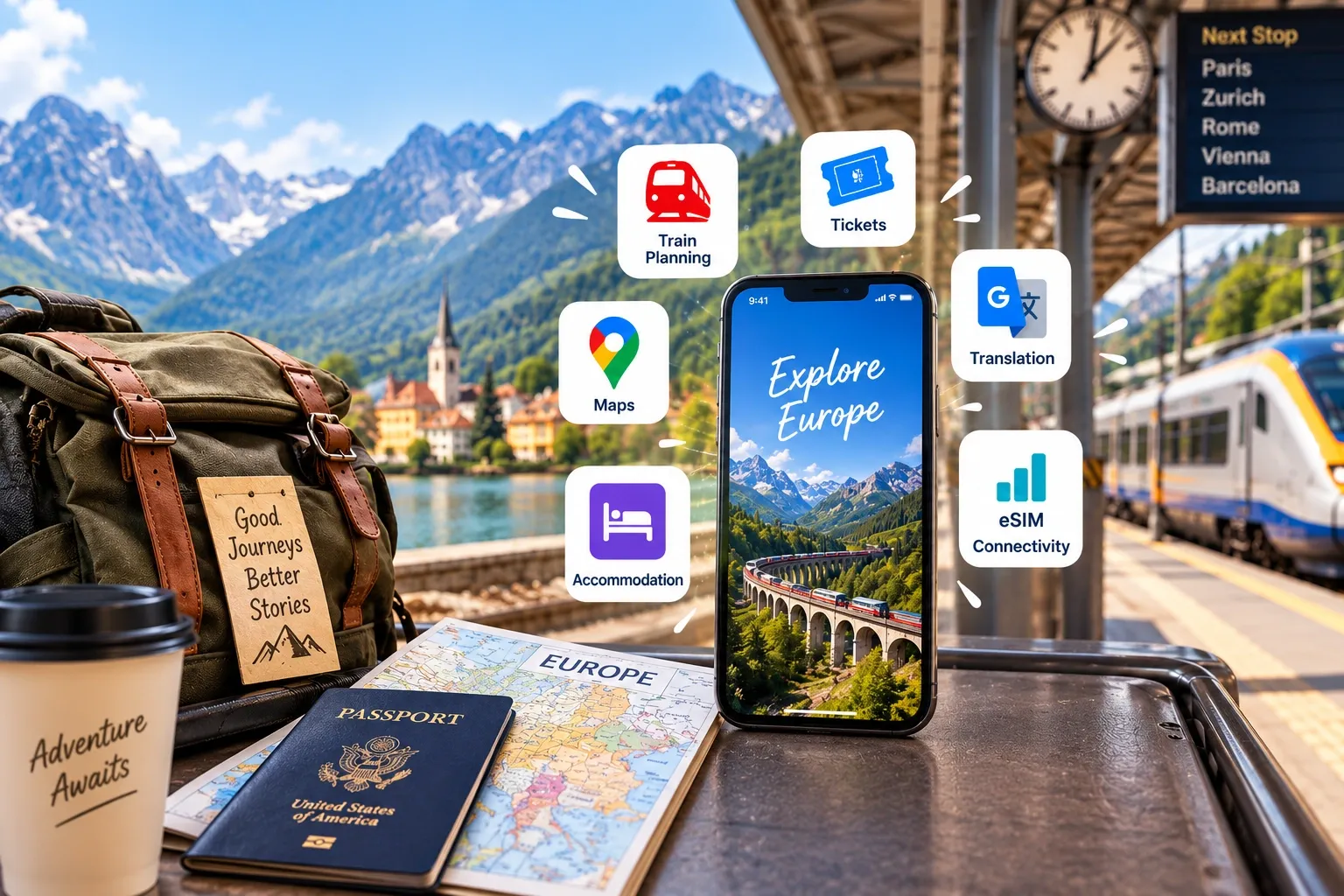
- Train planning: National railway apps such as SNCF Connect, DB Navigator, Trenitalia, and ÖBB are useful for timetables, routes, delays, and service updates.
- Tickets: Use national railway apps for direct purchases. If you're using a rail pass, the Eurail or Interrail app can manage your pass and relevant reservations.
- Maps: Download offline maps so you can navigate stations and cities without relying on Wi-Fi.
- Translation: A translation app can help with platform announcements, signs, and menus when English isn't widely used.
- Accommodation: Your usual hotel or accommodation booking app works just as well during a rail trip.
- Connectivity: An eSIM for Europe can keep these apps working as you move between countries, without having to rely on station Wi-Fi.
Europe Train Travel Checklist
A simple checklist can make train travel across Europe much easier, especially when you're visiting several countries.
Before the trip
- Plan your route
- Compare individual tickets and rail passes
- Book trains
- Reserve seats where required
- Book accommodation
- Download tickets and key travel information
Before each journey
- Check the departure time
- Check the departure station
- Check the platform
- Confirm the train number
- Check connection details
- Download your ticket for offline access
- Charge your phone
At the station
- Check the departure board
- Find your platform
- Confirm the train number and destination
- Check the carriage number
- Find your seat
- Keep your ticket and travel documents accessible
Ready to explore Europe by train?
Traveling by train makes it easy to explore multiple European cities without the hassle of airports. Plan your routes, book early, leave enough time for connections, and choose tickets or passes based on your itinerary.
With these train travel across Europe tips, you'll be ready to spend less time worrying about logistics and more time enjoying the journey.
FAQs
How do I learn how to travel Europe by train as a first-timer?
Start with well-connected high-speed routes between major cities before attempting complex multi-country loops.
Is it easy to travel across Europe by train?
Yes, for most routes between major cities. Smaller towns and multi-country loops take more planning, but the core network is well signed and well connected.
Is train travel cheaper than flying in Europe?
Sometimes, not always. Budget airlines can undercut trains on some routes, while trains often win on total door-to-door time and cost once airport transfers are factored in.
How do I book trains across Europe?
Directly through national railway websites and apps for the best prices, or through a rail pass platform if you're using Eurail or Interrail.
Is a Europe train pass worth it?
It depends on your itinerary. Passes tend to pay off with several long-distance journeys packed into a short window, and individual tickets often win out for a lighter, simpler trip.
Do I need to reserve train seats in Europe?
On most high-speed, international, and night trains, yes. On many regional trains and some national high-speed networks like Germany's ICE, reservations are optional.
How far in advance should I book European trains?
Two to six months ahead for the best fares on international and high-speed routes, though regional trains are more flexible and don't need to be booked that far out.
Can I travel between European countries by train?
Yes, extensively. International and cross-border trains connect most neighboring countries directly, sometimes with a change required for less common routes.
Can I take luggage on European trains?
Yes, with reasonable space limits rather than strict weight rules, though large suitcases go in dedicated racks rather than overhead on most trains.
Do European trains have Wi-Fi?
Most major high-speed and international operators offer free Wi-Fi, though quality varies and Switzerland's SBB trains rely on boosted mobile signal instead of onboard Wi-Fi.
What happens if I miss my train connection?
Policy depends on the operator and ticket type, but on many through-ticketed or pass itineraries, you'll be rebooked onto the next available service.
Can I use my phone on European trains?
Yes, and mobile data generally works better than train Wi-Fi in tunnels and rural stretches, which is where an eSIM for Europe earns its keep.
Is train travel in Europe safe?
Yes, for the large majority of routes and travelers. Ordinary precautions around luggage and valuables cover most of the actual risk.
Disclaimer
This blog is for educational purposes only. All information, including journey times, prices, and reservation rules, is based on publicly available data and can change over time. Always check official railway websites and current timetables before booking, since schedules, fares, and network changes happen regularly. Jetpac is not responsible for any inaccuracies, changes, or losses arising from reliance on this information.
Get connected as soon as you land with a Jetpac travel eSIM.