
How Good are eSIMs? Pros, Cons & Real-World Use
How good are eSIMs in real life? Learn the pros, cons, and how eSIMs work for travel, international use, and everyday phones.
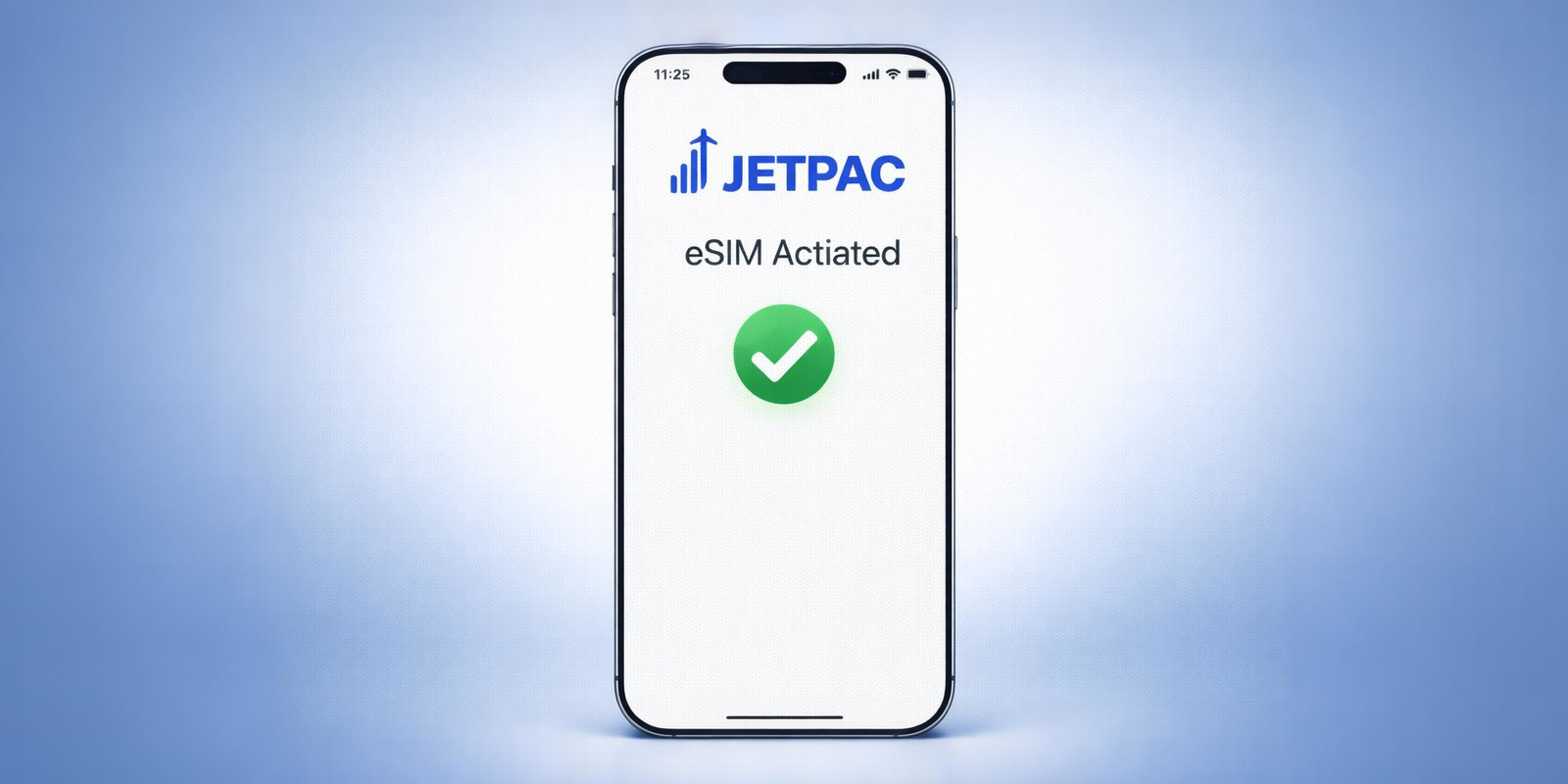
eSIMs are good for flexibility, travel, and managing multiple lines on one phone. They remove the need for physical SIM cards but still depend on carrier coverage and regional support. For many users, especially travelers, eSIMs are good to use when convenience matters more than perfect coverage everywhere.
Most of us only start thinking about SIMs (Subscriber Identity Module) when something breaks. No signal. No data. A roaming warning that makes you nervous. Or standing at an airport after a long flight, tired, hungry, just wanting maps to work. This is usually where the question comes up quietly in your head: how good are eSIMs, really?
eSIMs (Embedded Subscriber Identity Module) promise convenience. No plastic card. No tiny tray. No queue at a local shop. You scan a code, tap a few settings, and your phone connects. For many people, that feels like progress. But real life is rarely that simple, especially when travel, different countries, and different carriers are involved.
So, before deciding whether eSIMs are good, it helps to look beyond the surface. This blog looks at eSIMs the way people experience them in real life. Not just the benefits, but also the limits. It covers everyday use, travel scenarios, and what actually happens when you rely on an eSIM for international travel. By the end, you will have a clear sense of “are eSIMs good to use?” for your needs, and when a physical SIM might still make more sense.
Are eSIMs Actually Good?
In most situations, yes. eSIMs are genuinely useful. But they are good for convenience, not because they magically improve performance.
If you’re asking “how good are eSIMs?”, the biggest benefit is simplicity. You can switch plans without touching a SIM tray, keep more than one line on the same phone, and set things up quickly when you travel. That is why many people feel eSIMs are good to use in everyday life.
What eSIMs do not do is boost signal strength or speed on their own. Coverage and data quality still depend on the carrier network, local infrastructure, and your phone’s supported bands. So when people ask “are eSIMs good?”, the answer depends on the situation.
For someone who never travels and sticks to one carrier, the difference may feel small. For travelers, frequent switchers, or people using two numbers, eSIMs are clearly practical. That is where their value shows up.
What Is an eSIM and How Does It Work?
An eSIM is the digital version of a physical SIM card. Instead of inserting a small plastic card into your phone, the eSIM is built directly into the device as a secure chip. It does the same job as a physical SIM by connecting your phone to a mobile network for calls, messages, and data. This is the simplest way to understand what is an eSIM, and how it works.
When you activate an eSIM, your phone downloads a network profile from a carrier. This usually happens by scanning a QR code or using a carrier app. Once the profile is installed, the eSIM works exactly like a physical SIM. There is no difference in daily use. Your signal, data, and calling behave the same way.
Because the eSIM chip can store more than one profile, you can keep multiple plans on the same device. This is especially useful for people who switch between work and personal numbers or rely on an eSIM for travel when moving between countries.
PROs of Using eSIMs
The real strength of eSIMs is not speed or signal. It is flexibility. Once you move away from physical cards, everyday phone use feels simpler, especially if you travel or manage more than one line.
✅ Easy activation and switching
You can add or change a plan without visiting a store or waiting for a SIM card to arrive. Most setups take only a few minutes in settings. This ease is a big reason people feel eSIMs are good to use after trying them once.
✅ Multiple plans on one phone
Most eSIM phones can store more than one profile. You might keep a home plan, a work number, and a travel plan ready at the same time. Switching between them is usually quick, which explains “how good are eSIMs?” for daily use.
✅ Strong travel advantage
This is where eSIMs shine. An eSIM for travel lets you connect without searching for a local SIM shop after landing. You can install the plan before you leave and go online as soon as you arrive. For many people, this is why eSIMs are good for travel, especially on short trips or multi-country routes.
✅ Dual SIM finally feels practical
Many phones support one physical SIM with one eSIM, or even two eSIMs on newer models. This makes it easy to keep your main number active for calls and banking alerts while using a separate plan for data.
✅ Less physical hassle
There are no tiny SIM cards to lose, no tray tools, and no swapping cards in a rush. Everything stays digital, which quietly makes phone management easier over time.
✅ Better device design
Removing the SIM tray gives manufacturers more internal space. This often improves water resistance and allows slightly larger batteries, even if the difference is not dramatic.
✅ Improved security in specific situations
Because an eSIM cannot be physically removed, it is harder for someone to take your SIM and use it elsewhere. While this does not eliminate all risks, it adds protection compared to physical SIM cards.
Together, these points explain why many users conclude eSIMs are good, particularly when flexibility and travel convenience matter.
Cons of Using eSIMs
Not everything comes with only advantages, and eSIMs are no exception. While they solve many everyday problems, there are a few real-world downsides that matter, especially depending on how and where you use your phone.
❌ Compatibility is still uneven
Flagship phones usually support eSIM, but budget models, older devices, and some region-specific versions often do not. Even within the same phone model, support can vary depending on where it was sold. This can make eSIMs good to use in one country and difficult in another.
❌ Country and carrier support can be unpredictable
Some regions have limited eSIM adoption or strict regulations. Mainland China is a well-known example, but parts of the Middle East and some developing markets also have patchy support. Carrier policies matter just as much as the phone itself, which affects whether eSIMs are good for travel in every destination.
❌ Internet is usually required for activation
To download and install an eSIM profile, you typically need WiFi or another active data connection. This can be inconvenient if you arrive somewhere without easy internet access.
❌ Locked phones can block travel eSIMs
Many eSIM plans for international travel require your phone to be carrier-unlocked. Phones bought on payment plans or tied to certain carriers may refuse to activate third-party eSIMs.
❌ Speed and priority can differ
This is one of the most common surprises. Some travel eSIM plans are limited to LTE even where 5G exists. Roaming users may be deprioritized during busy hours, and cheaper plans often throttle speeds after a usage limit. This is not a problem with the eSIM chip itself, but with how carriers structure plans.
❌ Activation can be fragile
Expired QR codes, unstable WiFi during setup, carrier maintenance, or regional restrictions can cause activation to fail or hang. Fixing this sometimes means contacting support or requesting a new profile.
❌ Switching phones is less simple
With a physical SIM, you can often move your service to another phone in minutes. With eSIM, transfers depend on carrier support and whether the new device also supports eSIM. If your phone breaks while traveling, this can be stressful.
These downsides do not mean eSIMs are bad, but they do explain why are eSIMs good depending on your situation. Knowing these limits helps you decide when eSIM makes sense and when a physical SIM might still be useful.
How eSIMs Work for International Travel?
In real travel use, eSIMs are about continuity. Once the plan is installed, your phone stays ready to connect as you move between countries, without stopping to buy or swap SIM cards. That is the practical answer to “how do eSIMs work for international travel?”
What matters next is the quality of the eSIM provider. This is where Jetpac fits naturally into the picture.
When you are traveling, you are often moving through airports, trains, unfamiliar streets, and places where reliable internet quietly matters. Maps, ride apps, messages, and quick calls are not optional. This is where Jetpac comes in with the advantages that make travel smoother.
Why Jetpac works well for international travel?
1️⃣ Works in more than 200 destinations
You do not need a new plan for every country, which makes multi-country travel easier.
2️⃣ In-app voice calls at affordable rates
Voice calls start at USD 1.99 for 5 minutes, which is useful for hotels or local services.
3️⃣ Instant QR code activation
Setup is simple and can be completed before you leave for your trip.
4️⃣ Multi-network switching
Your phone connects automatically to the strongest available network.
5️⃣ Prepaid 5G access, where supported
You avoid roaming surprises and heavy bill shocks by paying upfront.
6️⃣ Unlimited hotspot sharing
Share your connection with laptops or travel companions without data restrictions.
7️⃣ Essential apps continue working even if data runs out
WhatsApp, Google Maps, and Uber remain usable, which helps when you are in a pinch.
8️⃣ 24/7 customer support
Support is available through WhatsApp and email, which matters when traveling across time zones.
This is why many travelers choose Jetpac as their eSIM for international travel. It removes small points of friction and keeps your phone usable throughout the journey, not just when everything goes perfectly.
Where eSIMs Can Be Weak or Frustrating?
eSIMs are convenient, but they are not perfect everywhere. This is usually where expectations need to be realistic, especially if you are deciding, "are eSIMs good for a specific trip?"
eSIMs can feel weaker in:
👉 Rural areas and remote towns
Coverage depends on which local network your eSIM can access. If that network is limited, speeds and signal can drop, just like with a physical SIM.
👉 Islands and coastal regions
Fewer roaming partners and limited infrastructure can lead to slower speeds or unstable connections, even when maps show coverage.
👉 Countries with limited roaming agreements
Some destinations simply have fewer carrier partnerships. In these places, eSIM international travel may work, but not always at full speed.
👉 High congestion periods
During festivals, peak tourist seasons, or busy business hours, roaming traffic may be deprioritized. This affects some eSIM plans for international travel more than others.
👉 Phones are missing key frequency bands
If your device does not support the bands used locally, coverage can suffer regardless of SIM type.
Knowing this helps you decide when are eSIMs good to use and when having a backup option makes sense.
Security: Are eSIMs Safer Than Physical SIMs?
eSIMs do improve security in some practical ways, but they are not a complete shield against every risk. The difference comes down to physical access versus account control.
✅ Because an eSIM is built into the phone, it cannot be removed and inserted into another device. This makes it harder for someone to steal your SIM and use it elsewhere. In everyday situations, this alone makes many people feel eSIMs are good to use, especially while traveling.
That said, the biggest threat today is not physical SIM theft. It is SIM swap fraud. This happens when someone convinces a carrier to move your number to a new SIM or eSIM they control. This risk exists with both physical SIMs and eSIMs. The technology does not eliminate it.
What actually helps reduce risk is how you protect your carrier account.
Practical habits that matter more than SIM type:
Use app-based authenticators instead of SMS codes where possible
Set a strong carrier account PIN and password
Enable port-out protection if your carrier offers it
Treat sudden loss of service as a warning sign
So, are eSIMs good from a security point of view? Yes, in terms of physical safety and convenience. But real protection still depends on account security and awareness, not just the SIM format.
eSIM vs Physical SIM
Criteria
Physical SIM
eSIM
Form
Small, removable plastic card inserted into the phone
Built into the device as a digital chip
Activation
Slow → Manual setup, longer activation time
Instant → Digital setup using QR code
Device compatibility
Works with almost all phones, including older models
Supported only on newer eSIM-enabled devices
Plan management
One plan per card
Multiple plans stored on one device
Switching plans
Requires swapping SIM cards
Done directly through phone settings
Travel convenience
Must buy a local SIM after landing, requires SIM swapping
Ideal for international travel with instant setup, no SIM swap
Security
Can be removed, misplaced, or stolen
Safe and secure
Network speed
Depends on carrier and coverage
Auto-connects to the best local network
Phone switching
Easy to move SIM to another device
Transfer depends on carrier and device support
Future support
Slowly being phased out in some markets
Increasingly adopted worldwide
Quick Checklist Before Switching to eSIM
Before moving to eSIM, a few simple checks can save you time and frustration later. This applies whether you plan to use eSIM at home or rely on an eSIM for international travel.
✅ Check your phone model
Make sure your exact device and regional version support eSIM. Some models support it in one country but not in another.
✅ Confirm your phone is unlocked
Many eSIM plans for international travel require an unlocked device. Carrier-locked phones may block third-party eSIMs.
✅ Verify carrier support
Not all carriers support eSIM on every plan. A quick check avoids failed activations.
✅ Plan internet access for setup
eSIM activation usually needs Wi-Fi or another active data source. Do not rely on having connectivity after landing.
✅ Decide which line handles data
If you use dual SIM, choose in advance whether your primary number or the eSIM will manage mobile data.
✅ Keep your physical SIM active until ready
Do not remove or deactivate your existing SIM until the eSIM is fully working.
✅ Understand plan limits
Some travel eSIMs have speed caps or fair usage policies. Knowing this upfront helps set expectations.
Running through this checklist makes it easier to decide are eSIMs good to use for your situation and reduces surprises when you switch.
FAQs
How good are eSIMs in real life?
In real use, eSIMs are good for flexibility and convenience. They make switching plans, using dual SIM, and traveling easier. Performance still depends on the carrier and coverage, not the eSIM itself.
Are eSIMs good to use for everyday phones?
Yes, for most modern phone users, eSIMs are good to use. They work the same way as physical SIMs once active, with the added benefit of easier plan management.
Are eSIMs good for travel?
For most travelers, yes. Are eSIMs good for travel often comes down to convenience. You avoid roaming surprises and skip buying local SIMs after landing, especially in major cities and popular destinations.
How do eSIMs work for international travel?
With eSIM international travel, you install the plan digitally, and your phone connects to supported local networks as you move between countries. There is no SIM swapping, and many plans work across multiple destinations.
Do eSIMs give better signal or speed?
No. eSIMs do not improve signal or speed on their own. Network quality depends on the carrier, coverage, and local conditions.
Are eSIM plans for international travel reliable?
Most eSIM plans for international travel are reliable in cities and travel hubs. Performance can vary in rural or remote areas, depending on roaming partners.
Can I use eSIM and a physical SIM together?
Yes, many phones support one physical SIM and one eSIM at the same time. Some newer models even support two active eSIMs.
Are eSIMs safer than physical SIMs?
eSIMs are harder to remove physically, which helps in some situations. However, account security still matters most when it comes to preventing SIM swap fraud.
Disclaimer
All information in this Blog is based on publicly available data and common user experiences. Network performance, coverage, speeds, and eSIM support can vary by device model, carrier, region, and local conditions. eSIM plans, pricing, and features may change over time. This content is for educational purposes only and does not constitute product or carrier recommendations. Readers are advised to verify device compatibility and carrier support before switching to eSIM or purchasing any eSIM plan.