Thailand Travel Tips: 20 Things I Wish I Knew Before Going
Submit your free TDAC entry form 72 hours before flying, carry small Thai baht bills, and use Grab for fixed-price rides. Expect dry November to February weather, daily budgets from $30, and strict bans on vaping or unmetered taxis. Pack modest temple clothing and book peak trains early.

Carry Thai baht cash, download Grab for rides, and dress modestly at temples for a smooth trip. Thailand rewards visitors with incredible street food, tropical islands, and vibrant cities, though knowing a few practical Thailand travel tips beforehand saves you time and money.
Whether you are a first-timer, a budget backpacker, or a family on vacation, these tips for visiting Thailand help you avoid common headaches.
From transport, local laws, and mobile connectivity to money and customs, here are the top things to know before visiting Thailand.

Thailand Travel Tips at a Glance
Thailand Travel Quick Facts & Planning Overview
| Category | Key Details |
|---|---|
| Best time to visit | November to February (cool and dry across most regions) |
| Ideal trip length | 10 to 14 days (covers Bangkok, Chiang Mai, and one island region) |
| Currency | Thai Baht (THB) |
| Language(s) | Thai (English is widely spoken in tourist areas) |
| Visa needed? | No for 60 eligible nationalities up to 30 days (mandatory TDAC online form required before arrival) |
| Avg. daily budget | Budget: $30–$50 / Mid-range: $70–$130 / Luxury: $200+ per person |
| Time zone | Indochina Time (ICT / UTC+7) |
| Nearest airport | Suvarnabhumi Airport (BKK) or Don Mueang Airport (DMK) in Bangkok |
20 Essential Travel Tips for Thailand
#1. Plan Around Seasons for the Best Time to Visit Thailand
The best time to visit Thailand for cool, dry weather across Bangkok, Chiang Mai, and the Andaman coast (Phuket, Krabi) is November through February. If you travel between May and October, head to Gulf islands like Koh Samui, where rainfall stays much lighter during the summer monsoon.
Book during shoulder months like April or October for lower hotel rates, though avoid northern Thailand in March and April due to heavy agricultural smoke.
#2. Check Visa Rules and Submit Your TDAC Before Flying
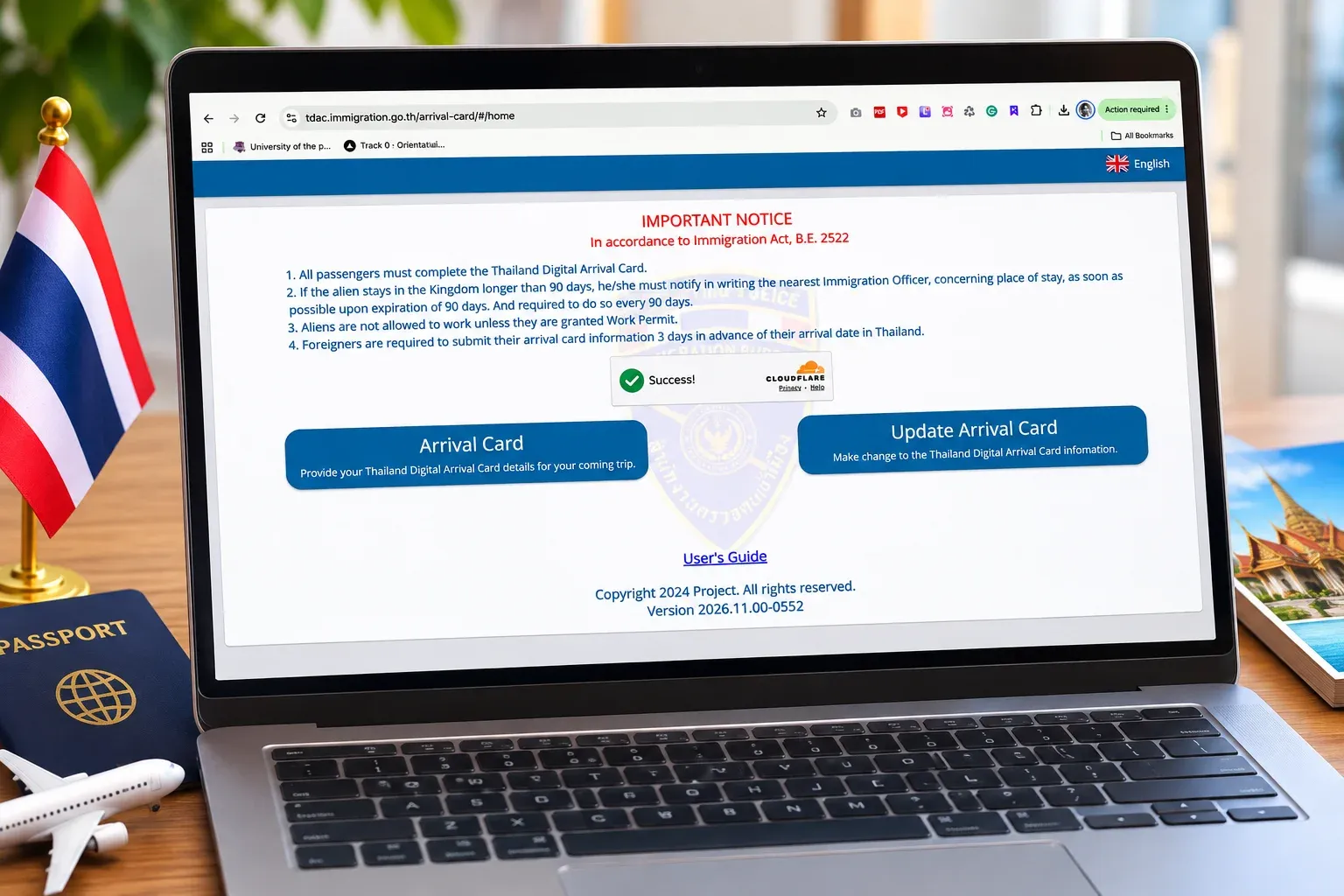
If you are wondering, "Do you need a visa to travel to Thailand?" citizens of 60 eligible countries can enter visa-free for up to 30 days. Every foreign traveler must still submit the free Thailand Digital Arrival Card (TDAC) online within 72 hours before landing at Suvarnabhumi (BKK) or Don Mueang (DMK).
#3. Use Ride-Hailing Apps and Trains for Thailand Transportation
Understanding Thailand transportation early saves you from unmetered taxi hassles and long traffic delays in Bangkok.
- Download Grab or Bolt before landing to book fixed-price cars, motorbikes, and airport rides.
- Ride Bangkok's BTS Skytrain and MRT subway to skip rush-hour gridlock across central shopping districts.
- Book overnight sleeper trains between Bangkok and Chiang Mai weeks ahead on the official SRT D-Ticket app.
#4. Pick Your Bangkok Neighborhood Based on Your Travel Style
Choosing the right base cuts down daily transit time in a sprawling city.
- Sukhumvit (Asok/Thonglor) works best for first-timers wanting direct BTS Skytrain access, modern hotels, and international dining.
- Khao San Road or Banglamphu suits budget backpackers looking for cheap hostels and walking access to the Grand Palace.
- Riverside (Charoen Nakhon) fits luxury travelers and families seeking quieter resorts with free shuttle boats to major piers.
#5. Track Your Thailand Travel Cost and Carry Small Bills
A realistic Thailand travel cost runs $30 to $50 daily for budget backpackers, $70 to $130 for mid-range travelers, and $200+ for luxury stays.
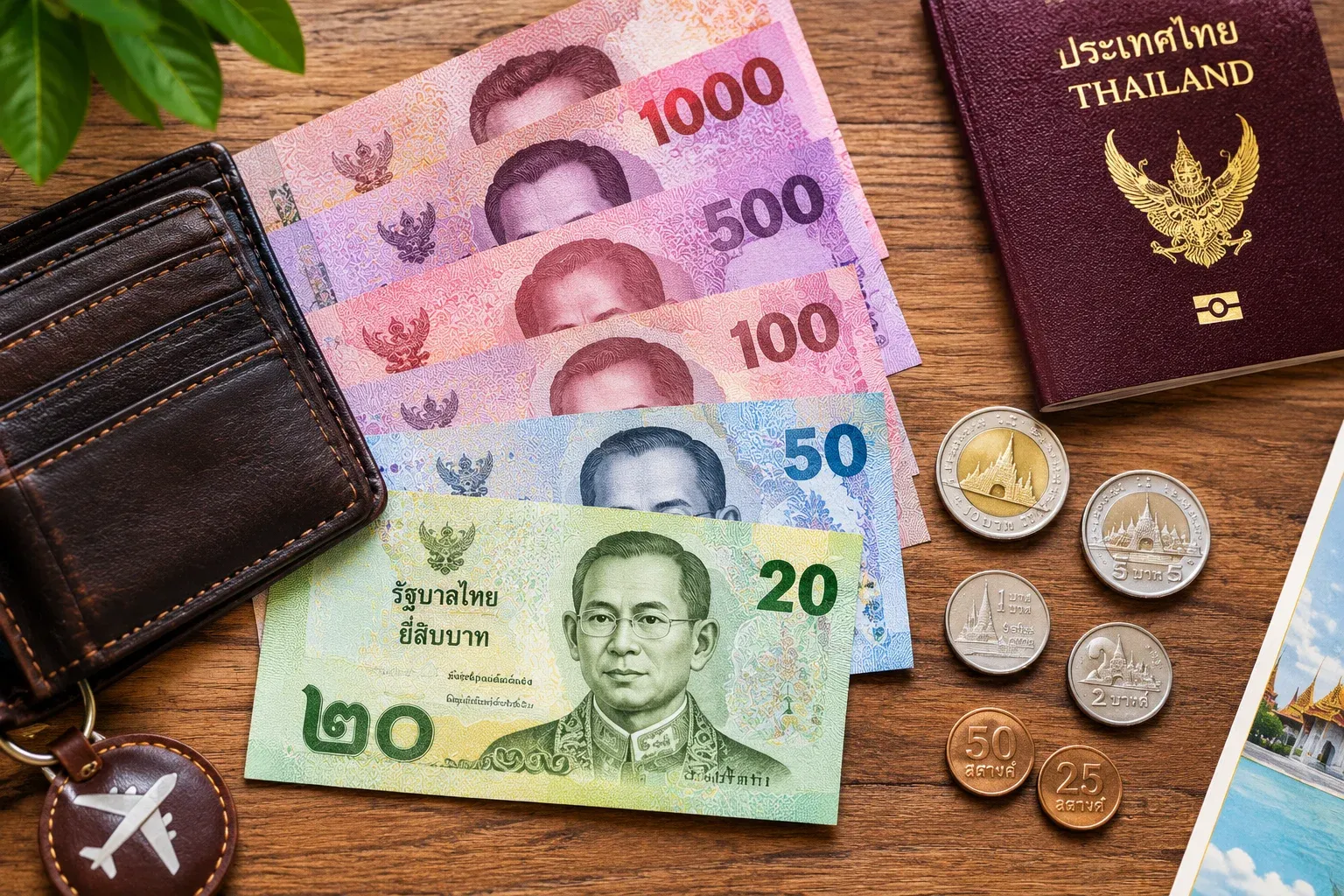
- Withdraw larger amounts at once because Thai ATMs charge 250 THB for Visa cards and up to 350 THB for Mastercard per foreign withdrawal.
- Decline dynamic currency conversion at ATMs and always choose to be charged in Thai baht.
- Keep 20, 50, and 100 THB notes handy since street vendors and local taxis rarely break 1,000 THB bills.
- Tipping is not mandatory, though rounding up taxi fares or leaving 20 to 50 THB at sit-down restaurants is appreciated.
#6. Watch Out for Street Scams and Drink Bottled Water
Among the best travel tips for Thailand, staying alert around major landmarks prevents the most common tourist traps.
- Ignore tuk-tuk drivers or strangers claiming the Grand Palace or Wat Pho is closed for a royal ceremony.
- Never leave your passport as a deposit when renting a jet ski or scooter in beach towns.
- Drink only sealed bottled water or filtered refill water, though factory-made ice with holes in the center is safe.
- Save 1155 on your phone to reach Thailand's English-speaking Tourist Police in any emergency.
#7. Follow Temple Dress Codes and Cultural Etiquette
Showing basic cultural respect keeps you welcome across sacred sites and local neighborhoods.
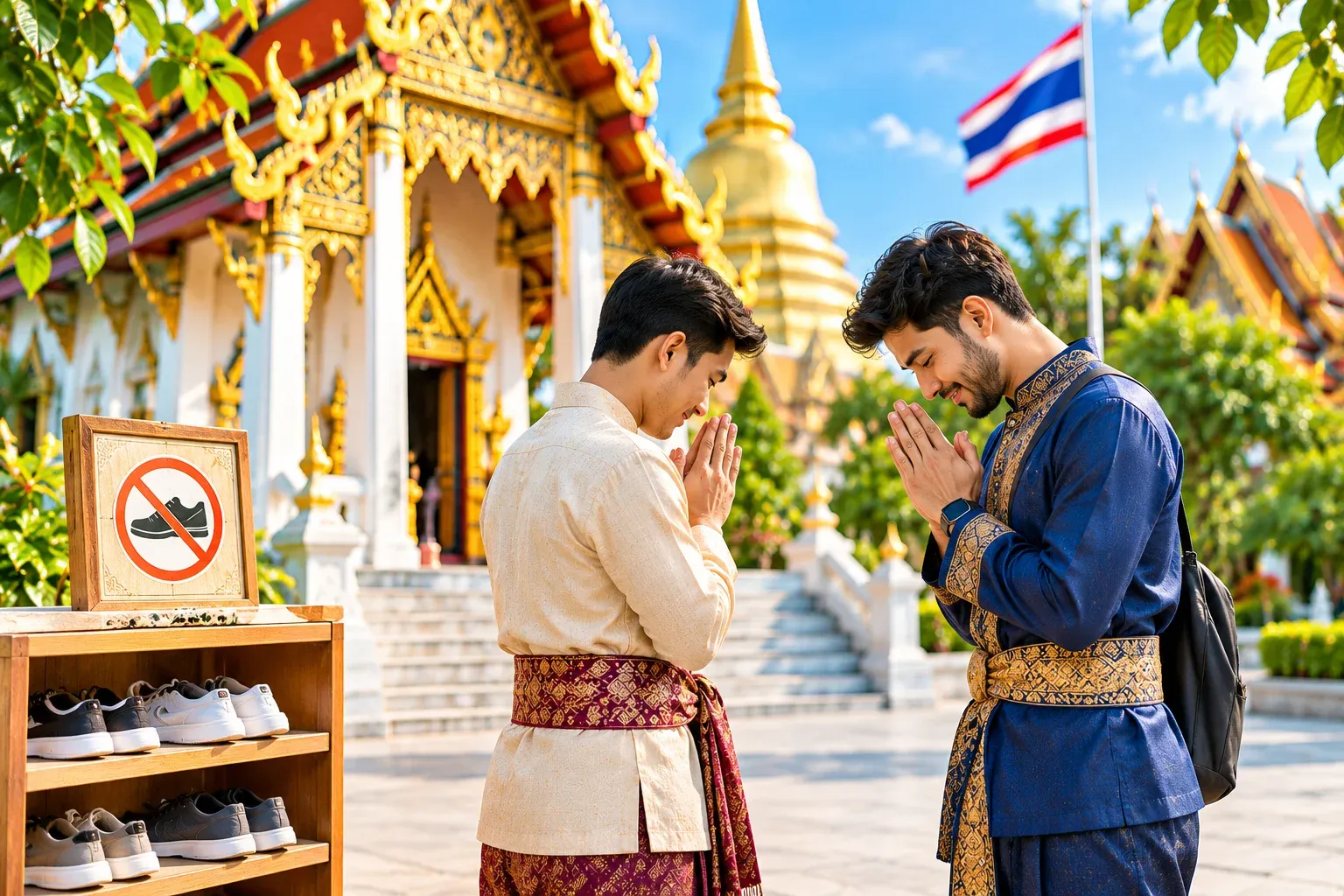
- Cover shoulders and knees before entering any temple, and remove your shoes at every shrine doorway.
- Never point your feet at Buddha statues or people, and avoid touching anyone's head.
- Treat Thai currency carefully because stepping on bills or coins with the King's image is illegal.
- Return a wai greeting by pressing your palms together at chest level with a slight bow.
Read more: Want to learn more about Thai history, culture, and surprising local trivia before your trip? Discover fascinating details about the Land of Smiles. Read our blog 👉 30 Fun Facts About Thailand That May Surprise You
#8. Build a Smart Thailand Packing List for Heat and Rain
A practical Thailand packing list focuses on breathable fabrics and temple-ready layers rather than heavy luggage.
- Light linen or cotton shirts and loose pants that dry quickly in high humidity.
- A lightweight packable scarf or shawl to cover bare shoulders at temple entrances.
- Easy slip-on sandals or shoes for frequent footwear removal at temples and shops.
- Reef-safe sunscreen and DEET mosquito repellent, which cost much more inside Thai beach resorts.
- A compact rain poncho or travel umbrella for sudden tropical downpours.
#9. Order Street Food Safely and Know Local Dishes
Eating where locals line up guarantees high food turnover and fresh ingredients.
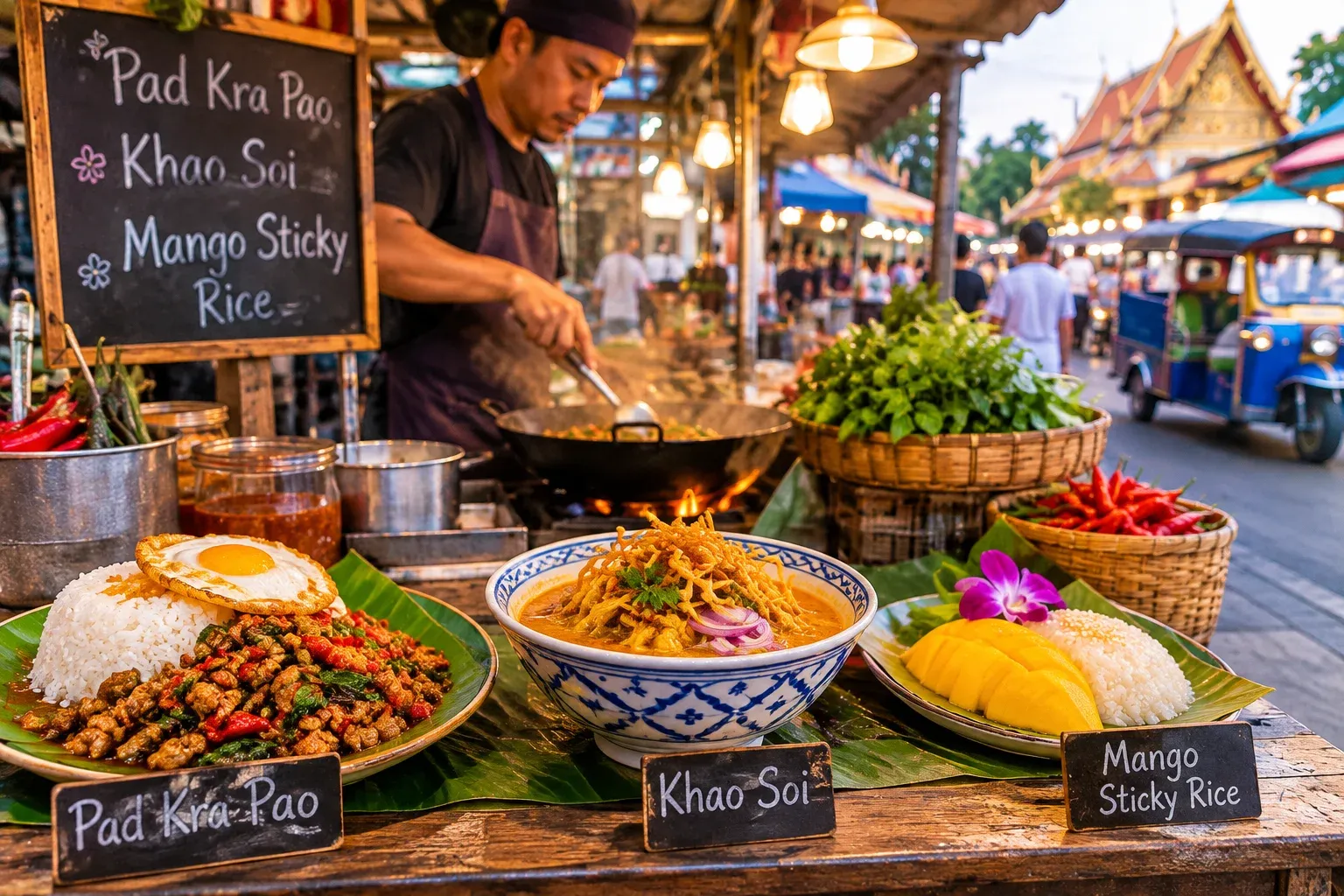
- Try staples like pad kra pao (holy basil stir-fry), khao soi in Chiang Mai, and mango sticky rice.
- Tell vendors "mai phet" if you want your dish cooked without chili heat.
- Bring peanut allergy cards translated into Thai since ground peanuts and peanut oil appear in many sauces.
#10. Buy Travel Insurance and Check Health Basics
Private hospitals in Bangkok and Phuket offer quality care, though emergencies and scooter accidents get expensive fast. Buy travel insurance with medical evacuation and motorbike coverage, and update routine vaccines plus Hepatitis A and Typhoid before flying.
#11. Follow Strict Local Laws on Vaping, Drones, and Alcohol
Knowing legal boundaries is one of the smartest Thailand travel tips and tricks since penalties catch tourists off guard.
- Leave vapes at home because importing or carrying e-cigarettes brings heavy fines or arrest.
- Register camera drones with the CAAT and NBTC before flying to avoid steep penalties.
- Watch alcohol sale hours since stores and restaurants only sell alcohol between 11:00 AM and midnight, with full bans on major Buddhist holidays.
- Never insult the monarchy online or in public, as strict lèse-majesté laws apply to everyone.
#12. Book Trains, Ferries, and Peak-Season Hotels Early
Reserve high-demand tickets ahead so you do not get stuck during busy winter months.
Thailand Travel Booking Timeline: What to Book in Advance
| What to Book | How Far in Advance | Why |
|---|---|---|
| Peak-season island hotels | 2 to 3 months | Beachfront rooms sell out fast from December to February. |
| Overnight sleeper trains | 30 to 60 days | Air-conditioned lower bunks to Chiang Mai fill up early. |
| Popular cooking classes | 1 to 2 weeks | Top Chiang Mai schools keep class sizes small. |
| Full Moon Party ferries | 1 to 2 months | Koh Phangan boats and stays hit full capacity. |
| Private airport transfers | 2 to 3 days | Ensures smooth late-night pickups for families. |
#13. Choose Ethical Sanctuaries and Respect Fragile Islands
Follow these tips for visiting Thailand respectfully to protect wildlife and fragile marine parks.
- Visit observation-only elephant sanctuaries in Chiang Mai and skip camps offering rides or bathing.
- Never touch coral reefs, feed wild fish, or take seashells inside marine national parks.
- Check park closures beforehand since several Andaman islands close from May through October.
Read more: Looking for inspiration to fill your trip with unforgettable experiences? Explore ancient temples, vibrant night markets, and tropical beaches across the country. Read our blog 👉 Things To Do in Thailand
#14. Avoid These 5 Common First-Timer Mistakes
Keep these Thailand travel tips for first-timers in mind to skip preventable headaches.
(i) Overpacking your route
Stick to two or three regions in ten days instead of rushing.
(ii) Renting scooters without an International Driving Permit
Police issue instant 500 to 1,000 THB fines and insurance voids claims.
(iii) Taking unmetered taxis
Insist on the meter or use Grab and Bolt before getting in.
(iv) Forgetting cash on small islands
ATMs on Koh Lipe or Koh Tao often run empty on weekends.
(v) Ignoring red beach flags
Monsoon rip currents on Phuket's west coast turn dangerous from May to October.
#15. Tailor Your Plan for Solo, Family, or Senior Travel
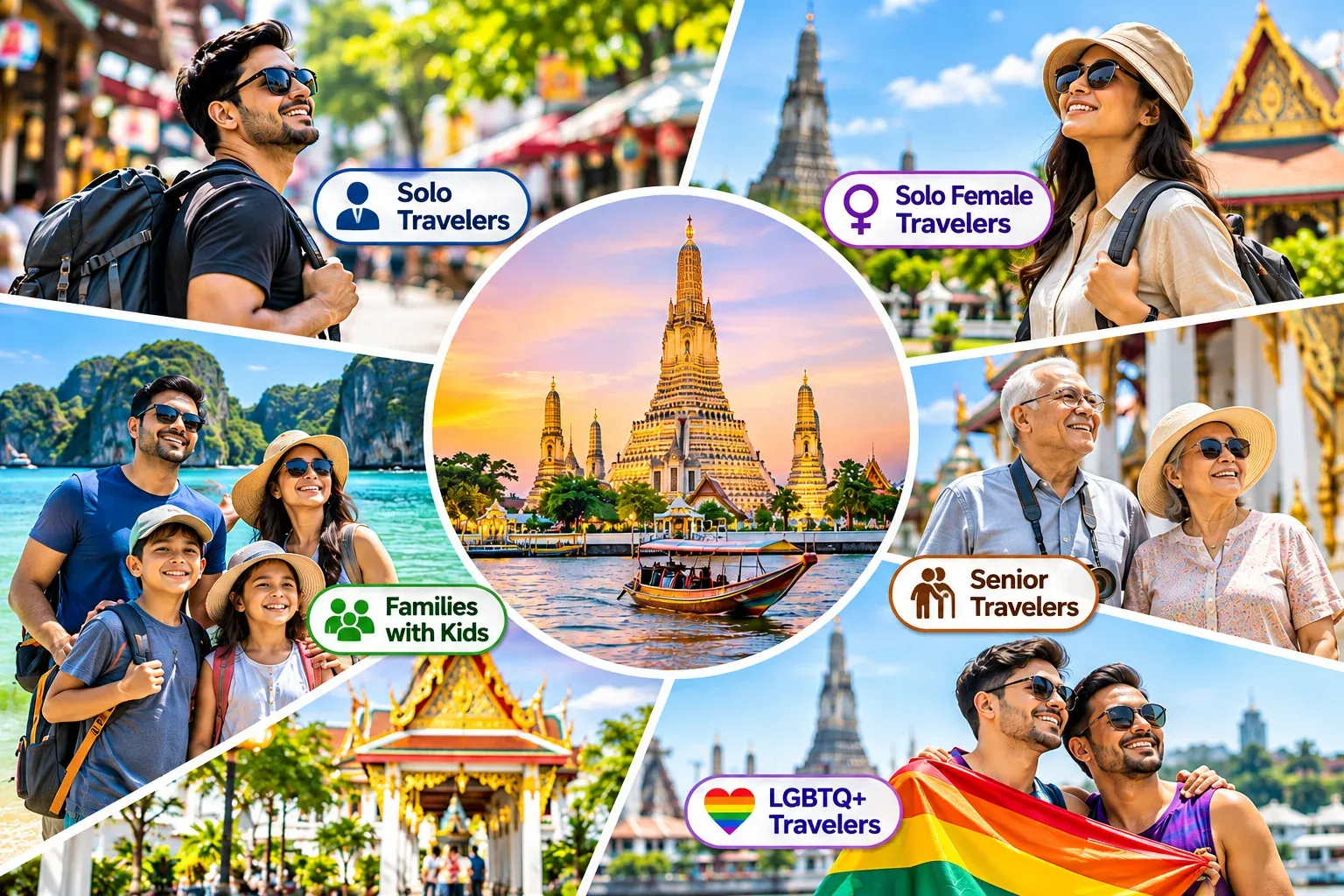
- Solo travelers: Thailand solo travel is easy and safe with social hostels and group tours, though you should watch your drinks at night.
- Solo female travelers: Violent crime is rare, yet dressing modestly outside beaches and sharing Grab ride statuses adds peace of mind.
- Families with kids: Book direct flights, family resorts in Hua Hin or Koh Samui, and air-conditioned Skytrain rides.
- Senior travelers: Pick riverside hotels with elevators and hire private drivers for temple tours to beat heat and steep steps.
- LGBTQ+ travelers: Thailand is welcoming in Bangkok and Phuket, though public affection stays low-key in rural towns.
#16. Follow a Realistic 10-Day Route Instead of Rushing
Use this Thailand travel guide route to see cities, mountains, and beaches without burnout: spend Days 1 to 3 in Bangkok for temples and street food, fly north for Days 4 to 6 in Chiang Mai, and finish Days 7 to 10 on Krabi or Koh Samui beaches.
Read more: Need help mapping out your route day by day? Follow a complete step-by-step plan covering Bangkok, Chiang Mai, and southern island escapes. Read our blog 👉 Thailand Travel Itinerary
#17. Save Digital Copies of Important Documents
One of the easiest tips for visiting Thailand is saving offline phone photos of your passport, TDAC arrival confirmation, and insurance policy. Hotels and domestic airlines check passport details frequently, and digital backups save time at busy counters.
#18. Learn Five Basic Thai Phrases for Warmer Interactions
Learning basic politeness ranks high among practical travel tips for Thailand. Use "sawasdee khrap/kha" for hello, "khop khun khrap/kha" for thank you, "mai pen rai" for no problem, "tao rai" for how much, and "mai phet" for not spicy.
#19. Install a Travel eSIM Before Landing
If you wonder, "Will my phone work in Thailand?" setting up mobile data before your flight is one of the top essential Thailand travel tips for instant 4G/5G after touchdown.
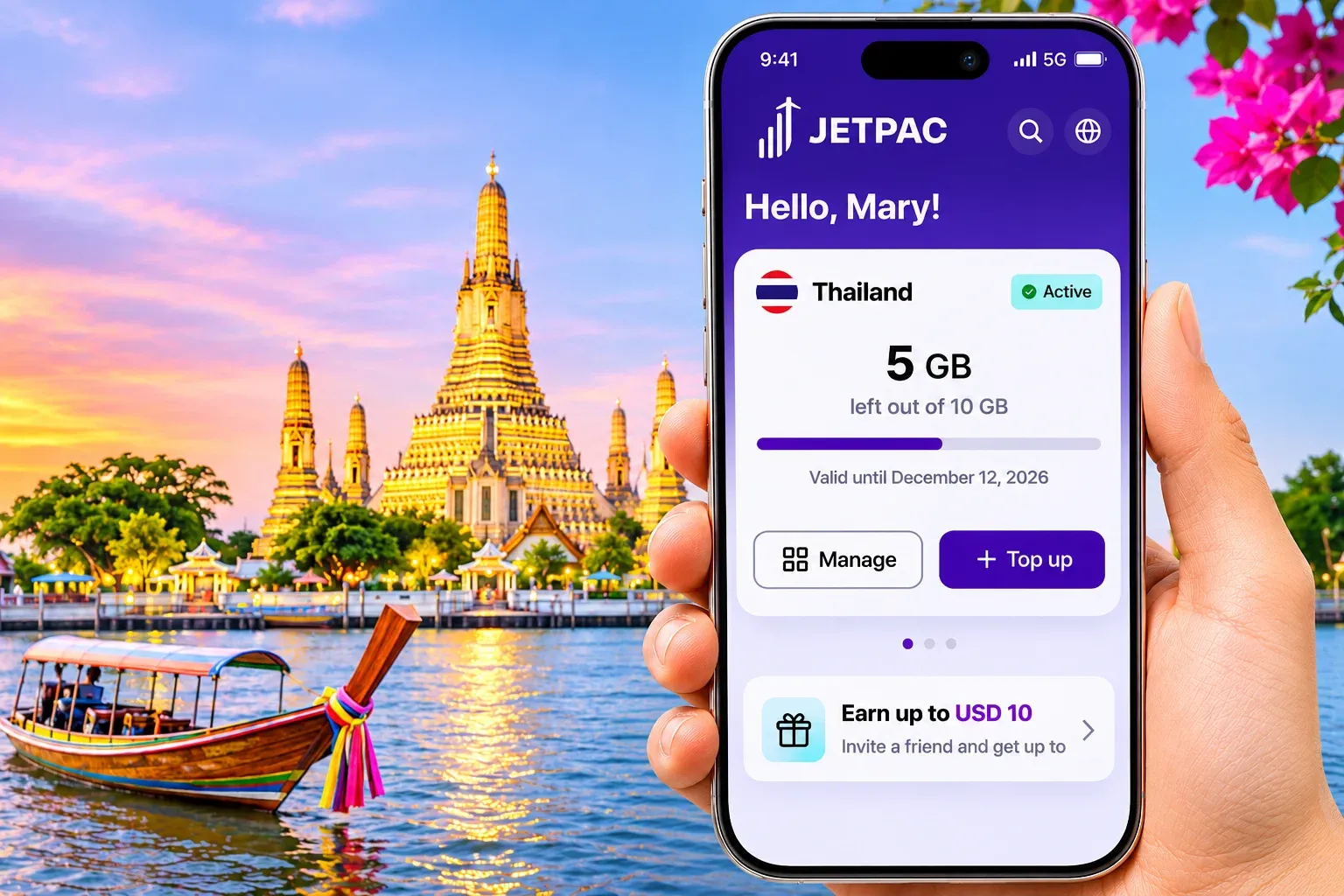
Unlike airport AIS or TrueMove H SIM cards, a Jetpac eSIM for Thailand begins at just $3.5, backed by round-the-clock customer help and a full refund policy. Even if you use up your high-speed allowance, WhatsApp and Google Maps keep working at no extra cost.
What makes it the best eSIM for Thailand travel is complimentary lounge entry whenever your flight is delayed past 60 minutes, though saving offline maps for island ferry crossings is still smart.
Read more: Staying connected makes navigating unfamiliar streets and booking rides effortless. Compare local SIM cards, eSIMs, and pocket Wi-Fi options to stay online. Read our blog 👉 How to Get Mobile Internet in Thailand
#20. Run Through This Pre-Trip Checklist Before Departure
Review these Thailand travel tips for 2026 essentials before heading to the airport.
- Confirm your passport has 6 months of validity left.
- Submit the free TDAC arrival form within 72 hours before landing.
- Download Grab, Bolt, Google Maps, and Google Translate.
- Install a Thailand travel eSIM for instant data upon arrival.
- Buy travel insurance covering medical care and scooter rides.
- Pack temple-appropriate clothing, reef-safe sunscreen, and DEET repellent.
- Bring crisp bills to exchange for Thai baht and notify your bank.
- Save 1155 (Tourist Police) and digital copies of your documents.
FAQs
Is Thailand expensive?
No, Thailand fits most budgets. Expect daily costs around $30 to $50 for backpackers, $70 to $130 for mid-range travelers, and $200+ for luxury resorts.
How many days do you need in Thailand?
Plan 10 to 14 days for a balanced trip covering Bangkok, Chiang Mai, and one southern island region without rushing through airport transfers.
Is Thailand safe for solo travelers?
Yes, Thailand is very safe and welcoming for solo visitors. Stick to basic Thailand travel tips for first-timers, like watching drinks at night and using registered taxis.
What is the best way to get around Thailand?
Use Grab or Bolt for city rides, the BTS Skytrain and MRT in Bangkok, and overnight sleeper trains or short domestic flights for longer distances.
Do I need cash in Thailand, or can I use a card?
Carry Thai baht cash for street food, markets, and taxis. Major hotels, malls, and 7-Eleven stores accept credit cards, though small vendors rarely do.
What cultural customs should I know before visiting Thailand?
Following essential Thailand travel tips for 2026 means covering shoulders and knees at temples, removing shoes indoors, returning wai greetings, and never pointing your feet at Buddha statues.
Do I need an eSIM or SIM card for Thailand?
Yes, getting one keeps you connected for maps and rides. A physical SIM works well, though a Thailand eSIM from Jetpac is a solid option for instant arrival data.
Disclaimer
The information in this blog is based on travel guidance, local regulations, and cost estimates available to the Jetpac team at the time of writing in 2026. Specific details such as entry requirements, local laws, transportation fares, and regional weather conditions are subject to change without notice. We recommend verifying all practical details directly with official provider websites and local government portals before planning your trip. Jetpac is not responsible for any changes or outcomes post-publication.
Get connected as soon as you land with a Jetpac travel eSIM.