How to Travel Vietnam on a Budget: Costs, Savings, and Practical Tips
Explore Vietnam on a budget, from choosing affordable places to stay and eating locally to using buses and trains, finding free attractions, and avoiding overpriced tourist spots.

Most budget travelers spend $20-$35 per person per day in Vietnam. A 7-day trip costs approximately $140-$245 and a 14-day trip runs approximately $280-$490, excluding international flights. All figures are approximate and were checked in November 2026.
Season is the biggest variable in any Vietnam travel budget - traveling in April costs noticeably less than December, and eating at local street food stalls cuts food spend roughly in half compared to tourist restaurants.
Below is a breakdown of how to travel Vietnam on a budget - covering accommodation, food, transport, activities, and what a realistic 14-day route actually costs on the ground.

Quick Answer: How Much Does It Cost to Travel Vietnam on a Budget?
| Travel Style | Daily Cost Per Person | 7-Day Total | 14-Day Total |
|---|---|---|---|
| Budget | $20-$35 | $140-$245 | $280-$490 |
| Mid-Range | $50-$80 | $350-$560 | $700-$1120 |
| Comfortable | $100-$150 | $700-$1050 | $1400-$2100 |
Note: All figures are in USD, per person, excluding flights and insurance. To get your budget for Vietnam, multiply daily cost by days, then add flights and insurance. Prices checked November 2026. For solo-specific costs and room supplements, see the Vietnam solo travel guide.
These totals shift significantly by season, region, and travel style - the Vietnam travel budget breakdown in the sections below explains each variable. All prices in Vietnam are paid in Vietnamese đồng (VND) on the ground - USD figures throughout this blog are converted for reference.
When Is the Cheapest Time to Visit Vietnam?
Cheapest Months
April, May, September, and October offer the lowest prices of the year. The best time to travel to Vietnam on a strict budget is April - accommodation is off-peak, domestic flights are more competitive, and weather holds across central and southern Vietnam.
Peak and Shoulder Season
December to February is peak season across the south; June to August peaks in the north. Tet - Vietnam's Lunar New Year, typically late January or early February - brings the year's sharpest price spike, with hotel rates doubling in major cities for 2-3 weeks and train tickets selling out weeks ahead.
Traveling off-peak means lower prices, but some sites reduce opening hours.
Read More: Traveling to Vietnam in December means navigating peak prices across the south, but the festival calendar and beach weather make it one of the most popular windows. Read our blog 👉 Vietnam in December: Weather, Festivals and Travel Tips
How Can You Get to Vietnam Cheaply?
Vietnam is one of the cheapest places to travel in Asia, and international air access reflects that. Vietjet, AirAsia, and Scoot frequently price Southeast Asian connections to Hanoi or Ho Chi Minh City below $90 one way, booked 6-8 weeks ahead. Fares vary by origin and season - no price here is guaranteed.
US travelers generally connect through Seoul, Taipei, or Tokyo. UK travelers commonly route through Dubai, Doha, or Singapore.
Budget airlines add baggage fees of approximately $15-$40 per leg that change the real fare - check what the ticket includes and pack light using the Vietnam packing list.
Where to Stay Cheaply in Vietnam?
Hostels and Guesthouses
Dorm beds in Hanoi and Ho Chi Minh City start from approximately $5-$15 per night, usually including Wi-Fi and a locker.
Private rooms in family-run guesthouses run approximately $15-$35. Budget travelers in Hoi An should allow approximately $15-$35 per night during peak months.
The guesthouse network is the foundation of how to travel on a budget in Vietnam.
Read More: Choosing which cities to include changes your accommodation budget as much as where you sleep - some regions run noticeably cheaper for the same quality of stay. Read our blog 👉 10 Best Places to Visit in Vietnam You'll Love
Budget Hotels and Short-Term Rentals
Two-star hotels and short-term rentals (Airbnb, Booking.com apartments) cost approximately $20-$40 per night. Check cancellation terms before booking - non-refundable rates are common, and cleaning fees or city taxes can raise the total at checkout.
Best Areas for Value
The Old Quarter in Hanoi and Pham Ngu Lao in Ho Chi Minh City are convenient but carry a tourist-area premium. Guesthouses one or two streets back typically cost 20-30% less.
For value by region across the country, the Vietnam travel guide covers which cities and towns balance price and experience best.

How to Eat on a Budget in Vietnam
Typical Meal Prices
A bowl of pho at a local stall costs approximately $1-$2. Com tam with grilled pork runs approximately $2-$3. A bia hoi draft beer is approximately $0.25-$0.50.
For a full breakdown of what to eat and where, see the best food in Vietnam guide.
These are among the most reliable budget travel tips for Vietnam - local food is genuinely cheap when you eat where locals eat.
Where Locals Eat
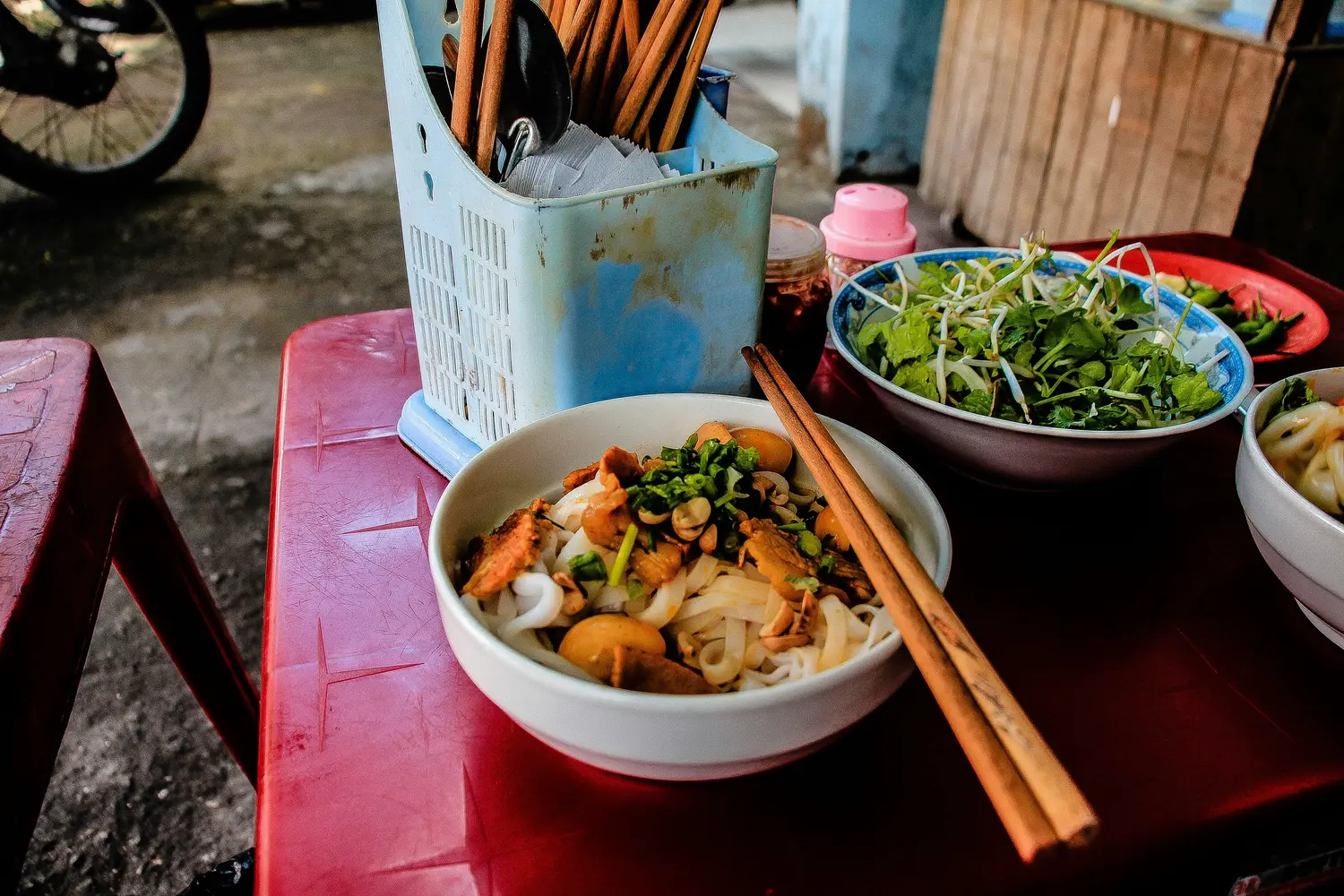
Street food stalls with plastic chairs, high turnover, and no English menu give the best value for budget travel in Vietnam.
Local markets also serve cooked meals at local prices. Restaurants on the main tourist strip charge 3-5 times more for identical dishes. Tap water is not safe to drink in Vietnam. Budget approximately $0.50 per day for bottled water.
Cheapest Ways to Get Around Vietnam
Local Transport
City buses in Hanoi and Ho Chi Minh City cost approximately $0.30-$0.50 per ride. Grab gives fixed prices with no negotiation needed - most short city rides run $1-$3. Motorbike hire for rural areas and day trips costs approximately $5-$8 per day. See the Vietnam transportation guide for city-by-city options.
Intercity Transport
The Reunification Express is the backbone of north-south travel. Soft-seat tickets between Hanoi and Da Nang cost approximately $27-$44. Overnight sleeper berths for the full Hanoi to Ho Chi Minh City journey (approximately 35 hours) run approximately $50-$100.
Book from any platform such as baolau.com or the station directly for the best fares.
Overnight buses cover routes the train doesn't serve as well - Da Nang to Nha Trang runs approximately $12-$18.
Domestic flights on Vietjet or Bamboo cost approximately $20-$100 booked ahead but add airport time and checked luggage fees.
For budget travelers on the main north-south corridor, Vietnam budget travel by train or overnight bus consistently beats flying by value.
Free and Low-Cost Things to Do in Vietnam
Hoan Kiem Lake in Hanoi, the outer areas of Hoi An's Ancient Town, and the beaches at Da Nang and Mui Ne are all free. Temple visits across the country are donation-based in most cases. For a full list by city, see things to do in Vietnam.
Phong Nha-Ke Bang National Park base entry costs is most free while, individual cave tickets run approximately $5-$15 depending on the attraction.
Sunrise hikes around Sa Pa and walks along Mui Ne's red sand dunes cost nothing.
For budget travel tips on stretching the activities budget further, the best places to visit in Vietnam covers which experiences are worth paying for.
For Vietnam travel tips on free days, arriving early beats paying for a guided tour at nearly every major site.

Read More: Traveling solo to Vietnam changes the budget calculation. Single room supplements and self-paced routing push some costs up and others down. Read our blog 👉 Best Places to Travel Solo (Safe & Budget-Friendly)
Do You Need a Visa or Travel Authorization for Vietnam?
Vietnam charges approximately $25-$50 for an e-visa covering up to 90 days. Some nationalities receive 14-90 days visa-free under bilateral agreements. Before booking flights, check whether do you need a visa to visit Vietnam applies to your passport.
Processing takes approximately 3 business days keep extra time around public holidays.
Do You Need Travel Insurance for Vietnam?
Travel insurance is strongly recommended for any responsible budget for Vietnam. Vietnam is among the top budget-friendly countries in Asia for independent travel, but medical evacuation from rural areas is expensive.
A single-traveler coverage with medical care and trip cancellation runs approximately $25-$55 per month (checked November 2026).
What Does a 14-Day Budget Trip to Vietnam Cost?
| Stop | Nights | Accommodation | Food | Transport | Activities | Total |
|---|---|---|---|---|---|---|
| Hanoi | 3 | $48 | $33 | $9 | $12 | $102 |
| Hue | 2 | $30 | $22 | $22 | $14 | $88 |
| Hoi An | 3 | $51 | $33 | $8 | $12 | $104 |
| Ho Chi Minh City | 3 | $48 | $33 | $20 | $12 | $113 |
| Mekong Delta | 2 | $28 | $20 | $10 | $8 | $66 |
| Trip total | 13 | $205 | $141 | $69 | $58 | $473 |
Source: Vietnam National Administration of Tourism
Note: Figures in USD per person for each stop, budget travel style, November 2026. The $473 total aligns with the budget range in the Quick Answer table. Dropping the Mekong Delta portion reduces the route to 11 nights at approximately $407. See Vietnam itineraries for how to travel Vietnam on a budget across different route lengths.
Read More: The stop-by-stop costs above show what the route costs. For the actual itinerary logic, how to book transport between cities, and what to arrange before you fly. Read our blog 👉 Vietnam Travel Guide: Itinerary, Costs, Transport, Tips & More
Budget Mistakes to Avoid in Vietnam
Underestimating intercity transport costs
Train and overnight bus fares for a full north-south route add $60-$90 to the total. Budget travel in Vietnam requires building this into the Vietnam travel budget from day one.
Leaving out insurance, mobile data (eSIM for Vietnam), and entry fees
These three alone can add $80-$120 to the real budget for Vietnam and are the most commonly missed costs.
Fitting in too many stops
Rushing 8-10 destinations in 14 days drives up transport costs and rules out longer-stay accommodation rates. Good budget travel tips for Vietnam on routing start with choosing fewer stops and more nights in each.
Booking late during peak season, or travelling at the worst time to visit Vietnam
The hotels near popular sites fill 4-6 weeks before Tet, and December prices spike significantly.
Paying card or ATM fees without checking first
The following basic budget travel tips on currency management (use a fee-free card, withdraw larger amounts less often) prevents $30-$120 ATM fees from compounding over a 14-day trip.

Read More: January brings Tet - Vietnam's Lunar New Year - and the year's most unpredictable hotel and transport pricing across every major city. Read our blog 👉 Vietnam in January: Weather, Events, Things to Do & Travel Tips
Save on Mobile Data in Vietnam With a Jetpac eSIM
Mobile data is part of the Vietnam budget travel calculation that budget travelers frequently overlook, but maps, ride-hailing, translation apps, and hotel confirmations depend on it every day.
International roaming costs $5-$15 per day on most carrier plans. A local SIM card for Vietnam from a Vietnamese carrier costs approximately $5-$15 for a 30-day plan but requires a store visit, passport, and manual setup.
A Jetpac eSIM for Vietnam activates before you leave home with no queues, no physical card, and no contracts.
eSIM Vietnam plans connect to multiple local networks and cover maps, airline apps, hotel confirmations, translation tools, ride-hailing, digital travel documents, lounge access, and immediate arrival connectivity.
eSIM Vietnam setup takes under 2 minutes in the Jetpac app. The best eSIM for Vietnam from Jetpac supports instant activation on iOS and Android.
Will My Phone Work in Vietnam?
Most unlocked smartphones work in Vietnam. The country uses 4G LTE on 1800MHz and 2100MHz bands, supported by most recent handsets. For an eSIM plan, the phone must be carrier-unlocked and eSIM-compatible.
Data roaming on US carrier plans ranges from $10/day on select T-Mobile plans to $12/day on most standard plans.
T-Mobile does work in Vietnam on its international roaming network, but daily roaming rates apply unless a specific plan is active. Check current terms with your carrier before traveling.
How to Get Internet in Vietnam
Pocket wifi rental costs approximately $4-$10 per day and covers multiple devices, and comes with hotel/accommodation delivery and front-desk drop-off or city shops pickup.
A local SIM card for Vietnam from Viettel, Vinaphone, or Mobifone costs approximately $5-$15 for a 30-day plan with 45-250GB of data.
A eSIM for Vietnam travel plan activates before arrival, requires no pickup point, and typically costs $5-$15 for 7-30 days depending on the allowance.
How to Make Calls in Vietnam
The cheapest way to call home from Vietnam is over data using WhatsApp, FaceTime, or Google Meet; all work reliably on a Vietnamese data connection.
For local calls within Vietnam, a local SIM or calling app gives local rates.
How Much Data Do You Need in Vietnam?
Active Google Maps navigation uses approximately 5MB per hour. Video calls on WhatsApp at standard quality use approximately 300-700MB per hour (WhatsApp published figures).
YouTube at 480p uses approximately 350MB per hour and at 720p approximately 700MB per hour (Google, 2025 figures). Netflix at standard definition uses approximately 1GB per hour (Netflix Help Center).
A typical travel day with maps, messaging, one video call, and light browsing uses approximately 500MB-1GB.
A 7-day plan with 5-7GB covers most travel patterns. For detailed data use by app, see how much data YouTube uses, how much data does Spotify uses, and how much data does Netflix uses.
FAQs
How much money do I need for 14 days in Vietnam?
Budget travelers spending $20-$35 per day need approximately $280-$490 for 14 days, excluding flights. International flights from the US add approximately $600-$900 return; from the UK, flights add approximately $450-$700 return. Insurance for two weeks adds approximately $30-$50. For budget travel tips for Vietnam on keeping costs at the lower end, focus on accommodation and eating local.
Is Vietnam expensive for tourists?
Vietnam is one of the least expensive countries in Southeast Asia for tourists. Budget travel in Vietnam delivers more value at the same quality level than Thailand or Bali. Food, accommodation, and intercity transport all cost less, and the country consistently ranks among the most affordable in the region for independent travelers.
What is the cheapest month to visit Vietnam?
April is the cheapest month overall. Accommodation prices are off-peak, domestic flights are more competitive, and weather holds across most of the country. May and October are close alternatives depending on which region you're prioritizing.
Can I travel Vietnam on $30 a day?
Yes, $30 per day is achievable staying in dorms or basic guesthouses ($5-$10), eating street food and local restaurants ($8-$12), and using trains and overnight buses. It requires discipline, but budget travelers regularly manage it, particularly in central Vietnam where costs run below the national average.
Is it cheaper to pay by cash or card in Vietnam?
Cash is generally cheaper. Street food stalls, local markets, and smaller guesthouses usually only accept dong. Local ATMs charge $2-$5 per withdrawal, so withdraw larger amounts less often. Use a fee-free travel card where card payment is accepted.
How much should I tip in Vietnam?
Tipping is not expected but appreciated. Rounding up at a local restaurant or leaving 10,000-20,000 VND (approximately $0.40-$0.80) is common. For full-day private guides, $5-$10 is standard. Hotels and spas on the tourist circuit sometimes have tip jars, but tipping remains optional.
Disclaimer
All information was accurate at the time of writing, based on available information as of November 2026. Prices, exchange rates, accommodation rates, transport fares and attraction fees may change after publication. Always verify current prices with service providers before booking. Jetpac is not responsible for any changes to the information after publication.
Get connected as soon as you land with a Jetpac travel eSIM.